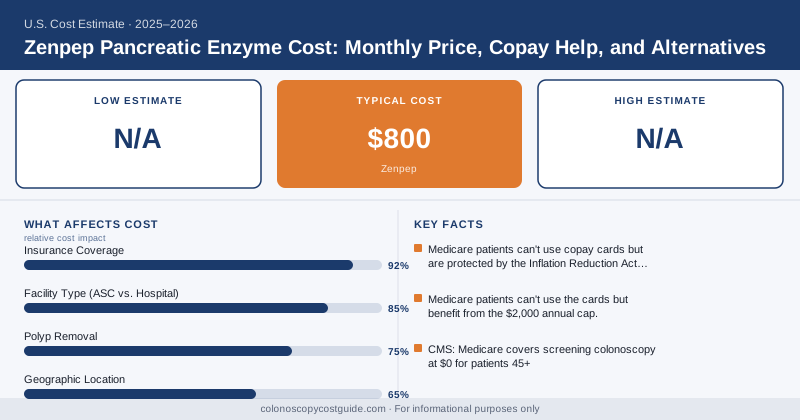
Zenpep Pancreatic Enzyme Cost: Monthly Price, Copay Help, and Alternatives
{ if eq .Lang "zh" }{ else }{ end }Imagine a medication you take with every single meal and snack — sometimes a dozen capsules a day — that has no generic and can list above $2,000 a month. That’s pancreatic enzyme replacement therapy, and Zenpep is one of the major brands. For people who can’t digest food without it, the cost isn’t optional, which makes the pricing especially painful.
Zenpep is a pancreatic enzyme replacement therapy (PERT) used for exocrine pancreatic insufficiency, common in chronic pancreatitis, cystic fibrosis, and after pancreatic surgery. The FDA approved Zenpep in 2009, and after a 2010 regulatory overhaul, every PERT product had to win formal FDA approval — a barrier that has kept generics off the market entirely.
Zenpep and PERT Cost Overview
| Product | Type | Typical Monthly Cost | Notes |
|---|---|---|---|
| Zenpep | Brand PERT | $800-$2,500+ | Dose-dependent, no generic |
| Creon | Brand PERT | $800-$2,500+ | Most prescribed PERT |
| Pancreaze | Brand PERT | $800-$2,500+ | No generic |
| Pertzye | Brand PERT | $800-$2,500+ | No generic |
| Commercial insurance + copay card | Sharply reduced | Often $0-$50 with assistance |
The cost swings widely because dosing is individualized — heavier meals and more severe insufficiency mean more capsules per meal, and the monthly total climbs with every capsule. There’s no cheap generic backstop, so the brand list price is what drives the bill.
Why PERT Has No Generics
This is the crux of the cost problem. Before 2010, pancreatic enzymes were grandfathered products sold without modern FDA approval. The agency then required every PERT to go through full approval, citing inconsistent potency. The result: a handful of approved brands, complex manufacturing, and zero generic competition more than a decade later.
Key Takeaway
Copay Cards and Assistance
Each major PERT brand offers a copay assistance program for commercially insured patients, which can bring a $2,000 list price down to $0-$50 a month. The manufacturers also run patient assistance programs for uninsured and low-income patients, since these drugs are medically essential and have no substitute.
Medicare patients can’t use copay cards but are protected by the Inflation Reduction Act’s $2,000 annual Part D out-of-pocket cap, effective January 2025 — a significant change for people who previously faced steep coinsurance on these drugs.
Getting the Dose Right Saves Money
Because cost scales with the number of capsules, an optimized dose isn’t just better for digestion — it’s cheaper. A dietitian or gastroenterologist experienced in pancreatic insufficiency can fine-tune your units of lipase per meal so you absorb nutrients without overusing capsules.
PERT in the Broader GI Cost Picture
Pancreatic enzymes are usually prescribed alongside management of an underlying condition. If chronic pancreatitis is the cause, our pancreatitis treatment cost guide covers the full picture. Digestive symptoms can overlap with other conditions too — our IBS treatment cost guide helps sort out where enzyme therapy fits versus other causes.
If reflux is part of your symptom mix, the cheaper end of GI drugs is covered in our PPI medication cost breakdown.
When Diagnostics Come First
Pancreatic insufficiency is often diagnosed after imaging, stool tests, and sometimes endoscopic procedures. Those workups add to the cost before the prescription even starts. For a sense of how procedure pricing works, our colonoscopy cost guide explains the facility-fee structure that drives many GI bills.
The Bottom Line
Zenpep and other pancreatic enzymes can list at $800 to $2,500 or more a month, and the lack of any generic is the core reason. Your best defenses are the manufacturer copay cards — which bring many insured patients to $0-$50 — and a dialed-in dose so you’re not taking extra capsules. Medicare patients can’t use the cards but benefit from the $2,000 annual cap. Because these drugs are medically essential, ask about patient assistance programs if you’re uninsured, and never cut your dose to save money without your doctor’s input.
{ if eq .Lang "zh" }