Stoma Reversal Surgery Cost
Not every colostomy or ileostomy is meant to be permanent — but figuring out whether yours qualifies for reversal, and what it’ll cost, requires navigating two separate systems: the medical one and the insurance one. Here’s what the American College of Gastroenterology’s data shows: 30–40% of stomas created in emergency situations become permanent, usually because the underlying condition, the patient’s health status, or both make reversal too risky. For the other 60–70%, reversal is achievable — and planned.
If you’re in that reversible group, here’s an honest breakdown of what stoma takedown surgery costs in 2025–2026.
Why Cost Varies So Much
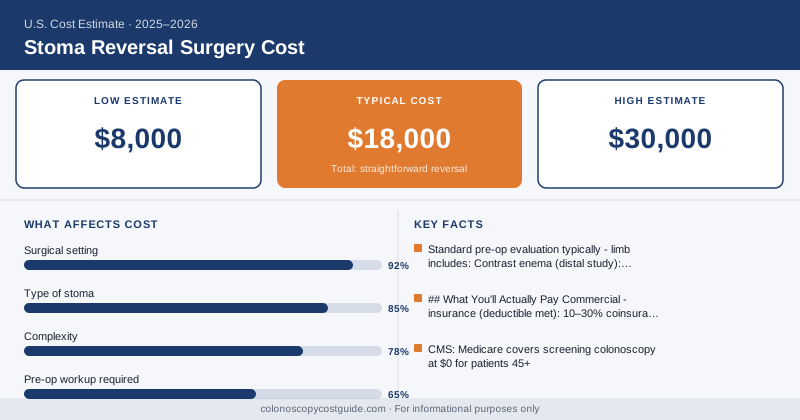
Stoma reversal cost isn’t one number. It swings based on:
- Surgical setting — hospital outpatient vs. ambulatory surgery center (ASC)
- Type of stoma — colostomy vs. ileostomy (Hartmann’s reversal is more complex)
- Complexity — was the original surgery straightforward, or did it involve complications that left adhesions and scarring?
- Pre-op workup required — most surgeons require a contrast enema or flexible sigmoidoscopy to confirm the bowel is healthy and the anastomosis site is viable before proceeding
- Post-op course — uncomplicated reversals go home in 3–5 days; anastomotic leaks or other complications extend stays dramatically
Stoma Reversal Surgery Costs
| Cost Component | Hospital-Based | Ambulatory Surgery Center |
|---|---|---|
| Surgeon fee (colorectal) | $3,500 – $8,500 | $3,000 – $7,000 |
| Facility fee | $8,000 – $22,000 | $5,000 – $11,000 |
| Anesthesia | $1,500 – $4,000 | $1,200 – $3,000 |
| Pre-op contrast enema or sigmoidoscopy | $500 – $1,500 | $500 – $1,500 |
| 3–5 day hospital stay (post-op) | $9,000 – $25,000 | N/A (discharge same or next day for simple cases) |
| Total: straightforward reversal | $10,000 – $30,000 | $8,000 – $18,000 |
The facility fee gap between hospital outpatient departments and ASCs is real and significant. For the same procedure, Medicare pays hospital outpatient departments roughly 1.8–2.2x what it pays ASCs. Commercial insurers often mirror this structure. If your surgeon operates at both settings, asking about the ASC option can save you several thousand dollars even after insurance.
Pre-Op Testing: What You’ll Pay Before Surgery Even Starts
Before your surgeon schedules a reversal, they need to confirm the bowel is healthy on both ends of the previous anastomosis or stoma site. Standard pre-op evaluation typically includes:
- Contrast enema (distal limb study): $400–$1,200 at a hospital imaging center; often lower at a freestanding radiology center
- Flexible sigmoidoscopy or colonoscopy: $800–$2,500 depending on setting and anesthesia
- Preoperative labs and EKG: $200–$600
- Surgical consultation: $200–$400
These aren’t optional. Surgeons who skip this workup and discover a stricture or incomplete healing intraoperatively face a much riskier and more expensive situation. Budget $500–$1,500 for pre-op testing as a baseline.
When Complications Happen: The Cost of a Leak or Stricture
Anastomotic leak is the feared complication of bowel reversal surgery. It’s not common — rates range from 1–5% depending on the patient’s health status and the surgical approach — but when it happens, costs explode.
| Complication | Additional Cost Range |
|---|---|
| Anastomotic leak requiring reoperation | $15,000 – $40,000 |
| Prolonged ileus (bowel slow to restart) | $3,000 – $8,000 (extended stay) |
| Anastomotic stricture requiring dilation | $2,500 – $8,000 |
| Wound infection requiring IV antibiotics | $2,000 – $6,000 |
| Leak requiring new temporary stoma | $5,000 – $12,000 (additional surgery) |
These numbers aren’t meant to scare you out of a reversal. They’re meant to set expectations for your deductible and out-of-pocket maximum planning. Most reversal surgeries go smoothly — but if you’re entering the year with a planned reversal, max-fund your HSA and understand your plan’s OOP maximum before the procedure date.
Is Your Stoma Actually Reversible? Key Criteria
Not every stoma created as “temporary” ends up reversed. The ACG and colorectal surgery literature point to several factors that determine feasibility:
- Original indication: Stomas created for rectal cancer, diverticulitis perforation, or trauma are usually reversible if the primary disease has been treated. Stomas for Crohn’s disease or radiation damage are more often permanent.
- Time since creation: Most surgeons wait 3–6 months minimum for inflammation to fully resolve and the patient to rebuild nutritional reserves. Reversal within 6 weeks of the original surgery is unusual.
- Bowel continuity: A contrast enema confirming a healthy distal segment is non-negotiable.
- Patient health status: Cardiac and pulmonary fitness for a second major surgery; nutritional status (albumin, prealbumin); steroid use (impairs healing).
- Surgeon assessment: An experienced colorectal surgeon’s judgment after reviewing imaging and examining the stoma directly.
If your general surgeon created the original stoma, consider asking for a colorectal surgery consultation before reversal. Colorectal specialists do higher volumes of reversal procedures and tend to have lower complication rates.
Insurance Coverage: What’s Required for Authorization
Stoma reversal is covered by commercial insurance, Medicare, and Medicaid when the procedure is medically indicated and the original stoma reason is documented. “Medically indicated” means the reversal is being done to restore bowel continuity after resolution of the underlying disease — not elective bowel modification.
What insurers typically require for pre-authorization:
- Operative report from the original stoma creation surgery
- Documentation of the indication (cancer, perforation, trauma, etc.)
- Pre-op imaging showing patent distal bowel
- Surgeon’s letter of medical necessity
- Evidence that enough time has elapsed post-original surgery (usually 3+ months)
Most colorectal surgery offices are experienced with prior auth for reversal — it’s a routine process. Where patients run into trouble is when the original surgery was done at a different health system and records are hard to obtain. Start requesting those records early.
What You’ll Actually Pay
Commercial insurance (deductible met):
- 10–30% coinsurance after deductible
- On a $15,000–$25,000 surgery, that’s $1,500–$7,500 in coinsurance before hitting your OOP max
- Most patients with significant deductibles will hit their annual OOP max on reversal surgery
Medicare:
- Part A covers the inpatient facility stay; Part B covers surgeon and anesthesiologist
- Part A deductible: $1,676 per benefit period (2025); no coinsurance for days 1–60
- Part B: 20% of approved amount after $257 annual deductible
- Medigap supplement eliminates most or all of this cost-sharing
High-deductible plan / HSA:
- Budget your HSA contribution around your plan’s OOP maximum for the year of the reversal
- All stoma reversal expenses — pre-op testing, surgery, hospital stay, post-op follow-up — are HSA-eligible
Tips to Reduce Your Out-of-Pocket Cost
Ask about the ASC setting. For straightforward Hartmann’s reversals or ileostomy takedowns in healthy patients, many colorectal surgeons now perform the procedure at an ASC with planned discharge in 24–48 hours. The facility fee savings alone can be $5,000–$10,000.
Schedule early in your deductible year. If you’ve already met your deductible from a prior surgery (or other care), your coinsurance starts immediately on the reversal.
Obtain pre-authorization yourself too. Don’t rely solely on the surgeon’s office to handle prior auth. Call your insurer, confirm what documentation they need, and follow up proactively.
Compare imaging costs before your contrast enema. Hospital radiology departments charge 2–4x what freestanding radiology centers charge for the same fluoroscopic study. Ask your surgeon if an outpatient imaging center is acceptable.
Ask for an itemized estimate before surgery. The No Surprises Act requires providers to give you a good-faith cost estimate for scheduled procedures. Use it to understand your expected cost-sharing before you hit the OR.
Stoma reversal is one of those procedures where planning ahead — both medically and financially — pays off in concrete ways. The surgery itself is typically well-tolerated in healthy patients, and getting your bowel function restored is life-changing. Don’t let cost confusion delay a conversation with your colorectal surgeon about whether and when reversal is right for you.