Sigmoidoscopy Cost: Flexible Sigmoidoscopy Pricing and Insurance Coverage
{ if eq .Lang "zh" }{ else }{ end }What does a flexible sigmoidoscopy cost? Less than you’d think — and a lot less than a colonoscopy. But the cheaper price tag comes with real limitations you need to understand before assuming it’s the better deal.
Flexible Sigmoidoscopy vs. Colonoscopy: The Key Difference
A colonoscopy examines the entire colon — all 5–6 feet of it. A flexible sigmoidoscopy only reaches the sigmoid colon and rectum, roughly the last 1.5–2 feet. That’s where most rectal cancers develop, but it misses the right (proximal) colon entirely.
The USPSTF includes flexible sigmoidoscopy every 5 years (or every 10 years combined with annual FIT) as an acceptable colorectal cancer screening option with a Grade B recommendation for adults ages 45–75.
What Does Flexible Sigmoidoscopy Cost?
| Setting | Self-Pay Price |
|---|---|
| Physician office / clinic | $150–$350 |
| Hospital outpatient | $400–$800 |
| Freestanding GI center | $200–$450 |
| With private insurance (cost-share) | $0–$150 |
| Medicare beneficiary cost | $0 (preventive, in-network) |
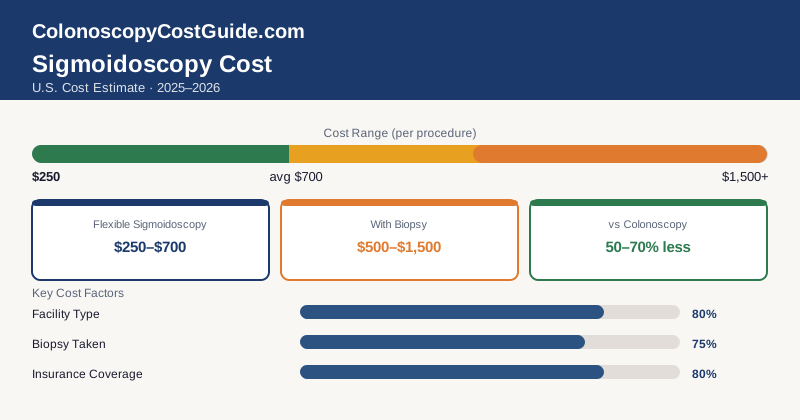
The lower cost versus a full colonoscopy — which typically runs $1,200–$4,800 — comes from a few factors: the procedure is shorter (about 15–20 minutes), doesn’t require sedation in most cases, and uses a simpler scope.
Medicare Coverage for Flexible Sigmoidoscopy
Medicare covers flexible sigmoidoscopy as a preventive screening under Part B:
- Frequency: Every 48 months (4 years) for average-risk beneficiaries
- High-risk patients: Every 24 months
- Cost to patient: $0 — no deductible, no coinsurance when billed as screening by an in-network provider
One important caveat: if a polyp is found and removed during the sigmoidoscopy, the procedure can be reclassified as therapeutic/diagnostic. That can trigger a cost-sharing obligation. Always ask your provider how polypectomy during sigmoidoscopy will be billed on your plan.
Is Sedation Required?
Usually no. This is one of the main advantages. Flexible sigmoidoscopy is generally done with the patient awake or with minimal sedation. That eliminates anesthesia fees — which can add $500–$1,200 to a colonoscopy.
The tradeoff: some patients find it uncomfortable without sedation. Rigid sigmoidoscopy (now largely obsolete in clinical practice) is even more uncomfortable and has been almost entirely replaced by the flexible scope.
Prep Requirements
You don’t need a full bowel prep. Typically, one or two enemas the morning of the procedure clears the sigmoid colon sufficiently. Compare that to the gallon-of-prep ordeal required for a full colonoscopy — this is a genuine quality-of-life difference for many patients.
Who Sigmoidoscopy Is Best Suited For
- Patients who’ve been unable to complete full colonoscopy prep
- Those with contraindications to sedation
- Average-risk adults who’ve been offered multiple screening options and prefer the lower cost/prep burden
- Patients combining it with annual FIT testing (an evidence-based combo strategy)
When It’s NOT the Right Choice
Sigmoidoscopy isn’t appropriate for everyone. Skip it and go straight to colonoscopy if:
- You have a personal or strong family history of colorectal cancer or polyps
- You’ve had polyps found before
- You have symptoms like rectal bleeding, unexplained weight loss, or changes in bowel habits
- You’re in a high-risk category (Lynch syndrome, IBD, etc.)
In those cases, insurance typically requires a full colonoscopy anyway, and it’s medically appropriate.
Why Flexible Sigmoidoscopy Has Declined in Use
According to ASGE data, flexible sigmoidoscopy use has dropped sharply over the past decade as colonoscopy became more accessible and insurers began covering it more broadly. Many GI practices have stopped offering it. If you want a sigmoidoscopy, call ahead — not every endoscopy center performs them routinely.
The American Cancer Society’s 2023 guidelines still list it as acceptable, but colonoscopy remains the dominant choice in US clinical practice due to full-colon visualization and same-session polypectomy capability.
The Total Cost Picture
For an average-risk adult with private insurance covering preventive screening, flexible sigmoidoscopy costs nearly nothing out of pocket. For cash-pay patients, $150–$350 at an office-based setting is genuinely affordable.
The real question isn’t just cost — it’s whether you’re comfortable with a test that examines only part of your colon. For many average-risk adults, the answer is yes, especially when paired with annual FIT testing. For others, the peace of mind of a complete colonoscopy every 10 years is worth the higher cost.
CDC data shows colorectal cancer is highly treatable when caught early. Stage I colorectal cancer has a 5-year survival rate above 90%, compared to roughly 14% for Stage IV disease. Whatever screening method fits your situation, pick one and stick with it.
{ if eq .Lang "zh" }