Short Bowel Syndrome Management Cost: TPN, Gattex, and Long-Term Care Expenses in 2025–2026
Most expensive ongoing GI therapy in American medicine. That’s not hyperbole — it’s the clinical reality of short bowel syndrome (SBS). When a patient loses enough of their small intestine to absorb nutrients independently, they depend on intravenous nutrition that can cost more than a mid-level executive salary every year. For the estimated 20,000–25,000 Americans living with SBS-related intestinal failure, according to the American Society for Gastrointestinal Endoscopy, the financial picture is as daunting as the medical one.
Understanding these costs isn’t just academic. It directly affects decisions about insurance coverage, disability applications, surgical planning, and whether to pursue newer but expensive pharmacologic treatments like teduglutide.
How SBS Develops — and Why Cost Follows Severity
Short bowel syndrome occurs when less than 200 cm of functional small intestine remains, either from surgical resection or from disease that renders the remaining bowel non-functional. The most common causes in adults are Crohn’s disease (requiring massive resection), mesenteric ischemia, and volvulus.
What you actually need — and what it costs — depends heavily on your remnant bowel anatomy:
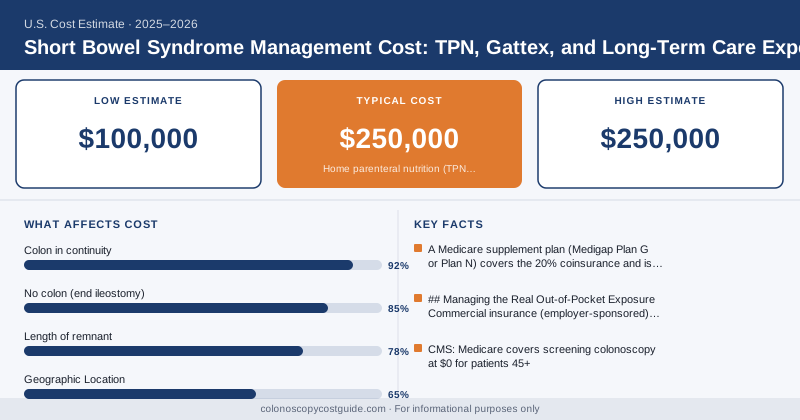
- Colon in continuity: Better fluid and carbohydrate absorption; some patients can wean off TPN
- No colon (end ileostomy): High output losses; most require long-term TPN or aggressive enteral support
- Length of remnant: Patients with 60–100 cm often achieve some oral autonomy; those with less than 60 cm rarely do without pharmacologic help
Annual Treatment Costs by Therapy Type
| Treatment Modality | Estimated Annual Cost |
|---|---|
| Home parenteral nutrition (TPN) — full support | $100,000 – $250,000 |
| Home TPN — partial support (2–4 days/week) | $40,000 – $100,000 |
| Teduglutide (Gattex) injection — list price | $300,000 – $400,000 |
| Teduglutide — after copay assistance/insurance adjustment | $0 – $15,000 OOP (varies) |
| Enteral nutrition / tube feeding (full) | $15,000 – $30,000 |
| Enteral nutrition (supplemental oral) | $5,000 – $12,000 |
| Oral rehydration solutions and supplements | $1,500 – $5,000 |
| GI specialist and dietitian follow-up | $2,000 – $6,000 |
| Lab monitoring (comprehensive panels, quarterly) | $2,000 – $5,000 |
The list price of teduglutide is striking — but it’s rarely what patients pay. Takeda’s patient assistance program (TAK-Assist) and commercial insurance copay cards typically reduce out-of-pocket costs substantially. For Medicaid patients, Gattex is covered in most states, though prior authorization requirements are stringent. The clinical argument for cost is persuasive: if Gattex eliminates or reduces TPN dependency, the net cost to the healthcare system can actually decrease.
Intestinal Transplantation: The Highest-Cost Option
For patients who can’t tolerate TPN long-term due to liver failure, recurrent line infections, or loss of venous access, intestinal transplant is the only curative option. It’s also among the most expensive procedures in all of medicine.
| Intestinal Transplant Cost Component | Estimated Cost |
|---|---|
| Transplant surgery (bowel alone) | $250,000 – $350,000 |
| Combined liver-intestine transplant | $400,000 – $600,000+ |
| First-year post-transplant care (immunosuppression, follow-up) | $100,000 – $200,000 |
| Annual ongoing immunosuppression + monitoring | $30,000 – $80,000 |
| Total: first year of care | $350,000 – $800,000+ |
Intestinal transplant outcomes have improved significantly — one-year graft survival now exceeds 80% at experienced centers — but it remains a high-risk procedure with serious long-term complications from immunosuppression. Insurance coverage through Medicare and commercial plans is available for listed indications, but transplant centers require extensive pre-authorization.
Medicare Part B Coverage for Home TPN
Managing the Real Out-of-Pocket Exposure
Commercial insurance (employer-sponsored):
- Home TPN is typically covered under the DME benefit or the pharmacy/infusion benefit, depending on the plan structure
- In-network infusion pharmacy markups matter enormously — always use a contracted home infusion company
- 2025 ACA OOP max: $9,450 individual / $18,900 family; most SBS patients hit this within weeks of starting TPN
- Gattex copay card programs can reduce patient cost to under $15,000/year
Medicare Part B:
- Covers home TPN at 80% after deductible for documented intestinal failure
- Requires a physician certificate of medical necessity renewed every 90 days
- Without Medigap: 20% coinsurance on $150,000–$250,000/year creates catastrophic exposure
- Medigap Plan G fully covers the Part B coinsurance
Medicaid:
- Home TPN covered in all states as medically necessary
- Gattex covered in most states with prior authorization
- Income and asset rules vary; many SBS patients qualify through disability or spend-down provisions
Applying for financial assistance:
- Takeda TAK-Assist program for Gattex
- NeedyMeds and RxHope for TPN supplies and formula
- United Ostomy Associations of America for patients with ostomies related to SBS