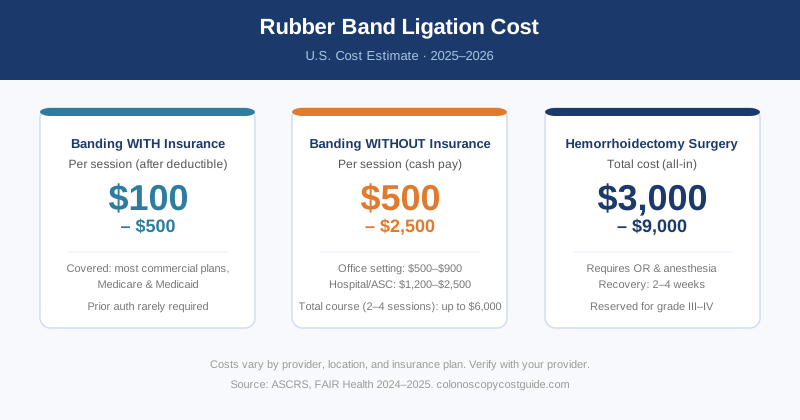
Rubber Band Ligation Cost: $500–$2,500 for Hemorrhoid Treatment
{ if eq .Lang "zh" }{ else }{ end }A gastroenterologist quoted $1,800 for two rubber band ligation sessions — no surgery, no operating room, no anesthesia. That’s a fair deal compared to hemorrhoidectomy surgery at $3,000–$9,000. But if you haven’t met your deductible yet, you’re writing a real check. Here’s exactly what you’re paying for, what drives the price, and how insurance handles it.
What Is Rubber Band Ligation?
Rubber band ligation — also called hemorrhoid banding — is the most commonly performed office procedure for internal hemorrhoids in the United States. A small rubber band is placed at the base of the hemorrhoid using a specialized ligator device. The band cuts off blood supply to the tissue, which shrivels and falls off within 7 to 14 days. The whole thing takes about five minutes once you’re in the procedure room.
It’s done without sedation. You’ll feel pressure — sometimes a dull ache for a day or two afterward — but most people return to work the same day or the next morning. That’s a far cry from surgical hemorrhoidectomy, which requires anesthesia, an operating room, and 2–4 weeks of painful recovery.
Rubber Band Ligation Cost Breakdown
The price varies significantly depending on where you have it done and how many hemorrhoids are treated per session.
| Setting / Scenario | Cost Per Session (Cash) | Cost Per Session (Insured) |
|---|---|---|
| GI or colorectal surgeon office (1 hemorrhoid) | $500 – $900 | $100 – $250 |
| GI or colorectal surgeon office (2–3 hemorrhoids) | $800 – $1,500 | $150 – $400 |
| Hospital outpatient or ASC setting | $1,200 – $2,500 | $250 – $500 |
| Full treatment course (2–4 sessions, cash) | $1,000 – $6,000 | $200 – $1,500 |
| Hemorrhoidectomy surgery (for comparison) | $3,000 – $9,000 | $500 – $2,500 |
The biggest price driver is setting. The same CPT code billed in a physician’s office (typically $500–$900) costs two to three times more at a hospital outpatient department or ambulatory surgery center because of separate facility fees. Whenever possible, having banding done in the doctor’s office rather than a procedure suite saves real money.
What’s Included in the Bill
For a typical banding visit, you’ll see charges for:
- Office visit or consultation (CPT 99213–99214): $150–$350
- Rubber band ligation procedure (CPT 46221 for the first hemorrhoid, CPT 46945 or 46946 for multiple): $350–$900
- Facility fee (only if done in an ASC or hospital): $400–$1,200 additional
If the banding is performed during the same visit as a colonoscopy, the billing gets more complicated — your insurer may apply a multiple-procedure discount, which can lower the hemorrhoid banding reimbursement. Ask upfront whether banding will be a separate charge if it’s done at the same time as another procedure.
How Many Sessions Do You Actually Need?
Most patients need 2–4 sessions, spaced 4–8 weeks apart. Each session treats 1–3 hemorrhoids — colorectal surgeons typically band one hemorrhoid per session to minimize post-procedure pain and risk of complications.
The American Society of Colon and Rectal Surgeons (ASCRS) reports long-term success rates of 70–85% for grade I–III hemorrhoids treated with banding. Grade IV hemorrhoids — the ones that can’t be manually pushed back in — don’t respond as well to banding and are more likely to need surgery.
If you need three sessions at $800 each, you’re looking at $2,400 total cash. Still well under the floor for surgical hemorrhoidectomy, which starts around $3,000 even at an ambulatory surgery center.
What Makes Banding Fail (And When Surgery Becomes Necessary)
Banding has real limits. It doesn’t work for:
- Grade IV hemorrhoids (permanently prolapsed, can’t be reduced)
- External hemorrhoids (banding is only for internal hemorrhoids — placing a band on external tissue causes severe pain)
- Large, mixed internal/external hemorrhoids that extend below the dentate line
If banding fails after 3–4 sessions, or if you have external components to your hemorrhoids, a colorectal surgeon will likely recommend hemorrhoidectomy. The surgery has a higher cure rate — above 95% — but the cost, recovery, and postoperative pain are substantially greater.
Rubber Band Ligation vs. Hemorrhoidectomy: The Cost Comparison
This is the decision most patients with grade III hemorrhoids face. Banding is almost always the right first step economically and medically.
| Factor | Rubber Band Ligation | Hemorrhoidectomy Surgery |
|---|---|---|
| Cash cost (total course) | $500 – $6,000 | $3,000 – $9,000 |
| Insured out-of-pocket | $100 – $1,500 | $500 – $2,500 |
| Recovery time | 1–2 days per session | 2–4 weeks |
| Anesthesia required? | No | Yes |
| Success rate (grade I–III) | 70–85% | 95%+ |
| Recurrence rate | ~20–30% over 5 years | ~5% over 5 years |
| Done in a doctor’s office? | Yes | No — OR required |
Hemorrhoidectomy’s higher recurrence-free rate comes at a cost — in both dollars and recovery pain. Most colorectal surgeons recommend exhausting banding (typically 3–4 sessions) before recommending surgery for grade II–III disease.
Does Insurance Cover Rubber Band Ligation?
Yes — almost universally, when the procedure is medically necessary. Most commercial plans, Medicare, and Medicaid cover banding for symptomatic internal hemorrhoids (bleeding, prolapse, or pain that hasn’t resolved with conservative measures).
The key requirements for insurance approval:
- Documented hemorrhoid grade and symptoms (bleeding, prolapse, discomfort)
- Trial of conservative therapy — sitz baths, dietary fiber, OTC creams — typically for 4–6 weeks
- Physician documentation of medical necessity
What you’ll actually owe depends on your plan structure:
- Before deductible: You pay the full contracted rate (usually $250–$700 per session, lower than cash price)
- After deductible, before out-of-pocket max: You pay your coinsurance — typically 20–30% of the allowed amount
- After out-of-pocket max: $0
Medicare covers banding under Part B when performed in a physician office (you pay 20% of the Medicare-approved amount after the Part B deductible). In a hospital outpatient setting, Part B applies but with the hospital’s outpatient copay structure instead.
Pre-authorization is rarely required for rubber band ligation — it’s a straightforward, well-established procedure with clear medical indications. That said, some plans require documentation of prior conservative treatment. Keep records of any sitz baths, OTC treatments, or dietary changes you’ve tried.
Recovery: What to Expect After Each Session
Banding recovery is manageable for most patients. Here’s the typical timeline:
- Day 1–2: Dull aching or pressure in the rectal area; over-the-counter pain relief (ibuprofen, acetaminophen) is usually sufficient
- Day 7–14: The banded tissue falls off — you may notice minor bleeding and tissue in the toilet, which is normal
- Week 2–4: Most patients feel fully back to normal; dietary fiber and adequate hydration help prevent straining
You should avoid heavy lifting or vigorous exercise for 2–3 days after each session. Unlike hemorrhoidectomy, there’s no wound to heal, no surgical site care, and no prescription pain management needed in most cases.
How to Keep Your Costs Down
- Have it done in the doctor’s office, not a hospital outpatient department. Facility fees at hospital-affiliated outpatient clinics can add $500–$1,200 per session. A private colorectal surgery or GI practice is nearly always cheaper for the same procedure.
- Ask how many hemorrhoids can be treated per session. Some practices treat two or three hemorrhoids per visit — that can reduce the total number of sessions (and total cost) for multi-hemorrhoid disease.
- Use your HSA or FSA to pay pre-tax dollars — rubber band ligation qualifies as a medical expense under IRS rules.
- Negotiate a cash-pay discount if you’re uninsured. Many colorectal practices offer 20–30% discounts for prompt cash payment. Ask explicitly before your first appointment.
- Check if the banding can be combined with an existing colonoscopy visit. If you’re already scheduled for a colonoscopy, your GI doctor may band internal hemorrhoids at the same visit — potentially saving you a separate procedure day.
Rubber band ligation is genuinely cost-effective for most patients with grade I–III internal hemorrhoids. You’re trading a modest number of short outpatient visits for a surgical procedure that costs three to five times as much and puts you out of commission for weeks. For the majority of people, banding works — and it works without breaking the bank.
{ if eq .Lang "zh" }