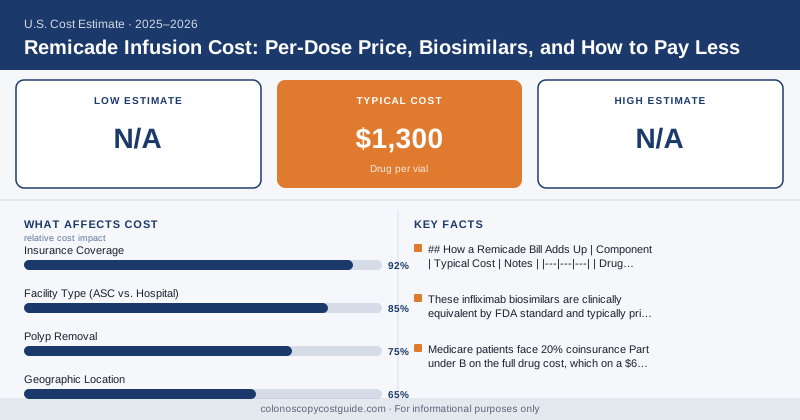
Remicade Infusion Cost: Per-Dose Price, Biosimilars, and How to Pay Less
What does a Remicade infusion actually cost? It’s not one number — it’s three stacked on top of each other, and that’s exactly why patients get blindsided. The drug, the dose math, and the facility fee combine to put a single infusion anywhere from $5,000 to $10,000 at list price.
Remicade is the brand name for infliximab, an anti-TNF biologic the FDA first approved for Crohn’s disease in 1998 — one of the original IBD biologics. Because it’s dosed by body weight and delivered by IV, the cost varies more from patient to patient than a fixed-dose pen does.
How a Remicade Bill Adds Up
| Component | Typical Cost | Notes |
|---|---|---|
| Drug per vial | $1,300-$2,500 | List price; multiple vials per dose |
| Full weight-based dose | $4,000-$8,000 | More vials for heavier patients |
| Infusion facility fee | $500-$2,000 | Hospital outpatient costs most |
| Infliximab biosimilar (drug) | ~30-50% less | Inflectra, Renflexis, Avsola |
| Medicare Part B | 20% coinsurance | Lower with supplement |
Because dosing is milligrams per kilogram, a larger patient simply needs more vials, and the cost rises with them. Add the facility fee — much higher at a hospital outpatient department than a clinic — and you can see why two patients on the same drug get wildly different bills.
Biosimilars Are the Big Lever
Remicade was among the first biologics to face biosimilar competition. Inflectra and Renflexis arrived in 2016-2017, and Avsola followed in 2019. These infliximab biosimilars are clinically equivalent by FDA standard and typically priced 30-50% below brand Remicade.
Key Takeaway
What Insured Patients Pay
Janssen offers copay assistance for commercially insured Remicade patients, which can bring per-infusion out-of-pocket way down. But because infusions are usually billed under the medical benefit, the math differs from an oral drug at the pharmacy counter — confirm with your infusion center how your plan processes it.
Medicare patients face 20% coinsurance under Part B on the full drug cost, which on a $6,000 dose is $1,200 per infusion before any supplement. A Medigap or Advantage plan can cover that. Copay cards aren’t permitted for Medicare beneficiaries.
Remicade Among the Other Biologics
Remicade is one anti-TNF option among many for IBD. To see how it stacks up against newer agents, our Crohn’s disease biologic medication cost guide compares the full class. If your diagnosis is ulcerative colitis, the ulcerative colitis medication cost breakdown shows where infliximab fits.
Before any biologic, insurers usually require a trial of cheaper drugs. The mesalamine medication cost guide covers that first step. And if medication can’t keep your Crohn’s in check, our Crohn’s disease surgery cost guide lays out the alternative.
Prior Authorization and Infusion Schedule
Remicade requires prior authorization with a confirmed diagnosis, usually backed by colonoscopy or biopsy records. The loading schedule is front-loaded: infusions at weeks 0, 2, and 6, then every 8 weeks. Each visit runs a couple of hours with monitoring, which is part of what the facility fee pays for.
The layered, hard-to-predict billing should feel familiar if you’ve ever gotten a surprise procedure bill — it’s the same dynamic we unpack in why is colonoscopy so expensive.
The Bottom Line
A Remicade infusion can list at $5,000 to $10,000, but the biosimilar you use and the site you use it at decide most of your real cost. Insured patients with copay help often pay far less, while Medicare patients face 20% Part B coinsurance. The smartest moves: ask about an infliximab biosimilar and choose a freestanding infusion center over a hospital. Get a written estimate covering the drug, the dose, and the facility fee before you sit in the chair.