Rectal Fistula Seton Cost: What Anal Fistula Surgery Really Runs
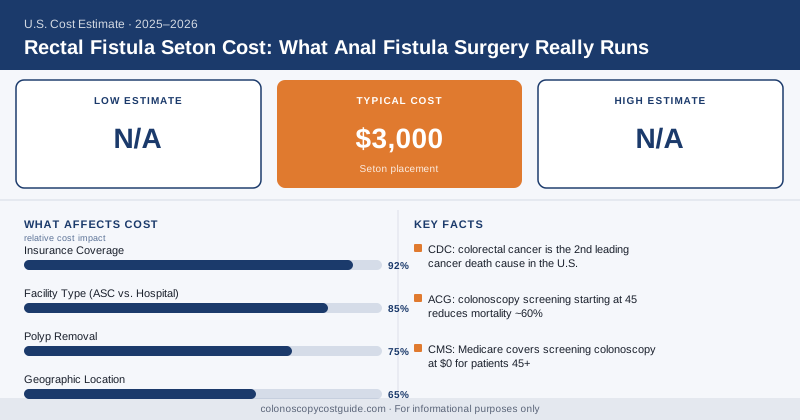
{ if eq .Lang "zh" }{ else }{ end }A seton is basically a surgical thread looped through a fistula tunnel — a low-tech fix for a stubborn problem. What’s not low-tech is the bill: placing one runs $3,000 to $9,000, and that’s often just the first stage of treatment. Anal fistulas are a multi-step game, and the cost reflects that.
An anal fistula is an abnormal tunnel that forms between the inside of the anal canal and the skin near the anus, usually after an abscess. The condition is more common than people think — it frequently follows an anorectal abscess, and it’s especially common in people with Crohn’s disease. The American College of Gastroenterology and colorectal surgical literature both note that complex fistulas often can’t be fixed in a single operation, which is exactly why the seton exists.
Why a seton, and what it costs
A seton drains the tract and keeps it from re-abscessing while the surgeon plans definitive repair. Sometimes it’s “cutting” (gradually divides the muscle), sometimes “draining” (just keeps it open). Either way, it’s an outpatient procedure.
| Procedure | Typical Cost |
|---|---|
| Seton placement | $3,000–$9,000 |
| Simple fistulotomy | $3,000–$8,000 |
| LIFT procedure | $5,000–$12,000 |
| Advancement flap repair | $7,000–$15,000 |
| Fibrin glue / plug | $2,500–$7,000 |
If your fistula started as an abscess, you may have already paid for drainage. Our anorectal abscess drainage cost guide covers that earlier stage.
The multi-stage cost reality
Here’s the part that surprises people. Complex fistulas — ones that cross a lot of muscle — usually aren’t fixed in one shot. The typical path is: drain the abscess, place a seton, let things calm down for weeks or months, then do a definitive repair like a LIFT procedure or advancement flap. Each step is its own outpatient procedure with its own facility and anesthesia bill.
Key Takeaway
The Crohn’s complication
If your fistula is related to Crohn’s disease, the cost picture shifts. These fistulas are harder to heal and often need biologic medication to control the underlying inflammation, on top of the surgical work. That can add substantial ongoing drug costs. Our perianal Crohn’s treatment cost discussion belongs on your reading list if that’s your situation, and the broader diverticulitis treatment cost guide gives context on how inflammatory bowel conditions drive bills up.
Insurance and out-of-pocket
Anal fistula repair is unambiguously medically necessary, so insurance and Medicare cover it. Because it’s usually outpatient, your out-of-pocket is your deductible plus coinsurance for each procedure. With a multi-stage plan, you may hit your deductible early and then owe less on later stages within the same plan year — timing your procedures around the calendar can genuinely save money.
If you’re uninsured, ask the surgery center for a bundled cash price per procedure, and find out whether the surgeon, facility, and anesthesia are billed separately. Our colonoscopy cost without insurance guide covers the same negotiation principles that apply to any outpatient GI procedure.
Putting a number on it
- Simple, low fistula: single fistulotomy, $3,000–$8,000.
- Complex fistula: seton first, definitive repair later, $8,000–$20,000 total.
- Crohn’s-related fistula: add ongoing biologic costs on top of the surgical total.
Anal fistulas are frustrating because they don’t always cooperate with a single fix. Go in expecting a plan, not a procedure, ask your colorectal surgeon how many stages they anticipate, and time your treatments around your insurance year where you can.
{ if eq .Lang "zh" }