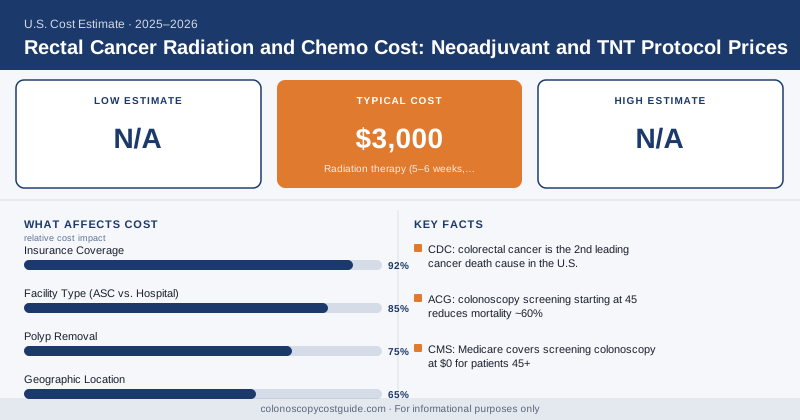
Rectal Cancer Radiation and Chemo Cost: Neoadjuvant and TNT Protocol Prices
{ if eq .Lang "zh" }{ else }{ end }Rectal cancer is one of the few cancers usually treated backwards from what you’d expect — chemo and radiation come before surgery, not after. There’s a smart reason for it, and it has big implications for both your outcome and your bill. Let’s walk through how this works and what it costs.
Shrinking the tumor first improves surgical results and can sometimes save you from a permanent colostomy. The American Cancer Society estimated about 46,000 new rectal cancer cases in the U.S. in 2024, and the combined-modality approach is now the standard for locally advanced disease. Here’s the cost picture.
Chemoradiation Costs for Rectal Cancer
| Treatment Component | Typical Total Charge | Average Patient OOP (Insured) |
|---|---|---|
| Radiation therapy (5–6 weeks, conventional) | $25,000 – $60,000 | $3,000 – $12,000 |
| Short-course radiation (5 days) | $15,000 – $35,000 | $2,000 – $9,000 |
| Concurrent chemotherapy (capecitabine or 5-FU) | $10,000 – $40,000 | $2,000 – $9,000 |
| Total neoadjuvant therapy (TNT, full course) | $80,000 – $150,000 | $7,000 – $16,000 |
| Combined chemoradiation (standard) | $60,000 – $120,000 | $5,000 – $16,000 |
These are list charges. Because treatment spans multiple weeks and almost always crosses your full deductible, most insured patients pay their annual out-of-pocket maximum for the year.
Why “Before Surgery” Matters for Cost and Outcome
Key Takeaway
The radiation side parallels the pricing in our broader colorectal cancer radiation cost guide, and the chemo backbone follows our colon cancer chemotherapy cost breakdown.
What Comes After
Once chemoradiation shrinks the tumor, surgery removes what remains. Those costs are detailed in our rectal cancer surgery cost guide. Some patients with a complete response to chemoradiation now qualify for a “watch and wait” approach, skipping surgery entirely under close monitoring — which can lower total cost, though it requires intensive surveillance.
The whole sequence fits into the staged framework in our colon cancer treatment cost by stage guide.
What Drives Your Total
Protocol choice. Short-course radiation (5 days) costs less than long-course (5–6 weeks), but your team picks based on your tumor, not the price.
TNT vs. traditional sequencing. TNT gives more treatment up front, which can raise charges but improves results.
Side-effect management. Pelvic radiation can cause skin reactions, fatigue, and bowel symptoms that need supportive care and medication.
Insurance Coverage
Chemoradiation for rectal cancer is covered by all major insurance:
- Commercial plans: Deductible and coinsurance up to your annual OOP max. Multi-week treatment almost always hits the cap.
- Medicare: Part B covers outpatient radiation and chemo; Part D covers oral chemo like capecitabine. The 2025 Part D out-of-pocket cap is $2,000.
- Medicaid: Covers treatment with little to no out-of-pocket cost.
The Bottom Line
Combined radiation and chemo for rectal cancer costs $60,000–$150,000 over a full course, but with insurance most patients pay their annual out-of-pocket maximum and nothing more. The “treatment before surgery” approach isn’t just standard practice — it can mean a smaller operation, a better outcome, and a real shot at avoiding a permanent colostomy. That makes it one of the better values in cancer care, even at these prices.
{ if eq .Lang "zh" }