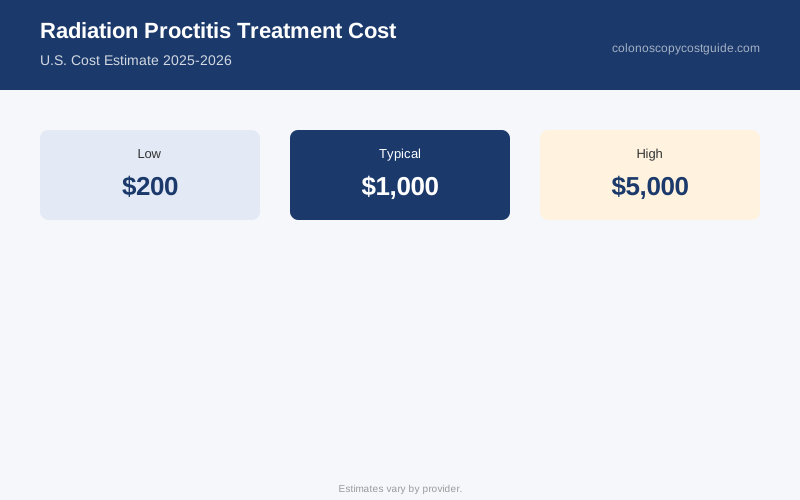
Radiation Proctitis Treatment Cost: What Prostate and Rectal Cancer Patients Pay
Most prostate cancer survivors aren’t warned that rectal bleeding could start months or even years after radiation ends. Radiation proctitis — damage to the rectal lining from pelvic radiation — affects an estimated 5–20% of patients who receive pelvic radiation therapy, according to the American Society for Gastrointestinal Endoscopy (ASGE). For many, it’s a manageable nuisance. For others, it means repeated procedures, specialist visits, and costs that catch them completely off guard.
What Is Radiation Proctitis?
Radiation proctitis is inflammation and damage to the rectum caused by radiation therapy for prostate, cervical, rectal, or other pelvic cancers. It comes in two forms:
Acute radiation proctitis: Occurs during or within weeks of radiation treatment. Symptoms include diarrhea, urgency, and rectal discomfort. Usually resolves within 3 months. Treatment costs are modest.
Chronic radiation proctitis: Develops months to years after treatment (median onset: 8–12 months post-radiation). Causes rectal bleeding, urgency, tenesmus, and in severe cases, fistulas or strictures. This is the form that drives significant healthcare costs.
Diagnostic Costs
Evaluation typically begins with sigmoidoscopy or colonoscopy to assess the extent and severity of mucosal damage.
| Diagnostic Step | Typical Cost (Uninsured) |
|---|---|
| GI specialist / colorectal surgery consult | $200 – $450 |
| Flexible sigmoidoscopy | $500 – $2,500 |
| Colonoscopy (if more proximal disease suspected) | $1,500 – $4,500 |
| Rectal biopsy (pathology) | $150 – $500 |
| CT scan (if fistula or obstruction suspected) | $500 – $2,500 |
| Anorectal manometry (if continence affected) | $500 – $1,500 |
Conservative Treatment Costs
Dietary modification: Low-fat, low-fiber diet during acute phase — minimal cost.
Sucralfate enemas: Coats the rectal mucosa and helps control bleeding. Compounded sucralfate enemas (not commercially available in standard form): $50–$150/month from compounding pharmacies. Generic sucralfate suspension used in enema form: approximately $30–$80/month.
Mesalamine (5-ASA) enemas: Originally for ulcerative colitis, used off-label for radiation proctitis. Generic mesalamine enemas (Rowasa generic): $80–$200/month with insurance copay; $200–$600/month without.
Metronidazole: Short courses sometimes prescribed for acute symptom management. Generic: $10–$30 per course.
Antidiarrheals (loperamide): For diarrhea/urgency. Generic: $5–$15/month.
For mild-to-moderate chronic radiation proctitis managed conservatively: $100–$800/month depending on medications used.
Endoscopic Treatment Costs
When conservative management fails to control bleeding, endoscopic therapy is the standard next step.
Argon plasma coagulation (APC): The most widely used endoscopic treatment for radiation proctitis bleeding. A flexible scope delivers argon gas and electrical current to coagulate bleeding vessels in the rectal mucosa. Multiple sessions are often needed.
| Endoscopic Treatment | Cost Per Session (Uninsured) |
|---|---|
| APC during flexible sigmoidoscopy | $1,500 – $4,500 |
| APC during colonoscopy | $2,000 – $5,500 |
| Formalin instillation (alternative to APC) | $800 – $2,500 |
| Nd:YAG laser coagulation | $2,000 – $5,000 |
| Radiofrequency ablation (RFA) | $2,500 – $6,000 |
Most patients require 2–4 APC sessions spaced 4–6 weeks apart. Total APC treatment course: $6,000 – $18,000 uninsured.
Insurance coverage for APC: Medicare covers argon plasma coagulation during colonoscopy or sigmoidoscopy (CPT 45382 + applicable APC code) for GI bleeding treatment. Most commercial insurers follow suit. With insurance, patient out-of-pocket per session is typically $200–$800 depending on deductible and coinsurance.
Hyperbaric Oxygen Therapy (HBOT)
Hyperbaric oxygen — breathing 100% oxygen in a pressurized chamber — promotes healing of hypoxic, radiation-damaged tissue. It’s used for severe or refractory radiation proctitis when other treatments have failed.
Cost per session: $300 – $600 (facility-dependent) Standard treatment course: 20–40 sessions Total course cost: $6,000 – $24,000
Insurance coverage: Medicare covers HBOT for radiation tissue damage (osteoradionecrosis, soft tissue radionecrosis) — CPT 99183. Commercial coverage varies; Aetna, BCBS, and UnitedHealthcare have positive coverage policies for radiation proctitis HBOT with documented treatment-refractory bleeding. Prior authorization is required and documentation of failed first and second-line treatments is necessary.
HBOT Insurance Authorization: What You Need
To get commercial insurance approval for HBOT for radiation proctitis, your provider should document:
- Personal history of pelvic radiation therapy with dates
- Duration and severity of rectal bleeding symptoms
- Prior endoscopic treatment (APC or equivalent) with insufficient response
- Physician attestation of tissue radiation injury
- Most plans require 2+ prior APC sessions with persistent bleeding before approving HBOT
Surgical Treatment Costs
Severe radiation proctitis with strictures, fistulas, or uncontrollable bleeding may ultimately require surgery.
Diverting colostomy: Creates a temporary or permanent stoma to allow the rectum to rest and heal. Surgical cost: $15,000 – $30,000. Ongoing ostomy supply costs: $200 – $600/month.
Proctectomy (rectal resection): Removes the damaged rectum entirely. Major surgery with significant recovery. Cost: $25,000 – $60,000+ for elective cases.
Surgery for radiation proctitis is a last resort — the tissue’s poor vascularity makes healing difficult and complications more likely. Most gastroenterologists and colorectal surgeons exhaust all endoscopic and HBOT options before recommending surgical intervention.
Total Cost by Severity
Mild chronic radiation proctitis (bleeding, no transfusion need): Annual cost: $500–$3,000 (GI visits + conservative medications)
Moderate chronic radiation proctitis (requires endoscopic treatment): First-year treatment cost: $6,000–$20,000 (diagnostic workup + 2–4 APC sessions) With insurance: $1,000–$5,000 out of pocket
Severe refractory radiation proctitis (HBOT + possible surgery): Multi-year treatment cost: $15,000–$60,000+ With insurance: $5,000–$20,000+ depending on plan limits
Finding Specialized Care
Radiation proctitis is uncommon enough that treatment expertise varies significantly. University-based GI programs and cancer center GI teams with dedicated inflammatory bowel specialists have the highest volume of APC experience for this condition. If you’re not getting adequate bleeding control, a second opinion at a major cancer center GI department is worth pursuing.
Patient advocacy resources: the Prostate Cancer Foundation and the Rectal Cancer Association both maintain physician directories and can help connect patients with high-volume treatment centers.