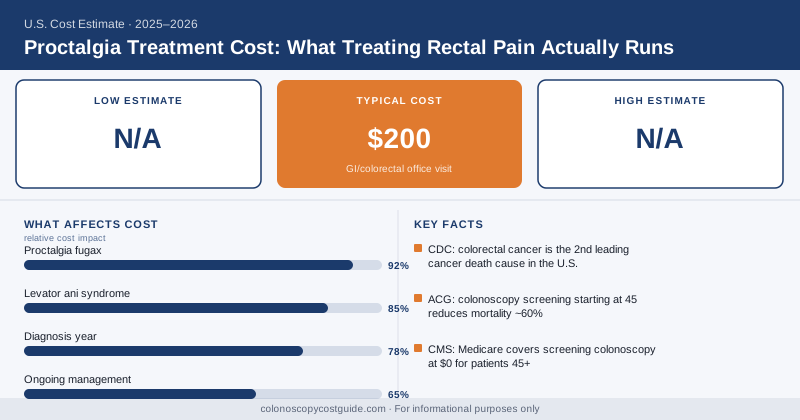
Proctalgia Treatment Cost: What Treating Rectal Pain Actually Runs
{ if eq .Lang "zh" }{ else }{ end }There’s a condition that wakes people up at night with sudden, stabbing rectal pain, sends them to the ER convinced something is seriously wrong, and then vanishes within minutes leaving no trace. It’s called proctalgia fugax, and the most expensive part of treating it is proving it’s nothing dangerous.
Proctalgia refers to functional rectal pain syndromes — chronic proctalgia (levator ani syndrome) and the fleeting proctalgia fugax. They’re functional disorders, meaning no structural cause shows up on tests. The NIDDK and Rome Foundation classify these among the functional anorectal disorders, and surveys suggest proctalgia fugax affects a notable slice of the general population, though most never seek care. Because there’s nothing to “see,” diagnosis is about ruling out the dangerous stuff.
The expensive part: ruling things out
Proctalgia is a diagnosis of exclusion. Your doctor has to make sure the pain isn’t from a fissure, abscess, hemorrhoids, or something more serious before landing on a functional diagnosis.
| Workup Step | Typical Cost |
|---|---|
| GI/colorectal office visit | $200–$450 |
| Digital exam + anoscopy | $150–$400 |
| Anorectal manometry | $400–$1,200 |
| Colonoscopy (rule out other causes) | $1,250–$4,800 |
| Pelvic MRI (selected cases) | $1,000–$3,000 |
That colonoscopy is often the biggest single line item, especially if you’re at screening age anyway. Our colonoscopy cost guide breaks it down, and since hemorrhoids are one of the first things ruled out, our hemorrhoid treatment cost guide is worth a quick look too.
The treatments are cheap
Here’s the good news. Once dangerous causes are excluded, the actual treatments for proctalgia are among the most affordable in all of GI.
| Treatment | Typical Cost |
|---|---|
| Muscle relaxants (diazepam, generic) | $20–$60/month |
| Topical nitroglycerin/calcium channel cream | $30–$120 |
| Warm sitz baths | Under $30 (home) |
| Biofeedback therapy (full course) | $1,500–$4,000 |
| Botox injection (refractory cases) | $1,000–$2,500 |
| Sacral nerve stimulation (rare, severe) | $20,000–$35,000 |
Key Takeaway
Chronic vs. fleeting — different treatment, different cost
The two syndromes diverge on treatment:
- Proctalgia fugax (brief, intense, infrequent attacks) often needs no ongoing treatment — reassurance plus an as-needed muscle relaxant or topical. Cost: minimal.
- Levator ani syndrome (chronic aching, worse sitting) responds best to biofeedback and pelvic floor therapy, which is the priciest routine treatment at $1,500–$4,000 for a full course but still modest compared to surgery.
Insurance and the realistic budget
Once the diagnosis is made, the treatments are medically necessary and covered. The biofeedback piece sometimes requires documentation that you’ve tried simpler measures first, but it’s generally covered for levator ani syndrome.
A realistic budget looks like:
- Diagnosis year: $2,000–$6,000 if it includes a colonoscopy and anorectal testing.
- Ongoing management: often under $500 a year — sometimes just an as-needed cream or relaxant.
- Biofeedback course (if needed): a one-time $1,500–$4,000.
If you’re uninsured, the workup is the part to manage carefully — cash-pay colonoscopy pricing and bundled visit fees. Our colonoscopy cost without insurance guide covers how to keep that down.
Bottom line
Proctalgia is frightening to experience and cheap to treat. The money goes toward ruling out the scary possibilities, not toward the management itself. Get a thorough workup once, get the reassurance that it’s functional, and then settle into a low-cost routine. For most people, the most expensive thing about proctalgia is the worry before the diagnosis.
{ if eq .Lang "zh" }