PPI Medication Cost: Omeprazole, Pantoprazole, and Brand Prices in 2026-2026
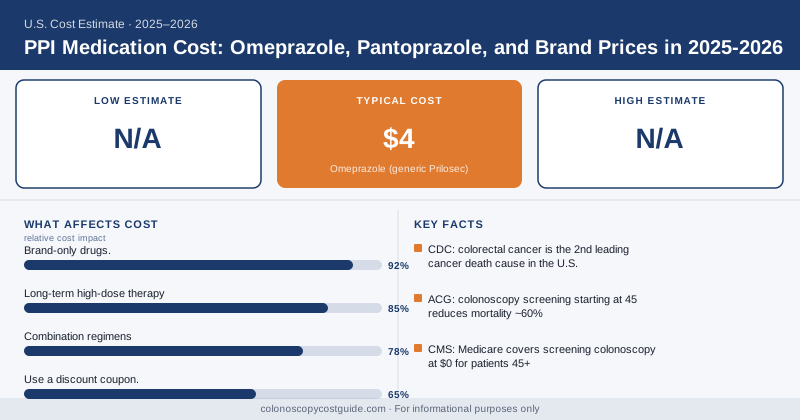
{ if eq .Lang "zh" }{ else }{ end }Here’s a rare bit of good news in the world of GI drug prices: proton pump inhibitors are cheap. A month of generic omeprazole can cost less than a fast-food lunch — $4 to $15 with a coupon. The trap is the brand-name versions, where the exact same drug class can cost $300 or more. Knowing the difference is most of the battle.
PPIs are the backbone of acid-reflux and GERD treatment, suppressing stomach acid far more effectively than antacids. The class has been around since omeprazole’s FDA approval in 1989, and most members went generic years ago. According to KFF analyses of prescription pricing, generic competition is exactly what drives costs this low.
PPI Cost Comparison
| Drug | Type | Typical Monthly Cost | Notes |
|---|---|---|---|
| Omeprazole (generic Prilosec) | Generic | $4-$15 | Also available OTC |
| Pantoprazole (generic Protonix) | Generic | $4-$15 | Common after endoscopy |
| Esomeprazole (generic Nexium) | Generic | $10-$25 | OTC version available |
| Lansoprazole (generic Prevacid) | Generic | $10-$20 | OTC version available |
| Dexilant (dexlansoprazole) | Brand | $300+ | No generic; rarely needed |
Notice the pattern: the generics cluster under $25 a month, while the lone brand-only holdout, Dexilant, sits in a different universe. Most patients do just as well on a cheap generic, so the brand premium is usually avoidable.
OTC vs. Prescription
Several PPIs are sold over the counter — Prilosec OTC, Nexium 24HR, Prevacid 24HR. The OTC versions are lower-dose but cost $10 to $20 for a two-week course and skip the prescription and copay structure entirely.
Key Takeaway
When PPIs Get Expensive
Three situations push PPI costs up:
- Brand-only drugs. Dexilant has no generic, so it stays pricey.
- Long-term high-dose therapy for conditions like Barrett’s esophagus, where you may take a PPI indefinitely — small monthly costs add up over years.
- Combination regimens for H. pylori, where a PPI is bundled with antibiotics in a more expensive packaged product.
Even at their priciest, PPIs are a rounding error next to the biologics used for inflammatory bowel disease — compare them to the figures in our Crohn’s disease biologic medication cost guide and the difference is jaw-dropping.
PPIs in the GERD Treatment Picture
A PPI is usually the centerpiece of GERD therapy, but it’s not the only cost. For the full breakdown including diagnostics and procedures, see our GERD treatment cost guide. Reflux symptoms also overlap with IBS treatment cost, and patients sometimes get worked up for both at once.
If your reflux gets investigated with an upper endoscopy or colonoscopy, the procedure cost dwarfs the drug. Our colonoscopy cost guide explains how those facility-driven bills compare to a $10 prescription.
How to Pay Less
Even though PPIs are cheap, you can pay less:
- Use a discount coupon. GoodRx and similar tools often beat your insurance copay on generics.
- Buy OTC if your dose allows it — no copay, no prescription.
- Ask for a 90-day supply. Generic 90-day fills frequently cost barely more than a 30-day fill.
- Try a different generic in the class. If one PPI is unexpectedly pricey on your plan, another generic in the same family usually works just as well and may sit on a cheaper tier.
A quick word on long-term use: PPIs are safe for most people, but guidelines from the American College of Gastroenterology suggest taking the lowest effective dose for the shortest time that controls your symptoms. That’s good medicine and good budgeting — if you can step down to an as-needed schedule or a lower dose, your already-small monthly cost drops even further.
The Bottom Line
PPIs are one of the few GI drug categories where cost isn’t a real obstacle. Generic omeprazole or pantoprazole runs $4 to $15 a month, OTC options are similar, and a discount coupon often beats your copay. The only thing to avoid is paying $300 for a brand-name PPI when a clinically equivalent generic does the same job. Compare your copay to the cash price before every fill, and ask your doctor whether a generic covers your needs.
{ if eq .Lang "zh" }