Portal Hypertension Treatment Cost: Managing the Pressure in 2026
{ if eq .Lang "zh" }{ else }{ end }Portal hypertension is one of those conditions where the name sounds abstract until you understand what it does. The vein carrying blood from your gut to your liver gets backed up, usually because of cirrhosis, and the rising pressure forces blood into fragile detour veins that can rupture and bleed. That risk of bleeding is what drives both the urgency and the cost of treatment.
The CDC counts chronic liver disease and cirrhosis among the leading causes of death for U.S. adults, with over 55,000 deaths in a recent year, and portal hypertension is the mechanism behind many of its most dangerous complications. Here’s what managing it costs.
What you’re treating, and paying for
Treatment has two goals: lower the pressure and prevent bleeding from those swollen veins (varices). The approach ranges from cheap daily pills to major procedures.
| Treatment | Cost (Uninsured) | With Insurance |
|---|---|---|
| Beta-blocker medication | $4 – $60/mo | $0 – $25/mo |
| Screening endoscopy | $1,500 – $4,000 | $400 – $1,500 |
| Variceal band ligation | $3,000 – $12,000 | $800 – $3,500 |
| TIPS shunt procedure | $20,000 – $50,000 | up to OOP max |
| Paracentesis (fluid drainage) | $1,000 – $5,000 | $300 – $1,500 |
| Hospitalization for bleeding | $25,000 – $70,000+ | up to OOP max |
The cheap end: medication
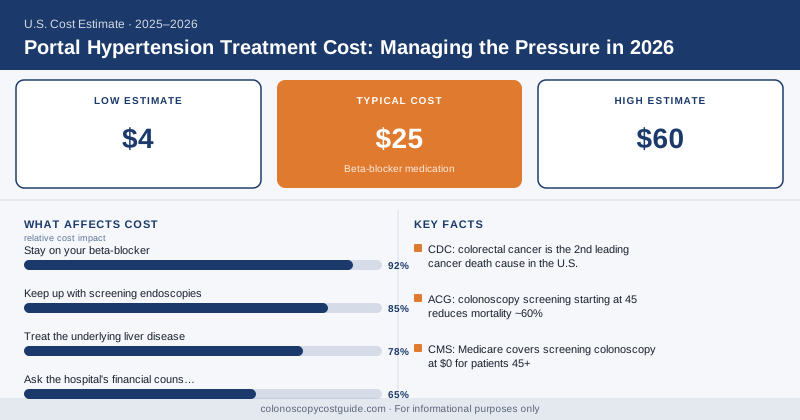
For many patients, the first-line treatment is a non-selective beta-blocker, an inexpensive generic that lowers portal pressure and reduces bleeding risk. At a few dollars a month, it’s one of the best values in liver care. This is the affordable backbone of management.
Diuretics for related fluid buildup are similarly cheap. So if your portal hypertension is caught early and managed with pills, your yearly cost can stay modest.
Screening and banding
Because bleeding varices are the big danger, patients get periodic upper endoscopies to look for them, similar in setup to an ERCP or the kind of scope used in an endoscopic ultrasound. When varices are found, the gastroenterologist can band them, placing tiny rubber bands to cut off the swollen veins, during the same or a follow-up procedure. Banding often needs repeating, which adds to the cost over time.
Key Takeaway
The TIPS procedure
When medication and banding can’t control complications, doctors may place a TIPS shunt, a stent that creates a new channel through the liver to relieve pressure. It’s effective but pricey, $20,000 to $50,000 including the hospital stay, and for most insured patients it maxes out the annual out-of-pocket limit.
The underlying disease matters
Portal hypertension almost always stems from an underlying liver problem, most often cirrhosis. Managing that root cause, whether it’s treating hepatitis C or addressing other liver damage, is part of the cost picture and tracked with regular liver function tests. Slowing the underlying disease slows the portal hypertension too.
How to keep costs down
- Stay on your beta-blocker, it’s cheap and prevents expensive bleeds.
- Keep up with screening endoscopies to catch varices before they rupture.
- Treat the underlying liver disease to slow progression.
- Ask the hospital’s financial counselor about assistance if you face a TIPS or hospitalization.
The bottom line
Portal hypertension can cost as little as $3,000 a year if managed with inexpensive medication and routine screening, or surge past $50,000 in a year that involves a TIPS procedure or a bleeding emergency. The gap between those numbers is almost entirely about prevention. Daily pills and regular checkups are the cheap, smart path, and the surest way to avoid the catastrophic costs that come with an uncontrolled bleed.
{ if eq .Lang "zh" }