Perianal Crohn's Treatment Cost: Biologics, Surgery, and the Real Total
{ if eq .Lang "zh" }{ else }{ end }Sarah, 29, had three fistula surgeries that kept failing before anyone told her the real problem: the surgery was never going to work without controlling her Crohn’s disease first. That’s the central truth of perianal Crohn’s — and it’s also why the cost is dominated not by the operating room but by the pharmacy, where biologics run $30,000 to $80,000+ a year.
Perianal Crohn’s disease is when Crohn’s causes fistulas, abscesses, and tunnels around the anus. The Crohn’s & Colitis Foundation notes that perianal disease affects a substantial share of Crohn’s patients — by some estimates a quarter or more develop it over the course of their disease. And the CDC counts inflammatory bowel disease among the chronic conditions affecting roughly 3 million U.S. adults. Treating the perianal piece means treating the whole disease.
The cost driver: biologics
Surgery alone rarely heals perianal Crohn’s fistulas because the inflammation keeps reopening them. The standard of care is biologic therapy — usually an anti-TNF drug like infliximab (Remicade) or adalimumab (Humira) — to control the disease so the tissue can actually heal.
| Biologic | Annual List Price |
|---|---|
| Infliximab (Remicade/biosimilar) | $25,000–$45,000 |
| Adalimumab (Humira/biosimilar) | $40,000–$80,000 |
| Ustekinumab (Stelara) | $50,000–$90,000 |
| Vedolizumab (Entyvio) | $40,000–$70,000 |
Those are list prices. What you actually pay depends entirely on insurance and copay assistance. For more on how these drugs are priced and covered, our broader diverticulitis treatment cost and IBS treatment cost guides give context on GI medication economics.
The surgical side
Even with biologics doing the heavy lifting, most people need surgical management of the fistulas and abscesses themselves.
| Procedure | Typical Cost |
|---|---|
| Examination under anesthesia (EUA) | $3,000–$7,000 |
| Abscess drainage | $2,500–$6,000 |
| Seton placement | $3,000–$9,000 |
| Advancement flap / LIFT repair | $7,000–$15,000 |
The seton-then-biologic combination is the modern approach — drain and stabilize surgically, then let the biologic control inflammation. Our rectal fistula seton cost guide covers the surgical staging in depth, and anorectal abscess drainage cost covers the abscess stage.
Key Takeaway
How people actually afford the biologics
The list prices are terrifying, but very few patients pay them. Here’s how the math usually works:
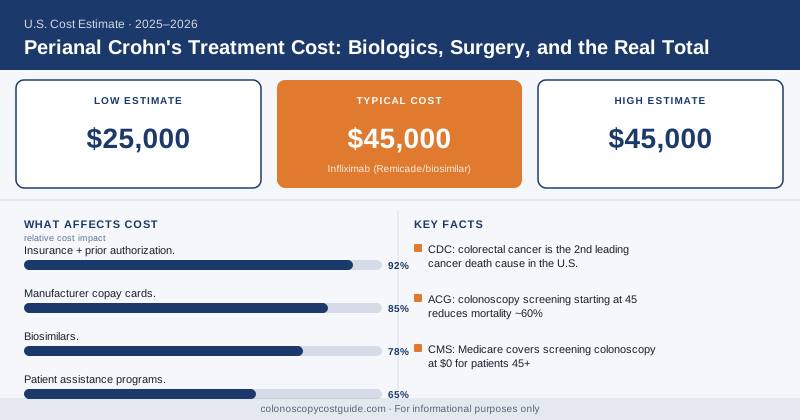
- Insurance + prior authorization. Plans cover biologics for documented Crohn’s after paperwork.
- Manufacturer copay cards. For commercially insured patients, these can drop out-of-pocket to as little as $0–$5 per dose for drugs like Humira and Stelara.
- Biosimilars. Infliximab and adalimumab biosimilars have meaningfully cut costs in recent years.
- Patient assistance programs. For the uninsured, drugmakers offer free or deeply discounted medication based on income.
Realistic out-of-pocket
For an insured patient with copay assistance, the annual reality might be:
- Biologic: a few hundred dollars or less out of pocket
- Surgical procedures: deductible plus coinsurance, often $2,000–$6,000 in a year with surgery
- Imaging (pelvic MRI to map fistulas): $1,000–$3,000
So even with a six-figure list price hanging over the treatment, a well-insured patient with assistance might spend $2,000–$8,000 in a year that includes surgery, and far less in a maintenance year.
The bottom line
Perianal Crohn’s is expensive on paper and manageable in practice, but only if you treat the disease and not just the symptoms. The biologic is the real cost, the surgery is the supporting act, and copay assistance is the lever that makes it affordable. Don’t let the list prices scare you off therapy — let your care team help you access the programs that bring it down.
{ if eq .Lang "zh" }