Pelvic Floor Therapy Cost: What You'll Pay for Bowel Dysfunction Treatment
$150 per session sounds expensive until you realize the alternative might be surgery. Pelvic floor physical therapy is the first-line, evidence-based treatment for fecal incontinence — a condition affecting an estimated 1 in 3 patients seen in primary care practices, according to the American College of Gastroenterology (ACG). Despite that prevalence, most patients don’t know it exists, and most providers don’t bring it up.
Here’s what it costs, what it covers, and what you can realistically expect insurance to pay.
What Pelvic Floor Therapy Treats (GI Conditions)
When people think “pelvic floor therapy,” they often think of postpartum bladder control. But for GI patients, it’s a primary intervention for:
- Fecal incontinence — inability to control bowel movements; affects 8–9% of U.S. adults per CDC estimates
- Obstructive defecation / dyssynergic defecation — difficulty passing stool due to paradoxical pelvic floor contraction
- Levator ani syndrome — chronic rectal pain from pelvic floor muscle tension
- Post-surgical bowel dysfunction — after colectomy, rectal surgery, or ostomy reversal
- IBS-related pelvic floor dysfunction — overlapping pelvic floor and gut motility issues
- Proctalgia fugax — recurrent episodes of severe rectal pain
The treatment for these conditions is different depending on the underlying dysfunction. Fecal incontinence typically needs strengthening protocols; obstructive defecation typically needs relaxation and biofeedback training. A pelvic floor physical therapist evaluates which you need — and doing the wrong protocol can make symptoms worse.
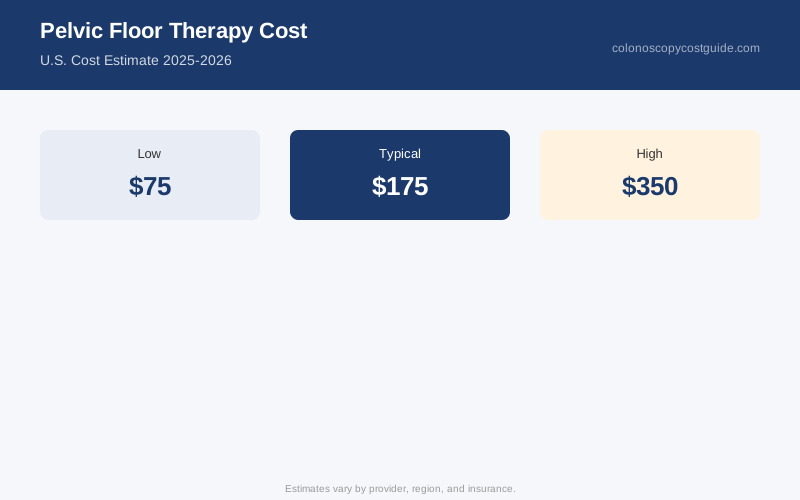
Pelvic Floor Therapy Costs Per Session
| Setting / Provider Type | Per-Session Cost Without Insurance |
|---|---|
| Outpatient PT clinic (standard) | $75 – $175 |
| Hospital outpatient PT department | $150 – $350 |
| Private pelvic floor specialist | $125 – $300 |
| Telehealth pelvic floor PT (evaluation only) | $60 – $150 |
| With biofeedback equipment during session | Add $50 – $100 per session |
| Initial evaluation (longer, first visit) | $150 – $350 |
Most patients need 6–16 sessions to see meaningful improvement. Mild fecal incontinence may resolve in 6–8 sessions; complex dyssynergic defecation may require 12–20+ sessions combined with home exercise programs.
Estimated total treatment cost (without insurance): $600–$5,600 depending on session count and provider setting.
What Insurance Covers
The good news: pelvic floor physical therapy for GI conditions is widely covered as standard outpatient physical therapy. It’s not a niche or experimental benefit — it bills under standard PT CPT codes.
CPT codes typically used:
- 97110 — Therapeutic exercises
- 97112 — Neuromuscular re-education (common for biofeedback)
- 97530 — Therapeutic activities
- 90901 — Biofeedback training (when used as a separate service)
Commercial insurance: Most plans cover outpatient PT with a $20–$50 copay per visit, subject to your deductible. Many plans have annual visit limits — typically 20–60 visits per year combined for all PT services. Confirm your PT visit limit before starting, especially if you’re using PT for other conditions too.
Medicare Part B: Covers pelvic floor PT at 80% after the Part B deductible. As of 2023, Medicare no longer has a hard PT visit dollar cap — there’s a “threshold” above which extra documentation is required, but coverage doesn’t end. You pay 20% coinsurance per session.
Medicaid: Covered in most states as medically necessary PT. Some states require prior authorization or limit the number of visits. Call your state Medicaid program or your pelvic floor PT’s billing department.
Getting Insurance to Cover Pelvic Floor PT for Bowel Issues
The referral and diagnosis coding matter for coverage:
- Get a physician referral — most insurers require a referral from your GI doctor, colorectal surgeon, or primary care physician specifying fecal incontinence or pelvic floor dysfunction as the indication
- Correct ICD-10 codes to include in your chart: R15.0 (fecal incontinence), K59.4 (anal spasm), or M62.89 (dysfunction of pelvic floor muscles)
- Find a therapist who specializes in pelvic floor — not all PT clinics have the training or equipment for anorectal biofeedback. Your GI doctor should be able to refer you specifically
- Don’t let the PT use “gynecologic” codes if your reason is bowel-related — this can trigger incorrect coverage review
Biofeedback for Fecal Incontinence: The Core Treatment
Biofeedback therapy is the cornerstone of pelvic floor PT for fecal incontinence. It uses sensors placed in or near the anal canal to give you real-time feedback on muscle contraction. You learn to consciously contract and strengthen the external anal sphincter — the muscle that controls bowel urgency and leakage.
The American Society of Colon and Rectal Surgeons (ASCRS) recommends anorectal biofeedback as first-line therapy before surgery. Studies show response rates of 50–80% for fecal incontinence with biofeedback, comparable to or better than many surgical options — at a fraction of the cost.
Without biofeedback equipment, some sessions will use manual techniques only, which reduces the per-session cost but may extend treatment time.
What Happens If PT Doesn’t Work: Cost Escalation
Pelvic floor PT is relatively cheap compared to what comes next when it fails:
| Next-Level Treatment | Typical Cost Without Insurance |
|---|---|
| Sacral nerve stimulation (InterStim) — device + surgery | $15,000 – $40,000 |
| Sphincteroplasty (anal sphincter repair) | $8,000 – $20,000 |
| Injectable bulking agents (Solesta) | $3,000 – $8,000 per injection |
| Colostomy (permanent diversion) | $15,000 – $35,000 (surgery) + supply costs |
Sacral nerve stimulation (InterStim or Axonics) is FDA-approved for fecal incontinence and is covered by Medicare and most commercial insurers — but prior authorization requires documented failure of conservative treatments including pelvic floor PT. Translation: you’ll likely need to do PT first to access the more expensive surgical options, regardless of whether it works.
Finding a Qualified Pelvic Floor PT
Not all physical therapists are trained in pelvic floor dysfunction. Look for:
- PRPC credential (Pelvic Rehabilitation Practitioner Certification) from the Herman and Wallace Pelvic Rehabilitation Institute
- CAPP-Pelvic credential from the American Physical Therapy Association (APTA)
- Ask specifically about anorectal biofeedback experience — not all pelvic floor PTs focus on bowel vs. bladder issues
Your colorectal surgeon or gastroenterologist should have a list of preferred pelvic floor PTs. Teaching hospitals and colorectal surgery programs almost always have in-house pelvic floor PT services with GI expertise.
The Bottom Line on Costs
For most insured patients, pelvic floor PT for bowel dysfunction costs $400–$1,500 out of pocket across a full treatment course. That’s a reasonable investment for a condition that can significantly impair quality of life — and a much lower cost entry point than the surgical alternatives.
If you’ve been managing fecal incontinence with Depends, dietary restriction, or just avoiding social situations, and you haven’t tried pelvic floor PT: ask your GI doctor for a referral today. The American Gastroenterological Association’s data shows it works, it’s covered by most insurance, and it’s meaningfully cheaper than what comes next if you skip it.