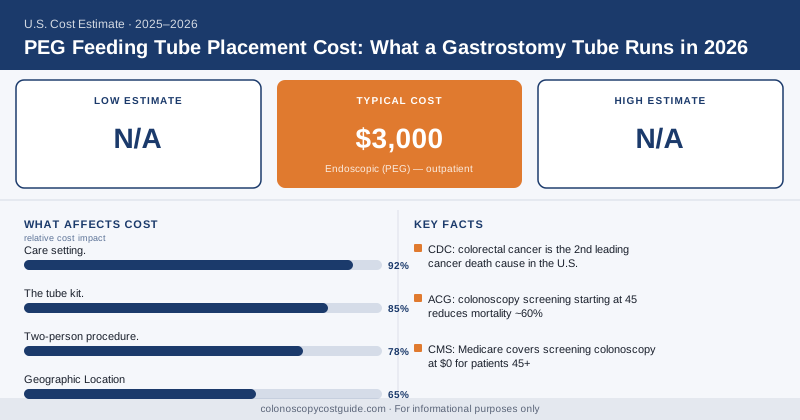
PEG Feeding Tube Placement Cost: What a Gastrostomy Tube Runs in 2026
{ if eq .Lang "zh" }{ else }{ end }A PEG tube can be the difference between a loved one getting adequate nutrition and slowly declining — and families are often blindsided by what the placement costs: $3,000 to $12,000 without insurance for what’s technically a 20- to 30-minute procedure.
PEG stands for percutaneous endoscopic gastrostomy. A gastroenterologist passes an endoscope into the stomach, then a feeding tube is placed directly through the abdominal wall into the stomach, guided by the scope’s light. It lets formula, fluids, and medications bypass the mouth and throat entirely. Here’s the full cost picture.
What PEG Tube Placement Costs
The endoscopic approach (PEG) is the most common and usually the most affordable. Surgical or interventional-radiology placement is used when endoscopy isn’t feasible, and it costs more.
| Placement Method | Typical Range (Uninsured) |
|---|---|
| Endoscopic (PEG) — outpatient | $3,000 – $8,000 |
| Endoscopic (PEG) — inpatient | $6,000 – $12,000 |
| Radiologic (RIG / PRG) | $4,000 – $10,000 |
| Surgical gastrostomy | $8,000 – $18,000 |
The endoscopic technique borrows directly from a standard upper endoscopy, which is why the base scope cost feels familiar — the tube kit, the abdominal-wall placement, and frequent inpatient setting are what add to it.
What Drives the Cost
- Care setting. Many PEG patients are hospitalized for the underlying condition — stroke, head and neck cancer, advanced dementia, ALS — so placement happens inpatient, where facility fees climb fast.
- The tube kit. PEG kits cost the facility a few hundred dollars and that’s passed along.
- Two-person procedure. PEG placement typically needs both a physician driving the scope and clinical staff handling the abdominal-wall portion, increasing staffing charges.
The general drivers behind endoscopic facility and sedation pricing are laid out in why is colonoscopy so expensive.
The Ongoing Costs Nobody Mentions
The placement is one-time; feeding a tube is forever-ish. This is where families get surprised again.
- Enteral formula: $300–$1,500 per month depending on the formula type and daily volume. Specialized formulas (renal, diabetic, peptide-based) sit at the high end.
- Supplies: Feeding bags, syringes, extension sets — $50–$200 monthly.
- Tube replacement: PEG tubes are typically swapped every 6–12 months; a routine replacement at a clinic runs $200–$800.
Key Takeaway
Insurance and Medicare Coverage
PEG placement is squarely medically necessary, so denials are rare. Coverage extends to the procedure itself and — importantly — to enteral nutrition supplies and formula, which Medicare covers under durable medical equipment when the tube is the patient’s primary nutrition source.
The American Society for Gastrointestinal Endoscopy (ASGE) notes that hundreds of thousands of PEG tubes are placed annually in the U.S., and the procedure is well established with broad payer acceptance. The CDC has documented that stroke — a leading reason for PEG placement — affects roughly 795,000 Americans each year, which keeps PEG among the more common GI procedures.
How It Compares to Other GI Procedures
PEG placement uses the same endoscopic platform as a diagnostic upper endoscopy or an endoscopy biopsy, so if you’ve priced those, the base scope cost will feel familiar. When the stomach can’t be reached endoscopically — say, after certain head and neck surgeries — radiologic or surgical placement steps in at a higher price. For obstruction-related feeding problems, an esophageal stent may be considered alongside or instead of a feeding tube.
Bottom Line
A PEG feeding tube costs $3,000–$12,000 to place, and the endoscopic outpatient route is the most economical. The bigger long-term number is the ongoing formula and supplies, which run $300–$1,500 monthly. The reassuring part: both placement and ongoing nutrition are covered by Medicare and most insurance because they’re medically necessary. Push your supplier to bill insurance for the formula, choose outpatient placement when possible, and the true out-of-pocket cost is usually far below the sticker.
{ if eq .Lang "zh" }