Pediatric Colonoscopy Cost: What Parents Pay for Kids' GI Procedures
42% of children with Crohn’s disease wait more than a year from their first symptom to diagnosis. By that point, parents have often racked up multiple specialist visits, labs, and imaging — and then comes the colonoscopy that finally confirms what’s wrong. The bill that follows can feel like a second shock.
Pediatric colonoscopy is genuinely more expensive than adult colonoscopy, and the reasons are legitimate: these procedures require specialized pediatric GI physicians, pediatric facilities, age-appropriate equipment, and almost always general anesthesia rather than the conscious sedation used for adults. Here’s what families actually face financially.
Why Pediatric Colonoscopy Costs More
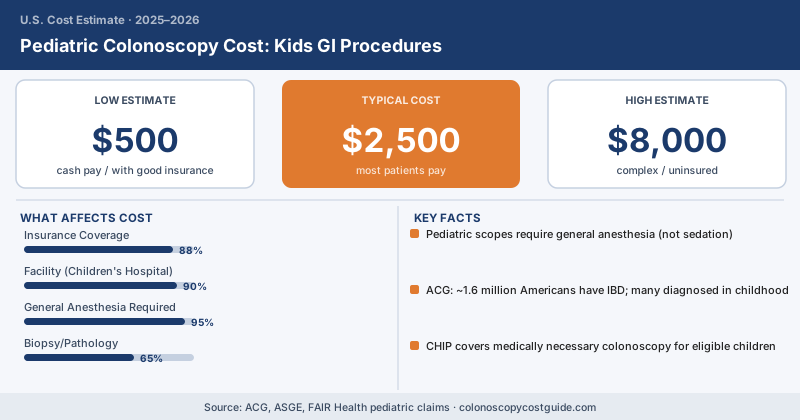
An adult getting a colonoscopy at an ambulatory surgery center can expect a total bill of $1,200–$3,500. A child getting the same procedure faces $2,500–$8,000, and here’s why:
- Pediatric gastroenterologist: Subspecialists in shorter supply than adult GI doctors; their professional fees are typically 20–40% higher
- General anesthesia: Children don’t tolerate conscious sedation for colonoscopy — they need general anesthesia, which requires a pediatric anesthesiologist and adds $800–$2,500 to the bill
- Children’s hospital setting: Most pediatric colonoscopies happen at children’s hospitals or pediatric surgery centers, which have higher overhead than adult ASCs
- Specialized equipment: Pediatric-sized scopes and instruments
| Cost Component | Typical Pediatric Range |
|---|---|
| Pediatric GI physician fee | $400 – $900 |
| Facility fee (children’s hospital) | $1,500 – $4,000 |
| Pediatric anesthesiology | $800 – $2,500 |
| Pathology (if biopsy taken) | $200 – $800 |
| Prep medications (adjusted for weight) | $20 – $100 |
| Total billed (diagnostic) | $2,500 – $8,000 |
Common Reasons Children Have Colonoscopies
Unlike adults, children don’t get colonoscopies for cancer screening. Pediatric colonoscopies are always performed for a specific medical indication. The most common reasons include:
- Inflammatory bowel disease (Crohn’s disease or ulcerative colitis) — diagnosis and monitoring
- Rectal bleeding with no obvious external cause
- Chronic diarrhea not responding to standard treatment
- Juvenile polyps — benign but require removal and monitoring
- Familial adenomatous polyposis (FAP) — genetic condition requiring early and regular surveillance
- Protein-losing enteropathy or other malabsorption syndromes
The ACG estimates that approximately 1.6 million Americans have inflammatory bowel disease, with a meaningful portion diagnosed in childhood. Pediatric-onset IBD requires ongoing endoscopic monitoring, meaning repeat colonoscopies every 1–3 years as part of disease management — a long-term cost commitment families need to plan for.
Pediatric Colonoscopy Is Always Diagnostic — Not Preventive
What Families Pay With Insurance
With employer-sponsored health insurance, a family’s out-of-pocket for a pediatric colonoscopy depends on their deductible and coinsurance status. In practical terms:
- Before deductible is met: Family typically owes the full procedure amount up to the deductible, then 20–30% after that
- After deductible is met: Family owes only the 20–30% coinsurance on the remaining amount
- After out-of-pocket maximum: Insurance covers 100%
For a $5,000 colonoscopy with a $2,000 deductible and 20% coinsurance:
- First $2,000: family pays
- Remaining $3,000: family pays 20% = $600
- Total out of pocket: ~$2,600
For families who’ve already met their deductible earlier in the year (common if there were prior diagnostic tests), the out of pocket is only the 20% coinsurance — roughly $500–$1,000.
Medicaid and CHIP Coverage
If your family’s income qualifies for Medicaid or CHIP, pediatric colonoscopy is covered with minimal or no cost-sharing. CHIP income thresholds vary by state but often extend to families earning up to 200–300% of the federal poverty level.
For families who don’t qualify for Medicaid but struggle with the cost, most children’s hospitals have financial assistance programs. Ask about the “charity care” or “financial counseling” department when you receive the bill — not after you’ve paid it.
Reducing the Cost: Practical Steps
- Confirm in-network status for the surgeon, anesthesiologist, and facility separately. At a children’s hospital, the anesthesiologist may be employed by a separate physician group with different network status.
- Use your FSA or HSA — pediatric colonoscopy is a qualified medical expense. If your child has a procedure scheduled, time it strategically in your plan year.
- Ask about a global procedure fee — some pediatric GI practices bundle the physician fee into a single quote; ask if the anesthesiologist is included.
- Apply for financial assistance before the procedure if cost is a concern. Children’s hospitals typically have robust assistance programs available to families regardless of immigration status.