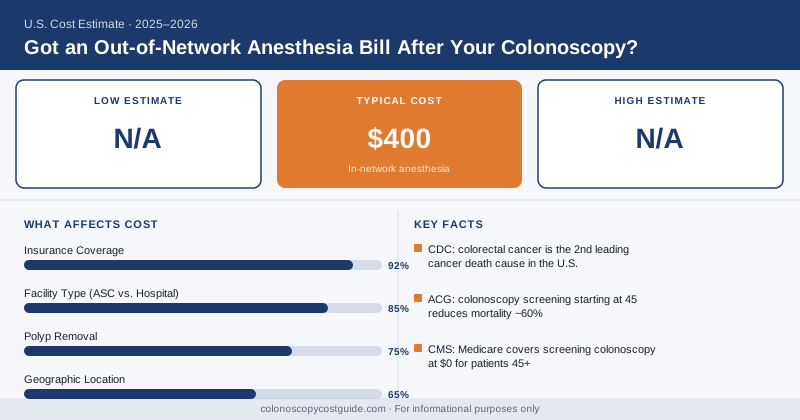
Got an Out-of-Network Anesthesia Bill After Your Colonoscopy?
The colonoscopy itself was covered. Your doctor was in network, the surgery center was in network, and then — three weeks later — a bill for $780 arrives from an anesthesia group you never chose and never heard of. Welcome to one of the most common surprise bills in medicine.
Here’s the thing: that bill may not be legal anymore. A federal law that took effect in 2022 was written almost specifically for this situation. Let’s figure out whether you owe it.
Why Anesthesia Bills Separately in the First Place
Most colonoscopies use propofol sedation, which requires a separately credentialed provider — an anesthesiologist or a CRNA. That provider works at your facility but bills independently. And critically, the anesthesia group that staffs an in-network facility is frequently not in your insurance network itself.
So you can do everything right — in-network facility, in-network gastroenterologist — and still get hit with an out-of-network anesthesia bill.
| Anesthesia Scenario | Typical Charge | Who Bills You |
|---|---|---|
| In-network anesthesia | $400 – $1,200 (insurer rate) | Anesthesia group |
| Out-of-network, No Surprises Act applies | $0 balance bill (illegal) | Should be barred |
| Out-of-network, exception applies | Full out-of-network rate | Anesthesia group |
| Moderate sedation (no separate provider) | Often bundled | Facility |
The No Surprises Act Is Probably on Your Side
The No Surprises Act took effect January 1, 2022, and ancillary providers like anesthesiologists were a primary target. The law generally bans out-of-network providers from balance-billing you when you’re treated at an in-network facility for non-emergency care.
Translation: if your colonoscopy was at an in-network facility and an out-of-network anesthesiologist sent you a balance bill, that bill is likely prohibited. You should owe only your normal in-network cost-sharing — not the difference.
How to Tell If Your Bill Is Illegal
The No Surprises Act protections generally apply if ALL of these are true:
- Your colonoscopy was at an in-network facility (hospital or surgery center)
- The anesthesia provider was out of network
- It was a scheduled, non-emergency procedure
- You did NOT sign a specific written consent waiving these protections for that out-of-network provider
If that describes you, the balance bill is likely barred. Don’t pay it — dispute it.
Exactly What to Do With the Bill
Move fast, but don’t panic, and definitely don’t pay it before checking.
- Confirm the facility was in network. Check your Explanation of Benefits or call your insurer.
- Compare the bill to your EOB. If the anesthesia claim shows a large “patient responsibility” because it was out of network, that’s the red flag.
- Call your insurer. Say: “This out-of-network anesthesia charge is from an in-network facility. Under the No Surprises Act, I should only owe in-network cost-sharing. Please reprocess it.”
- Call the anesthesia group. Tell them the bill appears to violate the No Surprises Act and ask them to correct it.
- File a federal complaint if needed at cms.gov/nosurprises or 1-800-985-3059.
When the Bill Might Actually Be Valid
The protection isn’t absolute. A genuinely out-of-network bill can stand if you signed a specific written waiver consenting to that out-of-network provider, or if your plan is a type not covered by the federal law (some self-funded plans and short-term plans have gaps). Even then, you can negotiate the amount down — see our cost negotiation tips.
Frequently Asked Questions
Can I avoid this before my next colonoscopy? Yes. Ask in advance whether the anesthesia group is in your network, and ask whether moderate (conscious) sedation is an option — it sometimes doesn’t require a separate anesthesia provider at all. Get answers in writing.
Why didn’t anyone warn me the anesthesiologist was out of network? They’re supposed to disclose it, and under the No Surprises Act you generally can’t be balance-billed regardless. Lack of disclosure strengthens your case to have the bill voided.
What if my insurer says it processed everything correctly? Push back with the No Surprises Act language and escalate to a formal appeal. If your colonoscopy itself was incorrectly billed too, our bill after a free screening colonoscopy guide covers the other charges that show up.
Bottom line: an out-of-network anesthesia bill after an in-network colonoscopy is exactly what the No Surprises Act was built to stop. Don’t assume you owe it. Check the four conditions, dispute it, and in most cases that surprise bill simply goes away.