Ostomy Care Cost: Supplies, Insurance Coverage, and Monthly Expenses
Most people don’t think about ostomy supplies until they need them. Then they get the first supply shipment invoice and realize this is a permanent monthly expense — one that runs $3,000–$7,000 per year before insurance, according to the United Ostomy Associations of America (UOAA). For the roughly 725,000–1,000,000 Americans currently living with an ostomy, getting supply costs under control matters just as much as medical management.
Whether you’re preparing for surgery, newly ostomate, or helping a family member navigate the system, here’s what you’re actually looking at cost-wise.
Types of Ostomies and How They Affect Supply Costs
Supply needs — and therefore costs — differ significantly depending on ostomy type:
| Ostomy Type | Created From | Output Consistency | Typical Monthly Supply Cost |
|---|---|---|---|
| Colostomy (sigmoid/descending) | Large intestine | Formed stool | $150 – $350 |
| Colostomy (transverse) | Mid-colon | Semi-formed | $180 – $400 |
| Ileostomy | Small intestine | Liquid to paste | $250 – $550 |
| Urostomy (ileal conduit) | Urinary diversion | Urine | $200 – $450 |
| Loop ostomy (temporary) | Either type | Variable | $180 – $500 |
Ileostomy outputs tend to be higher-volume and more liquid, which means more frequent pouch changes, higher skin barrier use, and often more accessories to manage peristomal skin — all of which drive costs higher than sigmoid colostomy.
Monthly Supply Breakdown
Ostomy supply costs aren’t just the pouch. A typical monthly kit includes:
| Supply Item | Monthly Usage (Typical) | Cost Without Insurance |
|---|---|---|
| Pouching system (1-piece or 2-piece wafer + pouch) | 8–20 changes/month | $80 – $200 |
| Skin barrier paste or rings | 1 tube or 12–20 rings | $20 – $60 |
| Adhesive remover wipes | 1 box (30–50 wipes) | $15 – $35 |
| Stoma powder | 1 bottle | $10 – $20 |
| Ostomy deodorant drops | 1 bottle | $8 – $20 |
| Moldable skin barrier seals | 1 box (10 seals) | $25 – $60 |
| Pouch covers (reusable fabric) | 2–4 | $10 – $30 |
| Irrigation supplies (colostomy only, if irrigating) | Monthly | $20 – $50 |
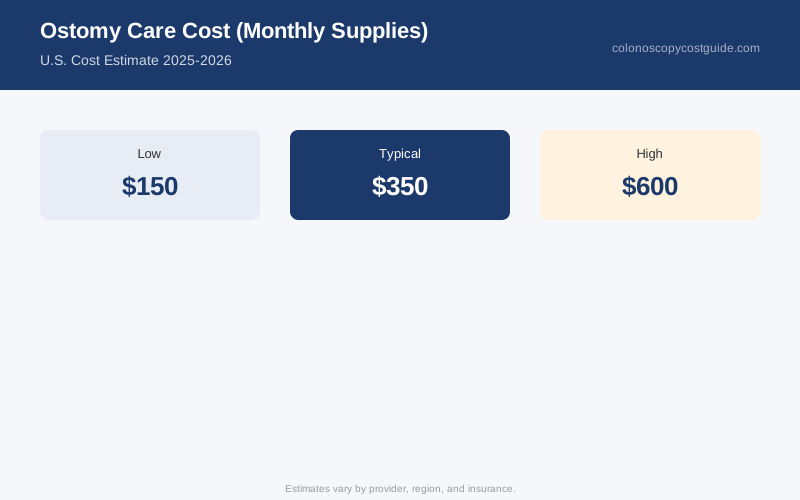
| Total monthly supplies | $168 – $475 |
New ostomates typically spend more during the first year as they find the right pouching system, manage output challenges, and address skin complications. UOAA research found that 30% of ostomates deal with peristomal skin complications annually, which adds wound care costs of $50–$300 per incident.
What Insurance Covers for Ostomy Supplies
Medicare Part B: Medicare covers ostomy supplies under the durable medical equipment (DME) benefit — but the coverage rules matter. Medicare pays 80% of the approved amount after your Part B deductible ($240 in 2024) for “necessary” ostomy supplies. You pay 20% coinsurance, meaning a $400/month supply bill becomes approximately $80–$100/month out of pocket once the deductible is met. You must use a Medicare-enrolled DME supplier. Supplies must be ordered by your physician with an appropriate diagnosis code.
Medicaid: Coverage varies by state, but all states must cover medically necessary ostomy supplies under federal Medicaid rules. Many states have monthly quantity limits. If you’re receiving Medicaid, ask your supplier whether your state allows quantity exceptions when medically justified (e.g., high-output ileostomy).
Commercial insurance: Most employer-sponsored plans and ACA marketplace plans cover ostomy supplies as durable medical equipment. Typical coverage: 70–80% after deductible. Your DME deductible may differ from your medical deductible — check your Summary of Benefits. Annual ostomy supply spending can easily hit DME limits on some plans, so confirm there’s no annual DME cap.
How to Maximize Your Insurance Benefit
To get the most out of insurance coverage for ostomy supplies:
- Use an in-network DME supplier — out-of-network charges often apply even to DME benefits. Many insurers have preferred ostomy suppliers (Edgepark, Byram Healthcare, Shield HealthCare).
- Get a standing order from your surgeon or GI doctor with diagnosis codes — most insurers require this for monthly auto-shipment
- Track your DME spending separately — DME benefits often have separate deductibles and out-of-pocket maximums
- Request a quantity exception if your usage exceeds standard monthly limits — document medical necessity with a letter from your doctor
- Appeal denials — ostomy supplies are medically necessary and denials are often reversed with documentation
The First Year: Higher Costs to Expect
The 12 months after ostomy surgery are typically the most expensive for supply spending. You’ll go through:
- Multiple pouching systems as you find the right fit for your stoma shape and body — budget $100–$300 for trial-and-error sampling
- Ostomy nurse (WOCN) visits: 2–6 consultations at $100–$300 each, usually partially covered by insurance
- Skin complication treatments: Peristomal dermatitis, hernia belts, barrier repair cream — $50–$200 per episode
- Follow-up GI and surgical visits: $150–$500 per visit (specialist copay)
Total first-year costs are typically 25–40% higher than steady-state annual supply spending.
Ostomy Reversal Cost (if Applicable)
Many loop ostomies created during colon surgery are temporary — the plan is to reconnect the bowel in 3–12 months once healing is complete. If reversal is on your timeline, factor in:
| Procedure | Typical Cost Without Insurance | With Insurance |
|---|---|---|
| Ostomy reversal (Hartmann’s reversal) | $15,000 – $35,000 | Deductible + coinsurance |
| Hospital stay (1–3 days average) | $3,000 – $12,000 | Included in surgical billing |
| Anesthesia | $1,500 – $4,000 | Included or separate billing |
| Post-op GI follow-up | $300 – $900 | Copay/coinsurance |
Reversal isn’t always possible — it depends on the reason for the original ostomy, the extent of bowel resection, and your overall health. About 30% of temporary ostomies ultimately become permanent, per published surgical outcomes data.
Free Supplies and Financial Assistance
UOAA Ostomy Fund: The United Ostomy Associations of America maintains a financial assistance program providing emergency supply assistance. Apply at ostomy.org.
Manufacturer sample programs: Coloplast, ConvaTec, Hollister, and Salts Healthcare all have generous sample programs. Request samples before committing to a system — this saves money and helps you find the right fit. Contact each manufacturer’s patient support line.
Medicaid Waiver programs: For low-income patients who don’t qualify for standard Medicaid, Home and Community Based Services waivers in many states include ostomy supply coverage.
Local ostomy support groups: UOAA chapters often maintain supply exchanges where gently used (unopened) supplies are redistributed to ostomates in need.
Manufacturer assistance programs: ConvaTec’s Ostomy Patient Support Program and Coloplast Care both offer financial assistance for uninsured or underinsured patients — income-based free product programs.
Living with an ostomy is manageable — and with the right supplier relationship and insurance setup, monthly supply costs can be brought down to $50–$150 out of pocket for most insured patients.