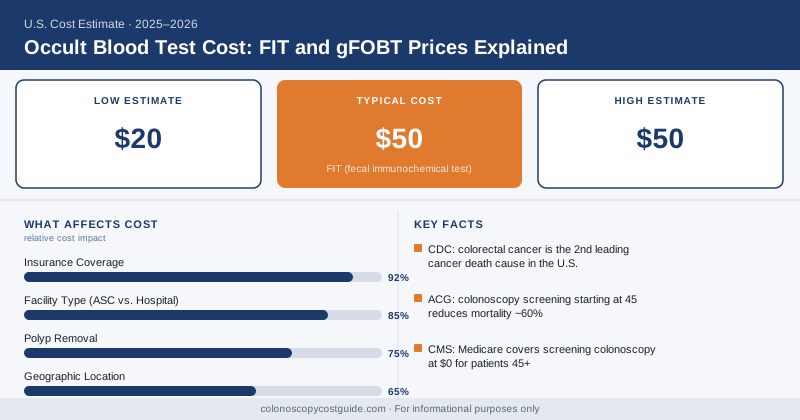
Occult Blood Test Cost: FIT and gFOBT Prices Explained
{ if eq .Lang "zh" }{ else }{ end }Step 1: Follow the kit instructions to collect a small stool sample at home. Step 2: Mail it to the lab. Step 3: Get your result in about a week. That’s the entire occult blood test process, and it’s one of the cheapest ways to screen for colon cancer risk available.
Here’s the full cost breakdown.
What You’ll Actually Pay
| Test Type | Cash Price | With Insurance |
|---|---|---|
| FIT (fecal immunochemical test) | $20 – $50 | $0 (preventive) |
| gFOBT (guaiac-based, older method) | $15 – $40 | $0 (preventive) |
| Combined FIT-DNA (Cologuard) | $600 – $700 | $0 (preventive) |
| Follow-up colonoscopy (if positive) | $1,200 – $5,000 | Varies — often diagnostic billing |
Notice how much cheaper a standalone occult blood test is compared to Cologuard, which bundles in DNA analysis. If your goal is the lowest-cost annual screening option, plain FIT wins by a wide margin.
Why FIT Replaced gFOBT at Most Labs
The older guaiac-based test reacts to any blood-like compound, including ones from red meat, certain vegetables, and some medications, which meant a fair number of false positives requiring unnecessary follow-up. FIT uses antibodies specific to human hemoglobin, so it’s more accurate and doesn’t require you to avoid red meat or NSAIDs beforehand. Most labs and insurers have shifted almost entirely to FIT for this reason.
Key Takeaway
What a Positive Result Actually Means
A positive occult blood test doesn’t diagnose cancer — it just means blood was detected, and that blood could come from polyps, hemorrhoids, an anal fissure, or diverticular disease, among other causes. The ACG and ASGE guidelines both call for a follow-up colonoscopy after any positive FIT or gFOBT to identify the actual source.
How Often You Actually Need One
Guidelines call for annual FIT testing for average-risk adults 45 and older who choose stool-based screening over colonoscopy. Skip a year here or there and you’ve meaningfully weakened the screening program’s ability to catch something early — this test’s low cost is directly tied to its requirement for consistency.
Comparing to the Alternatives
If annual testing feels like too much to keep up with, Cologuard stretches the interval to three years for a higher price per test, and a colonoscopy stretches it to ten years for the highest single price but the least frequent hassle.
Bottom Line
An occult blood test is the lowest-cost colon cancer screening option on the market, often free with insurance, and it’s a legitimate ACS-endorsed choice for average-risk adults. Just commit to doing it every year — the value collapses if you let it lapse.
{ if eq .Lang "zh" }