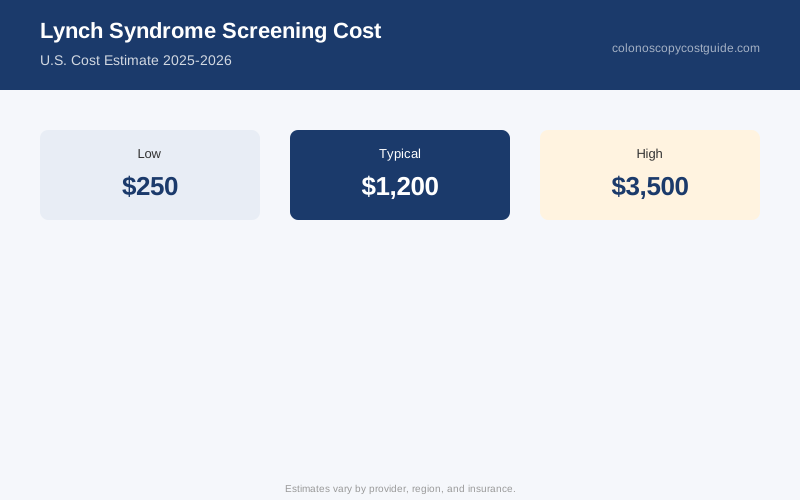
Lynch Syndrome Screening Cost: Genetic Testing, Surveillance, and What Insurance Pays
{ if eq .Lang "zh" }{ else }{ end }Here’s a number that should get your attention: people with Lynch syndrome face a 40–80% lifetime risk of colorectal cancer, compared to about 4% for the general population, according to the Colorectal Cancer Alliance. That’s not a small difference. It’s the difference between routine cancer screening and a comprehensive surveillance program that starts as early as age 20–25 and continues every 1–2 years for life.
The good news is that intensive surveillance works. Colonoscopy surveillance in Lynch syndrome patients reduces colorectal cancer mortality by more than 60%, per data from the Mallorca Group (European research consortium). The hard part? Paying for it.
What Lynch Syndrome Screening Actually Involves
Lynch syndrome surveillance isn’t just a colonoscopy. It’s a multi-year program that includes genetic counseling, diagnostic testing, and regular surveillance procedures across multiple organ systems.
| Component | Frequency | Typical Cost Without Insurance |
|---|---|---|
| Genetic counseling (pre/post-test) | 1–2 sessions at diagnosis | $200 – $600 per session |
| Germline genetic testing panel (MLH1, MSH2, MSH6, PMS2, EPCAM) | Once at diagnosis | $250 – $2,500 |
| Annual surveillance colonoscopy | Every 1–2 years | $900 – $3,500 |
| Annual gynecologic exam + endometrial biopsy (women) | Annually | $300 – $1,200 |
| Annual transvaginal ultrasound (women) | Annually | $200 – $800 |
| Upper endoscopy (EGD) surveillance | Every 2–5 years (selected patients) | $800 – $2,800 |
| Urinalysis for urothelial cancer surveillance | Annually | $30 – $100 |
Over 30 years of surveillance (a realistic horizon for someone diagnosed at 30), total out-of-pocket costs can run $15,000–$80,000 depending on insurance, deductibles, and whether complications like polyp removal occur during colonoscopies.
Genetic Testing Costs: The First Big Hurdle
Lynch syndrome is diagnosed by identifying a pathogenic variant in one of five mismatch repair genes: MLH1, MSH2, MSH6, PMS2, or EPCAM. Testing typically follows a “cascade” process:
Step 1 — Tumor testing (if you have a personal cancer history): Immunohistochemistry (IHC) or microsatellite instability (MSI) testing on tumor tissue. Cost: $300–$1,200. This is almost always covered when ordered by an oncologist as part of cancer workup.
Step 2 — Germline testing (blood or saliva): A hereditary cancer panel that includes Lynch genes. Cost ranges from $250 (Quest/LabCorp panels) to $2,500 (comprehensive hereditary panel at specialty labs like Myriad or Ambry).
Step 3 — Cascade testing for family members: Once a pathogenic variant is identified, single-site testing for relatives costs $100–$400 — significantly less than the full panel. This is the most cost-effective way to screen family members.
Free and Low-Cost Genetic Testing Options
Several programs offer free or subsidized Lynch syndrome testing:
- FORCE (Facing Our Risk of Cancer Empowered): Maintains a list of free testing programs and research studies offering no-cost genetic testing at www.facingourrisk.org
- Ambry Genetics MyRisk Program: Free or reduced-cost testing for patients meeting clinical criteria who lack insurance coverage
- Color Genomics: Offers $249 all-inclusive hereditary cancer panels; accepts insurance when covered
- Academic medical center biobanks: Many major cancer centers offer subsidized testing through research protocols
- Myriad mySupport360: Financial assistance program for commercially uninsured patients
Ask your genetic counselor about options before paying list price for testing.
Insurance Coverage for Genetic Testing
Coverage has improved dramatically since the ACA, but it’s still inconsistent:
Commercial insurance: Most major insurers cover Lynch syndrome genetic testing when clinical criteria are met — typically a personal or family history of colorectal or endometrial cancer under age 50, multiple Lynch-associated cancers in a family, or a known family variant. Coverage requires prior authorization at most plans. Expect a $0–$500 copay after prior auth approval.
Medicare: Covered under Part B when ordered for beneficiaries with a personal history of Lynch syndrome-associated cancer. Medicare covers the laboratory analysis but typically doesn’t cover genetic counseling separately — it’s billed as a physician service.
Medicaid: Coverage varies by state. Many states cover genetic testing for hereditary cancer syndromes; some require clinical documentation showing family history criteria are met.
Denied claims: If your insurer denies testing, appeal with a letter documenting family history and clinical criteria (Amsterdam II criteria or revised Bethesda guidelines). Genetic counselors often write these appeal letters as part of their service.
Annual Colonoscopy Costs for Lynch Syndrome Patients
This is where the long-term costs really add up. Lynch syndrome guidelines recommend colonoscopy every 1–2 years, compared to every 10 years for average-risk patients. That’s 5–10x more frequent surveillance.
| Scenario | Annual Colonoscopy Cost |
|---|---|
| Uninsured, ambulatory surgery center | $900 – $2,000 |
| Uninsured, hospital-based | $1,800 – $3,500 |
| With insurance (diagnostic — NOT preventive) | $200 – $1,500 (applies to deductible/coinsurance) |
| Medicare Part B | $0 after deductible (diagnostic) or $0 (preventive) |
| High-deductible plan, pre-deductible | $1,000 – $2,500 |
Critical insurance detail: Lynch syndrome surveillance colonoscopies are typically billed as diagnostic, not preventive — because you have a known hereditary condition. This means the ACA’s free preventive colonoscopy rule may not apply. You’ll likely pay deductible and coinsurance, unlike an asymptomatic average-risk patient getting a free screening colonoscopy.
Women’s Surveillance Costs (Endometrial and Ovarian Cancer Risk)
Women with Lynch syndrome also face elevated endometrial cancer risk — 40–60% lifetime risk for MLH1 and MSH2 carriers, per the Colorectal Cancer Alliance. Annual gynecologic surveillance adds meaningful cost:
- Annual gynecologic exam with endometrial sampling (biopsy): $300–$1,200 without insurance; $50–$400 with coverage
- Transvaginal ultrasound: $200–$800 without insurance; $50–$200 with coverage
- CA-125 blood test: $50–$200 without insurance; often covered as diagnostic lab
Some women with Lynch syndrome opt for risk-reducing hysterectomy and bilateral salpingo-oophorectomy once childbearing is complete. Costs: $12,000–$35,000 without insurance for the surgical procedure.
Cost Over a Lifetime: The Real Math
Here’s a realistic 30-year cost projection for a woman with MLH1 Lynch syndrome diagnosed at age 30:
| Item | Frequency | 30-Year Total (Uninsured) |
|---|---|---|
| Genetic testing (germline panel) | Once | $250 – $2,500 |
| Genetic counseling | 2 sessions | $400 – $1,200 |
| Colonoscopy (every 1.5 yrs avg) | ~20 procedures | $18,000 – $70,000 |
| Gynecologic surveillance | Annually | $15,000 – $60,000 |
| Upper endoscopy (every 3 yrs) | ~10 procedures | $8,000 – $28,000 |
| Total (uninsured, 30 years) | $41,650 – $161,700 | |
| Total (well-insured, 30 years) | $8,000 – $30,000 |
These numbers are sobering. But context matters: Lynch syndrome patients who skip surveillance have far higher cancer treatment costs — colorectal cancer treatment averages $150,000–$500,000+ depending on stage, per the National Cancer Institute’s data.
How to Reduce Lynch Syndrome Surveillance Costs
Use an ambulatory surgery center for your colonoscopies. The same procedure at an ASC typically costs 40–60% less than a hospital outpatient department. Your gastroenterologist can usually order both locations — just ask which ASCs they’re credentialed at. See our ASC vs. hospital colonoscopy cost breakdown for details.
Coordinate deductibles with your annual plan reset. Schedule surveillance colonoscopies in January if you’ve already met your out-of-pocket max in the prior year, or in a year where other medical spending has depleted your deductible.
Appeal diagnostic colonoscopy billing. Some insurers will reclassify Lynch surveillance as preventive with the right documentation. Have your GI doctor write a letter explaining the surveillance indication.
Family cascade testing. If you’ve identified a Lynch variant, getting first-degree relatives tested at the single-site rate ($100–$400) is far cheaper than having each family member undergo a full panel. Relatives who test negative return to average-risk screening schedules — removing the cost burden entirely.
Lynch syndrome surveillance is a lifelong commitment. It’s also one of the most cost-effective uses of healthcare spending — catching cancer at stage I instead of stage III makes an enormous difference in both outcomes and cost.
{ if eq .Lang "zh" }