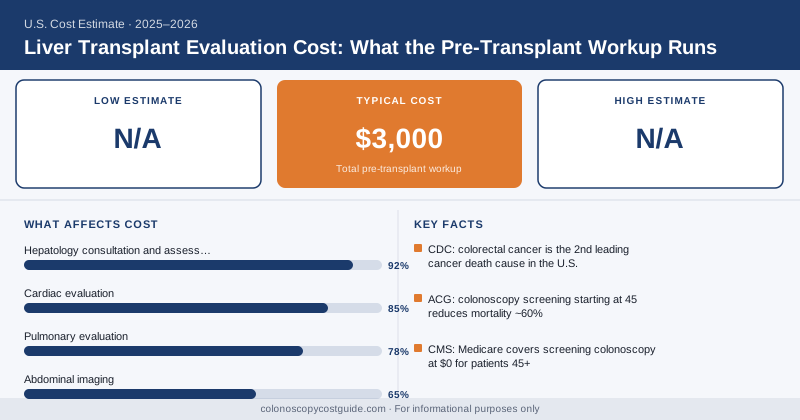
Liver Transplant Evaluation Cost: What the Pre-Transplant Workup Runs
Most patients don’t realize the transplant evaluation itself costs thousands of dollars before a liver ever becomes available. If your hepatologist has referred you to a transplant center, you’re entering a process that involves specialists from half a dozen disciplines, multiple imaging studies, labs drawn repeatedly over months, and insurance hurdles that catch many patients off guard.
Understanding what the evaluation costs — and what happens afterward — gives you a clearer picture of the financial commitment ahead.
What the Liver Transplant Evaluation Includes
The pre-transplant evaluation is a comprehensive workup to determine whether you’re a candidate for transplant and to establish your baseline health status. It’s not one visit and one bill — it’s a series of appointments spread over weeks to months, each generating its own charges.
Typical components include:
- Hepatology consultation and assessment — your transplant hepatologist reviews your case, orders initial labs, and determines MELD (Model for End-Stage Liver Disease) score eligibility
- Cardiac evaluation — echocardiogram, stress test, and sometimes right heart catheterization to confirm your heart can handle major surgery
- Pulmonary evaluation — pulmonary function tests and chest imaging to assess lung health
- Abdominal imaging — CT scan or MRI of the abdomen to evaluate liver anatomy, vasculature, and rule out hepatocellular carcinoma
- Lab panels — comprehensive metabolic panel, coagulation studies, viral hepatology markers, blood typing, crossmatch testing
- Psychosocial evaluation — social worker or psychologist assessment of support system, substance use history, and treatment compliance
- Nutritional assessment — dietitian consultation, since malnutrition is common in end-stage liver disease and affects surgical outcomes
How Much Does the Evaluation Cost?
| Component | Typical Cost |
|---|---|
| Hepatology consultation (initial + follow-up) | $800 – $2,000 |
| Cardiac clearance (echo + stress test) | $500 – $2,000 |
| Abdominal CT or MRI | $500 – $2,500 |
| Lab panels (initial workup) | $300 – $1,200 |
| Psychosocial evaluation | $300 – $600 |
| Pulmonary function tests | $200 – $600 |
| Nutritional assessment | $150 – $400 |
| Total pre-transplant workup | $3,000 – $10,000 |
These are out-of-pocket figures if you’re uninsured or before deductibles are met. Most patients with commercial insurance or Medicare will have substantial cost-sharing coverage for the evaluation — but you’ll still face deductibles, coinsurance, and potential out-of-network exposure if your nearest transplant center isn’t in your plan’s network.
Ongoing Costs While You Wait
Getting listed is the beginning, not the end of the financial picture. Once you’re on the United Network for Organ Sharing (UNOS) waiting list, you’ll need regular labs and imaging to update your MELD score and monitor your condition. The AASLD reports that approximately 8,000 liver transplants are performed annually in the US, and wait times range from 1 to 36 months depending on your blood type and UNOS region. That’s a long time to be generating recurring medical costs.
| Ongoing Monitoring Item | Frequency | Estimated Cost per Visit |
|---|---|---|
| MELD score lab panel | Every 1–3 months | $200 – $600 |
| Abdominal ultrasound (HCC surveillance) | Every 6 months | $300 – $800 |
| Hepatology follow-up visit | Every 3–6 months | $250 – $600 |
| Alpha-fetoprotein (AFP) blood test | Every 6 months | $50 – $200 |
If you’re listed for 18 months before a donor organ becomes available, the monitoring costs alone could add $3,000 to $8,000 to your total pre-transplant spend.
What the Full Transplant Costs
For context on what you’re preparing for: the liver transplant surgery itself, the hospital stay, and first-year post-transplant care typically run $300,000 to $500,000 in total. Medicare covers liver transplant for beneficiaries who meet end-stage liver disease criteria, provided the procedure is performed at a Medicare-approved transplant center. Most commercial insurers cover it as well, subject to their own criteria.
The UNOS 6-Month Sobriety Rule
Insurance Coverage for the Evaluation
The pre-transplant workup is covered by most insurance plans as medically necessary care when ordered by a hepatologist at an accredited transplant program. The key requirements are:
- Your diagnosis must support transplant candidacy (typically MELD score ≥ 15 or specific indications like hepatocellular carcinoma within Milan criteria)
- The transplant center must be accredited by UNOS and, if you’re on Medicare, must be Medicare-approved
- Prior authorization is typically required before the formal evaluation begins
One common trap: transplant center network status. Not all UNOS-accredited transplant centers are in every insurer’s network. If your hepatologist refers you to an out-of-network center, you could face dramatically higher cost-sharing or outright denial. Before your first appointment, call your insurer and verify both the transplant center and the individual hepatologist are in-network.
What to Ask Your Transplant Center Before Evaluation Begins
- Is this center Medicare-approved, and is it in-network with my commercial plan?
- Will I receive a bundled evaluation estimate, or separate bills from each specialist?
- What financial assistance programs does the center offer for uninsured or underinsured patients?
- How often will my MELD score be re-evaluated, and what are those monitoring costs?
- If I’m listed and later delisted due to clinical changes, does insurance continue to cover monitoring visits?
The liver transplant process is long, medically complex, and expensive at every stage. But the evaluation itself is the gate you have to pass through first — and knowing its cost, what it covers, and what your insurance will pay puts you in a much stronger position to navigate what comes next.