IBS Treatment Cost: Medications, Therapy, and Dietary Interventions
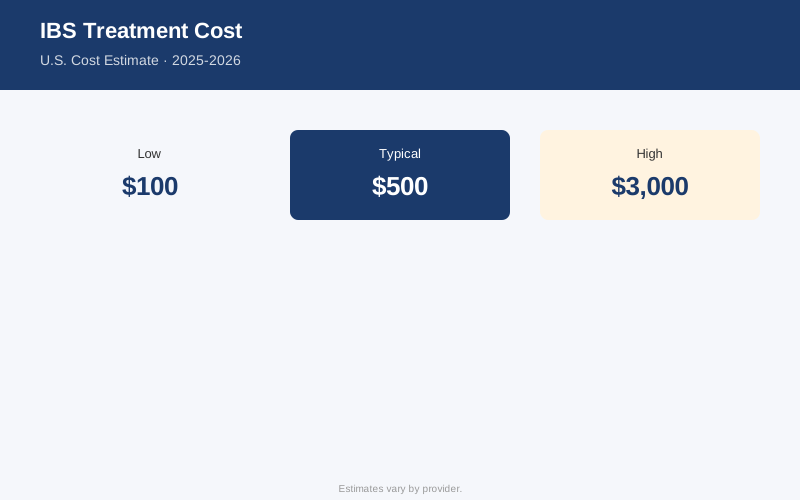
42% of people with IBS say their condition significantly affects their quality of life, according to a 2022 survey by the American College of Gastroenterology (ACG) — yet many spend years cycling through treatments that don’t work before finding one that does. Each trial-and-error cycle has a price tag. The cumulative annual cost of managing IBS can run $1,000–$8,000 for patients in active treatment, depending on medication tier and whether psychological therapies are included.
Here’s what each treatment approach actually costs — and how to build a cost-effective plan.
IBS Treatment Options and Monthly Costs
IBS breaks into three main subtypes: IBS-C (constipation-predominant), IBS-D (diarrhea-predominant), and IBS-M (mixed). Each has different medication targets, so costs vary by subtype.
| Treatment | Subtype | Typical Monthly Cash Cost | With Insurance |
|---|---|---|---|
| Psyllium fiber (Metamucil, generic) | All | $10 – $25 | OTC; not covered |
| Peppermint oil capsules (IBgard) | All | $25 – $50 | OTC; not covered |
| Dicyclomine (antispasmodic, generic) | All | $15 – $40 | $5 – $20 with Rx benefit |
| Hyoscyamine (Levsin, generic) | All | $20 – $60 | $5 – $30 with Rx benefit |
| Amitriptyline or nortriptyline (low-dose) | All | $10 – $30 | $5 – $15 with Rx benefit |
| Polyethylene glycol / MiraLax (OTC) | IBS-C | $15 – $30 | OTC; not covered |
| Linzess (linaclotide) | IBS-C | $400 – $600 | $0 – $50 with tier 3 coverage |
| Trulance (plecanatide) | IBS-C | $400 – $550 | $0 – $50 with coverage |
| Amitiza (lubiprostone) | IBS-C | $350 – $500 | $30 – $75 with coverage |
| Loperamide (Imodium, OTC) | IBS-D | $5 – $15 | OTC; not covered |
| Xifaxan (rifaximin) 14-day course | IBS-D | $1,200 – $1,600 (2-week course) | $0 – $100 with prior auth |
| Viberzi (eluxadoline) | IBS-D | $500 – $650 | $30 – $100 with coverage |
| Cholestyramine or colesevelam | IBS-D | $25 – $100 | $10 – $50 with coverage |
The Cheapest Approach: Start with Basics
Before expensive prescription drugs, there’s a tier of treatments that costs very little and works for a meaningful number of patients:
Fiber supplementation ($10–$25/month): Soluble fiber (psyllium) is the single most evidence-based intervention for overall IBS symptom improvement, per ACG guidelines. It works for IBS-C and mixed subtypes, and even helps some IBS-D patients by normalizing stool consistency. Start here.
Low-FODMAP diet ($0 extra if you already cook at home, or $50–$150/month for specialty foods): The low-FODMAP approach — eliminating fermentable carbohydrates — is the most studied dietary intervention for IBS. About 50–86% of patients improve significantly on it, per multiple ACG-cited RCTs. The catch: it requires guidance from a registered dietitian to implement correctly and safely.
Gut-directed hypnotherapy or CBT ($200–$600 for a full course; some apps $10–$30/month): The brain-gut connection is real in IBS. CBT and gut-directed hypnotherapy have comparable symptom benefit to the best prescription drugs in clinical trials — and their effects last longer. A structured course typically involves 6–8 sessions.
Why Linzess and Xifaxan Are So Expensive — and How to Afford Them
Linzess (linaclotide) for IBS-C and Xifaxan (rifaximin) for IBS-D are among the most effective prescription treatments for their subtypes — but both have sticker prices that put them out of reach for uninsured patients.
Linzess: Manufacturer AbbVie offers a savings card for commercially insured patients that caps cost at $0–$30/month. For uninsured patients, a patient assistance program provides free drug to qualifying low-income individuals. The generic (linaclotide) became available in some markets in 2025.
Xifaxan: Salix Pharmaceuticals runs a program reducing cost to $99 for eligible commercially insured patients. Prior authorization is almost always required — your GI doctor’s office should submit this on your behalf. Without insurance and without a savings program, a two-week course is $1,200–$1,600.
Always check manufacturer savings programs before assuming you can’t afford a prescription. They’re not widely advertised but are worth significant money.
Annual Total Cost Scenarios
| Treatment Approach | Estimated Annual Cost |
|---|---|
| Basic: fiber + peppermint oil + dietary changes | $200 – $500 |
| Moderate: antispasmodic + 4 GI visits + dietitian | $1,000 – $2,500 |
| IBS-C: Linzess (covered, $30/mo copay) + GI visits | $1,500 – $2,500 |
| IBS-D: Xifaxan 2 courses + Viberzi ongoing + GI visits | $2,000 – $5,000 insured |
| Full program: meds + CBT course + dietitian (6 sessions) | $3,000 – $8,000 |
Does Insurance Cover IBS Treatments?
Most prescription IBS medications are covered, but often at higher tiers requiring prior authorization or step therapy documentation. What this means practically:
- Linzess, Amitiza, Trulance: Tier 3 on most formularies. Without a savings card, you’re looking at $80–$150/month copay. With manufacturer savings programs, $0–$30/month for commercially insured patients.
- Xifaxan: Requires prior authorization documenting IBS-D diagnosis and prior treatment failure. Insurance approves it at a cost of $0–$100 for most patients with approved PA.
- Antispasmodics (dicyclomine, hyoscyamine): Generic, cheap, Tier 1 or 2 on virtually all formularies. Usually $5–$20/month after insurance.
- Low-dose antidepressants (amitriptyline, nortriptyline): Very cheap generics; typically $5–$15/month with insurance.
CBT and hypnotherapy: Covered when billed under mental health benefits (behavioral therapy for a GI condition). Many insurers now cover these since GI-specific CBT became more established. Check whether your insurer covers “gut-directed psychotherapy” or “behavioral therapy for functional GI disorders.”
Registered dietitian visits: Covered by most commercial plans for 1–6 visits per year under preventive or medical nutrition therapy benefits, depending on diagnosis coding. Check your plan’s RD benefit before your first visit.
Keeping Costs Under Control
- Use the step therapy approach intentionally. Start cheap (fiber, peppermint, dietary changes), document what you tried, then escalate. This documentation also supports insurance prior authorization requests.
- Join manufacturer patient assistance programs before you give up on a drug. Linzess and Xifaxan both have programs that make the drug affordable or free.
- Consider app-based CBT. Programs like Mahana, Regulora, and Nerva (gut-directed hypnotherapy) are FDA-cleared or clinically validated and cost $10–$40/month — far cheaper than in-person therapy and available anywhere.
- Ask your GI doctor for dietitian samples or food resources. Many academic GI centers have dietitians who teach low-FODMAP at no charge as part of care pathways.
- Use telehealth for follow-up visits. Once your diagnosis is established, virtual GI follow-ups often cost less than in-person visits and eliminate travel time.
IBS is a chronic condition, but it doesn’t have to be a chronic expense. The most effective treatments — fiber, dietary changes, CBT, gut-directed hypnotherapy — are among the cheapest. Prescription medications are valuable tools when lower-cost approaches haven’t worked, especially with manufacturer savings programs making them accessible.