IBS Diagnosis Cost: Tests, Doctor Visits, and What You'll Actually Pay
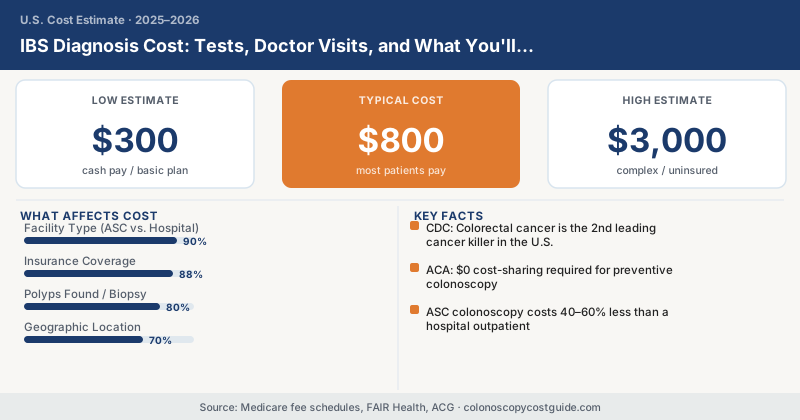
Here’s the uncomfortable truth about IBS diagnosis: there’s no single test that says “yes, you have it.” IBS is a clinical diagnosis based on your symptoms and ruling out other conditions. That means the cost isn’t really about one test — it’s about the workup your doctor orders, and those can range from $300 to $3,000 or more depending on how aggressively they pursue other diagnoses first.
IBS affects an estimated 10–15% of adults in the United States, making it one of the most common GI conditions, according to the American College of Gastroenterology (ACG). Yet it’s frequently overdiagnosed, undertreated, and — importantly — over-tested. Understanding the standard workup helps you have an informed conversation about what’s actually necessary.
The Standard IBS Diagnostic Workup and Cost
Diagnosis typically follows the Rome IV criteria: recurrent abdominal pain at least once per week for the last 3 months, associated with changes in bowel habits. When a physician applies these criteria without alarm symptoms (blood in stool, unexplained weight loss, family history of colon cancer), extensive testing isn’t always required.
| Test or Visit | Typical Cash Cost | Notes |
|---|---|---|
| Primary care office visit (initial) | $150 – $350 | Symptom history, physical exam |
| GI specialist consultation | $250 – $600 | Often needed for diagnosis confirmation |
| Complete blood count (CBC) | $30 – $90 | Rules out anemia, infection |
| Comprehensive metabolic panel (CMP) | $40 – $120 | Screens liver, kidney, electrolytes |
| C-reactive protein (CRP) or ESR | $30 – $80 | Screens for inflammatory bowel disease |
| Celiac disease panel (anti-tTG IgA) | $60 – $180 | Rules out celiac; ACG recommends routinely |
| Thyroid panel (TSH) | $40 – $100 | Rules out thyroid-related GI symptoms |
| Stool tests (calprotectin, ova and parasites) | $80 – $250 | Screens for IBD, infection |
| Colonoscopy (if alarm symptoms) | $800 – $4,000+ | Not required for typical IBS under 45 |
What the ACG Actually Recommends
The ACG’s 2021 clinical guidelines for IBS are clear: for patients under 45 with typical IBS symptoms and no alarm features, a colonoscopy is NOT routinely recommended. Many GI offices still order it — but that’s a clinical decision, not a requirement.
What the ACG does recommend:
- Celiac serology (anti-tTG IgA + total IgA) for all IBS patients — a simple blood test
- C-reactive protein or fecal calprotectin to screen for inflammatory bowel disease (IBD)
- Complete blood count
That’s it. For straightforward IBS without alarm symptoms in a younger patient, the workup can cost $300–$600 total — not thousands.
Alarm Symptoms That Justify More Testing (and More Cost)
If you have any of these, a more extensive workup including colonoscopy is appropriate:
- Blood in stool or black/tarry stools
- Unintended weight loss (more than 10 lbs)
- Anemia on CBC
- Nighttime symptoms that wake you from sleep
- Family history of colon cancer, IBD, or celiac disease
- Age 45 or older (colonoscopy for colon cancer screening is standard regardless)
- Fever or elevated inflammatory markers
Without these features, a diagnosis of IBS can often be made clinically with basic blood work.
When a Colonoscopy Is Ordered — and What It Adds
A colonoscopy for IBS workup bumps total costs significantly. At a hospital outpatient department without insurance, expect $2,000–$4,500 for the procedure alone. At an ambulatory surgery center (ASC), cash prices are typically $1,000–$2,500.
If the colonoscopy finds nothing (which is common in IBS — by definition the colon looks normal), you’ll get a diagnostic colonoscopy bill and an IBS diagnosis anyway. Some patients with IBS-D (diarrhea-predominant) warrant colonoscopy to rule out microscopic colitis, which requires biopsies — adding $300–$600 in pathology fees.
Total Cost Scenarios
| Patient Scenario | Estimated Total Diagnostic Cost |
|---|---|
| Young adult, typical symptoms, no alarm features | $300 – $800 |
| Age 40+ or mixed symptoms, full blood panel + stool tests | $600 – $1,500 |
| Any age with alarm features, full workup + colonoscopy | $2,000 – $5,000 |
| IBS-D workup including colonoscopy with biopsies | $2,500 – $6,000 |
Does Insurance Cover IBS Diagnosis?
Yes — all the standard diagnostic tests are covered by commercial insurance, Medicare, and Medicaid when ordered with appropriate diagnosis codes. Blood panels are processed through your lab benefit (often a separate deductible and copay from your medical benefit on some plans). GI specialist visits go through your specialist copay.
Medicare: Part B covers all medically necessary diagnostic tests. You’ll pay 20% coinsurance after the Part B deductible for physician services; lab work under Part B typically has no coinsurance for approved tests.
Without insurance: The blood tests are very affordable — a basic IBS panel at a direct-to-consumer lab like LabCorp’s patient portal or Quest’s MyQuest service can cost $100–$200 total out of pocket, without a physician visit, in many states.
Ongoing Management Costs After Diagnosis
Diagnosis is just the start. IBS management adds ongoing costs:
- GI follow-up visits: $150–$350 per visit, 1–2 per year typically
- Prescription medications (Linzess, Xifaxan, amitriptyline, etc.): $30–$300/month depending on insurance and drug
- Dietary counseling (low-FODMAP diet): $100–$400 for 2–4 sessions with a registered dietitian
- Over-the-counter management (fiber, probiotics, antispasmodics): $20–$60/month
How to Control Your IBS Workup Costs
- Ask your GI doctor to follow ACG guidelines — if you’re under 45 with no alarm symptoms, push back on routine colonoscopy.
- Use your lab benefit for blood tests — ordering through your PCP or GI’s in-network lab is often cheaper than a hospital draw.
- Consider direct-to-consumer labs for basic panels if you’re uninsured — CBC, CMP, CRP, and celiac panels are available for $100–$200 total.
- Telemedicine GI consultations for straightforward IBS often cost less ($75–$150) than in-person specialist visits.
- Bundle appointments — a single GI consultation where the physician reviews your history and orders the right panel is more efficient than multiple PCP visits.
IBS is manageable and, in most cases, diagnosable without a five-figure workup. The key is knowing which tests are actually necessary — and which ones you can skip.