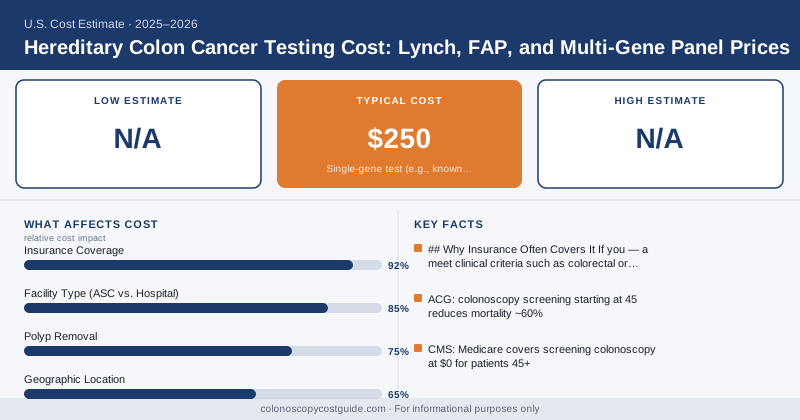
Hereditary Colon Cancer Testing Cost: Lynch, FAP, and Multi-Gene Panel Prices
{ if eq .Lang "zh" }{ else }{ end }Three relatives with colon cancer, two of them under 50. If that sounds like your family, hereditary cancer testing isn’t paranoia — it’s smart medicine. About 5% of colorectal cancers are linked to an inherited syndrome, the American Cancer Society notes, with Lynch syndrome the most common. Knowing your status changes how aggressively you screen, and that can save your life.
The cost question stops a lot of people from testing. Good news: for high-risk families, it’s often far cheaper than expected, and frequently fully covered.
Hereditary Cancer Testing Costs
| Test Type | Typical Cash Price | With Insurance |
|---|---|---|
| Single-gene test (e.g., known family mutation) | $250 – $1,000 | $0 – $100 |
| Lynch syndrome panel (MLH1, MSH2, MSH6, PMS2, EPCAM) | $300 – $2,000 | $0 – $250 |
| Comprehensive multi-gene hereditary cancer panel | $300 – $5,000 | $0 – $250 |
| Genetic counseling session | $150 – $400 | Often covered |
| Tumor screening (MSI / IHC on biopsy) | $300 – $1,200 | Usually covered |
The cash prices look scary, but the labs that dominate this space (Myriad, Invitae, Ambry, and others) run patient assistance programs that often cap out-of-pocket cost around $100–$250 even for the uninsured.
Why Insurance Often Covers It
Key Takeaway
Genetic counseling isn’t just a hoop. A counselor figures out which test you actually need, interprets the result, and maps out screening for you and your relatives. That step is covered in more depth in our colorectal cancer genetic testing cost guide.
What a Positive Result Means for Future Costs
Testing positive for Lynch syndrome or FAP doesn’t mean you have cancer — it means your risk is high, so you screen earlier and more often. That’s where the real value shows up.
For Lynch syndrome carriers, guidelines recommend colonoscopy starting as young as 20–25 and repeating every 1–2 years. That’s more frequent than the standard schedule, but each colonoscopy cost is a fraction of treating an advanced cancer. Catching a polyp early — see our colon polyp removal cost guide — can prevent cancer entirely.
If cancer is already diagnosed, hereditary results can also guide treatment choices, including eligibility for certain drugs covered in colorectal cancer immunotherapy cost, since some Lynch-related tumors respond especially well to immunotherapy.
Who Should Consider Testing
You’re a strong candidate if you have:
- Colorectal or endometrial cancer diagnosed before age 50
- Multiple relatives with colorectal, uterine, ovarian, or related cancers
- A known family mutation
- 10+ colon polyps in your lifetime
- A tumor that screened positive for MSI-high or mismatch repair deficiency
The Bottom Line
Hereditary colon cancer testing costs $250–$5,000 at cash price, but high-risk patients with insurance often pay $0–$250 thanks to coverage rules and lab assistance programs. For a family touched repeatedly by colorectal cancer, that’s one of the highest-value tests in medicine — turning frightening uncertainty into a clear, potentially life-saving screening plan.
{ if eq .Lang "zh" }