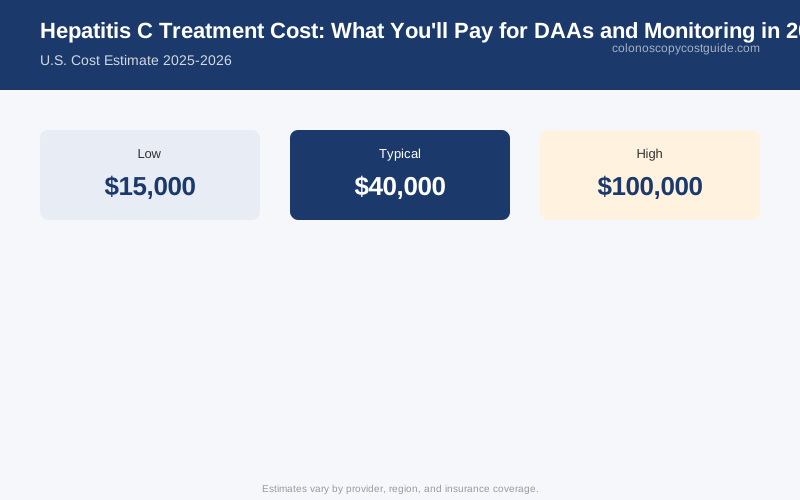
Hepatitis C Treatment Cost: What You'll Pay for DAAs and Monitoring in 2025–2026
When Marcus got his hepatitis C diagnosis at 51, the first thing he Googled was the cost of treatment. The number he found — $84,000 for a 12-week course — made him close the laptop. Three weeks later, his GI doctor explained what he’d actually pay. It was $5.
That gap between sticker price and real out-of-pocket cost is the defining feature of hepatitis C treatment in 2025. Understanding both numbers matters.
What Direct-Acting Antivirals (DAAs) Actually Cost
Modern hepatitis C treatment uses direct-acting antivirals — oral medications taken once daily for 8 to 12 weeks that cure more than 95% of infections in most genotypes. The main options include Epclusa, Mavyret, Harvoni, and Vosevi. List prices are significant.
| Drug | Genotype Coverage | Duration | List Price (Full Course) |
|---|---|---|---|
| Mavyret (glecaprevir/pibrentasvir) | All genotypes (1–6) | 8–12 weeks | $26,000 – $39,000 |
| Epclusa (sofosbuvir/velpatasvir) | All genotypes (1–6) | 12 weeks | $74,000 – $84,000 |
| Harvoni (ledipasvir/sofosbuvir) | Genotype 1, 4, 5, 6 | 8–24 weeks | $63,000 – $188,000 |
| Vosevi (sofosbuvir/velpatasvir/voxilaprevir) | All genotypes (retreatment) | 12 weeks | $84,000 – $95,000 |
Nobody pays list price. That’s not a platitude — it’s a structural feature of how these drugs are sold. Insurers negotiate steep rebates, Medicaid programs pay sharply discounted rates, and manufacturer patient assistance programs cover most or all of the cost for uninsured patients who qualify.
What You’ll Actually Pay With Insurance
The CDC estimates that approximately 2.4 million Americans are living with hepatitis C infection. Most with commercial insurance pay modest out-of-pocket amounts.
| Insurance Type | Typical Out-of-Pocket Cost |
|---|---|
| Commercial insurance (in-network, met deductible) | $0 – $500 copay |
| Commercial insurance (high-deductible plan, pre-deductible) | $500 – $3,500 |
| Medicare Part D | $0 – $2,000 (IRA 2023 cap now $2,000/year for 2025) |
| Medicaid | $0 (most states: no cost-sharing for DAAs) |
| Uninsured (manufacturer assistance program) | $0 for qualifying patients |
| Uninsured (no program, retail) | $26,000 – $95,000 |
The Inflation Reduction Act’s $2,000 annual out-of-pocket cap for Medicare Part D enrollees, effective January 2025, significantly reduced what Medicare beneficiaries pay for hepatitis C drugs that were previously reaching the catastrophic threshold.
Manufacturer Patient Assistance Programs
Monitoring and Testing Costs
Drug cost is only one piece. Hepatitis C treatment involves baseline testing, monitoring during treatment, and confirmation of cure — all of which add to total costs.
| Service | Cost Without Insurance | Notes |
|---|---|---|
| Hepatitis C antibody test (screening) | $25 – $80 | Often free at FQHCs |
| HCV RNA quantitative (viral load) | $100 – $350 | Confirms active infection |
| HCV genotype test | $150 – $400 | Determines drug choice |
| Liver function panel (ALT/AST/bilirubin) | $50 – $150 | Baseline + monitoring |
| Liver fibrosis assessment (FibroScan or FIB-4) | $200 – $800 | Determines treatment urgency |
| Post-treatment SVR12 test (cure confirmation) | $100 – $350 | 12 weeks after completing treatment |
Insurance covers all of these as medically necessary when hepatitis C treatment is in progress. The U.S. Preventive Services Task Force (USPSTF) gives hepatitis C screening in adults 18–79 an “A” recommendation — which means all marketplace and most commercial plans cover the antibody screening test at no cost to you, no deductible required.
Who Should Be Screened
The USPSTF recommends one-time hepatitis C screening for all adults aged 18 to 79, and periodic screening for people at higher risk (people who inject drugs, incarcerated populations, those born between 1945 and 1965 who haven’t been screened). Baby boomers — born 1945–1965 — have significantly higher rates of hepatitis C infection than other age groups, largely due to exposures before blood supply screening began in 1992.
If you’ve had a colonoscopy or upper endoscopy and your GI doctor mentions liver concerns, hepatitis C screening is likely to come up as a logical next step.
State Medicaid Coverage — A Significant Improvement
Historically, many state Medicaid programs restricted hepatitis C treatment to patients with advanced liver disease. That’s changed substantially. As of 2025, most states cover DAA treatment regardless of fibrosis stage, though some still have restrictions based on sobriety requirements or specialist prescribing requirements.
The Real Cost of Not Treating
Untreated chronic hepatitis C causes progressive liver damage — cirrhosis, liver failure, and hepatocellular carcinoma. The cost of managing decompensated cirrhosis or hepatocellular carcinoma runs $100,000 to $500,000 or more. The cost of liver transplantation exceeds $500,000 in the first year. By contrast, an 8-week course of Mavyret costs $26,000 at list price — and your out-of-pocket is likely near zero with insurance or manufacturer assistance.
If your insurer denies coverage, your GI doctor can submit a peer-to-peer review request. Approval rates on appeal are substantially higher when supported by physician documentation.
What to Ask Before Starting Treatment
Before your first prescription is filled, ask your GI or infectious disease physician:
- Which drug is right for my genotype and liver status?
- Is prior authorization required, and will your office submit it?
- Am I eligible for the manufacturer’s patient assistance program?
- What monitoring visits are needed, and how will those be billed?
- Will a FibroScan be needed, and is it covered under my plan?
Getting these answers upfront prevents billing surprises 8 weeks into treatment. Hepatitis C is one of the few chronic infections with a true cure — the financial pathway to get there is navigable if you know the system.