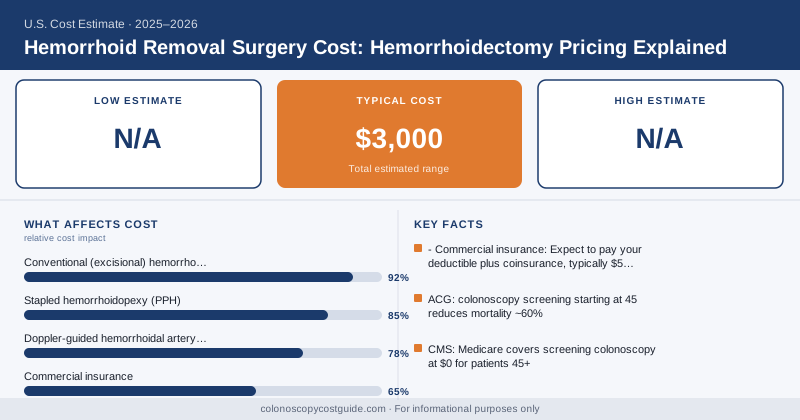
Hemorrhoid Removal Surgery Cost: Hemorrhoidectomy Pricing Explained
{ if eq .Lang "zh" }{ else }{ end }The $3,200 quote is normal — and for hemorrhoidectomy, it’s actually on the lower end. Unlike rubber band ligation, which happens in an office in minutes, surgical hemorrhoid removal requires an operating room, anesthesia, and a real recovery period. That’s why the price jumps so sharply once conservative treatments haven’t worked.
Hemorrhoidectomy Cost Breakdown
| Component | Typical Cost | Notes |
|---|---|---|
| Facility fee (ambulatory surgery center) | $1,800 – $4,000 | Outpatient setting, most common |
| Facility fee (hospital) | $3,000 – $6,500 | For complex cases or complications |
| Surgeon fee | $800 – $2,000 | Varies by technique and region |
| Anesthesia | $400 – $900 | General or regional, per case |
| Post-op follow-up visits | $150 – $400 each | Typically 2–3 visits over 4–6 weeks |
| Total estimated range | $3,000 – $8,000 | — |
When Surgery Is the Right Call
The American Society of Colon and Rectal Surgeons reserves hemorrhoidectomy for grade IV internal hemorrhoids (those that prolapse and can’t be manually reduced), large external hemorrhoids causing significant symptoms, or cases where less invasive treatments like banding have failed after repeated attempts. It’s rarely the first treatment offered, since less invasive options resolve the majority of cases at a fraction of the cost.
Surgical Techniques and Cost Differences
Conventional (excisional) hemorrhoidectomy — the traditional approach, removing hemorrhoidal tissue directly. Most affordable surgical option and highly effective, but has the longest, most uncomfortable recovery.
Stapled hemorrhoidopexy (PPH) — uses a circular stapling device to reposition hemorrhoidal tissue rather than excising it. Slightly higher cost due to the specialized device, but typically involves less post-operative pain and a faster return to activity.
Doppler-guided hemorrhoidal artery ligation (THD) — ties off the blood supply to hemorrhoids using ultrasound guidance, without removing tissue. Often the most expensive option due to specialized equipment, but offers the least post-operative pain among surgical techniques.
Ask About Technique — It Affects Both Cost and Recovery
Insurance Coverage
Hemorrhoidectomy is covered by virtually all commercial insurance plans and Medicare when medically necessary — meaning documented failure of conservative treatment or a severity grade that warrants surgery.
- Commercial insurance: Expect to pay your deductible plus coinsurance, typically $500–$2,500 out of pocket for most 2025 plans
- Medicare: Part A covers facility costs if performed as an inpatient stay; Part B covers the surgeon and anesthesia at 80% after the deductible
- Medicaid: Covered with minimal cost-sharing in most states
Recovery and Hidden Costs
Recovery is the part patients underestimate. The first 7–10 days after a hemorrhoidectomy typically involve significant pain, often requiring prescription pain medication (an additional cost if not fully covered) and daily sitz baths. Most patients need 1–3 weeks before returning to normal activities, and manual labor jobs may require longer.
Budget for:
- Prescription pain medication: $20–$80 depending on your plan’s pharmacy copay
- Stool softeners (essential to avoid straining during healing): $10–$30
- Missed work: Consider whether your employer offers paid sick leave or short-term disability, since 1–3 weeks off is common
The Bottom Line
Hemorrhoidectomy costs $3,000–$8,000 in total charges, reflecting the operating room, anesthesia, and follow-up care that in-office procedures like banding don’t require. It’s reserved for the most severe cases, so if you’re facing this recommendation, less invasive options have likely already been tried. Ask about technique options — the newer, slightly pricier approaches can meaningfully shorten your recovery.
{ if eq .Lang "zh" }