H. Pylori Test and Treatment Cost: Full Breakdown for 2025–2026
42% of the world’s population carries H. pylori — but in the United States, the CDC estimates about 30–40% of adults are infected, with higher rates in people born outside the US or living in crowded conditions. Most never know it. The ones who do find out usually need both a test and a course of antibiotics, and the cost question comes up fast.
Here’s the real-world breakdown.
H. Pylori Testing: What Are the Options and What Do They Cost?
There are four main ways to test for H. pylori, each with a different price and use case:
| Test Type | Cash Price | With Insurance |
|---|---|---|
| Urea breath test (UBT) | $150 – $300 | $0 – $50 copay |
| Stool antigen test | $50 – $150 | $0 – $30 copay |
| Blood antibody test | $30 – $80 | $0 – $20 copay |
| Endoscopic biopsy (during EGD) | $800 – $2,500+ total | 10–30% after deductible |
Urea breath test is the gold standard for confirming active infection (and confirming cure after treatment). You swallow a capsule with labeled carbon, breathe into a bag, and the lab detects H. pylori by-products. It’s accurate and non-invasive. Most insurance covers it as a diagnostic test.
Stool antigen test is cheaper and widely used in primary care. Sensitivity is comparable to the breath test at roughly 94% per American College of Gastroenterology (ACG) guidelines. It’s often the first test ordered.
Blood antibody tests are the cheapest but the least useful clinically — they can’t distinguish active from past infection. Most GI doctors don’t rely on them for diagnosis.
Endoscopic biopsy is reserved for patients already getting an upper endoscopy for another reason (like persistent ulcers or suspected cancer). The biopsy specimen is sent to pathology and adds $150–$600 to the endoscopy bill.
H. Pylori Treatment Cost
Treatment is antibiotic-based. The standard regimen is “triple therapy” — two antibiotics plus a proton pump inhibitor (PPI) for 10–14 days. Antibiotic resistance has made some older regimens less effective, and “quadruple therapy” (four drugs) is increasingly common.
| Regimen | Generic Drug Cost | With Insurance Copay |
|---|---|---|
| Triple therapy (clarithromycin + amoxicillin + PPI) | $80 – $200 | $20 – $60 |
| Bismuth quadruple therapy (metronidazole + tetracycline + bismuth + PPI) | $100 – $300 | $30 – $80 |
| Pylera (brand-name combo pill) | $400 – $800 | $50 – $200 |
| Talicia (rifabutin-based) | $600 – $1,200 | $100 – $300 with copay assistance |
Generic triple therapy is the cheapest route — most of the drugs are inexpensive generics. The catch: clarithromycin resistance is rising, now estimated at 15–30% in some US populations per ACG 2022 data. If your first treatment fails, you’ll need a second round (different regimen), doubling drug costs and requiring a follow-up breath test to confirm eradication.
Total Cost for Full Diagnosis + Treatment + Confirmation
Add up all three steps when budgeting:
- Initial test (stool antigen or breath test): $50–$300
- Treatment course (generic triple or quadruple therapy): $80–$300
- Confirmation breath test (4–8 weeks post-treatment): $150–$300
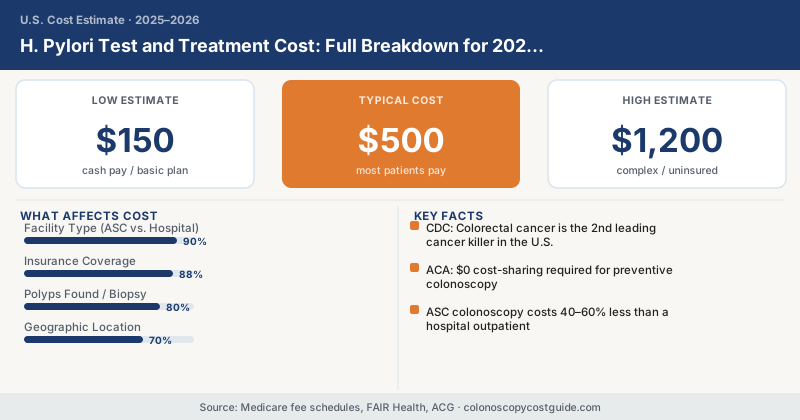
Total without insurance: $280–$900 Total with insurance (deductible met): $50–$180
Does Insurance Cover H. Pylori Testing and Treatment?
Yes, in most cases. Both testing and treatment are medically necessary and covered by commercial insurance, Medicare, and Medicaid when ordered by a physician. You’ll pay your normal lab copay for testing and your pharmacy copay for the antibiotics.
Medicare: Part B covers the breath test and stool antigen test. Part D covers the antibiotics — your cost depends on your specific drug plan and whether the antibiotics are on the formulary.
Without insurance: The stool antigen test at a community health center (FQHC) may run as little as $25–$50 on a sliding scale. GoodRx typically brings generic triple therapy down to $40–$100 at major pharmacy chains.
What If Treatment Fails?
About 10–20% of patients don’t clear the infection after first-line treatment, per ACG clinical guidelines. You’ll need a follow-up breath test ($150–$300), a new antibiotic regimen (usually bismuth quadruple therapy if clarithromycin resistance is suspected), and possibly an upper endoscopy if ulcers aren’t healing — adding another $800–$2,500+ to total costs.
Ways to Cut the Cost
- Use GoodRx for antibiotics: Generic amoxicillin, clarithromycin, metronidazole, and omeprazole are all under $15 each with GoodRx at major pharmacies.
- Request the stool antigen test first: It’s the cheapest accurate test for initial diagnosis.
- Ask about in-office breath testing: Some GI practices offer in-office UBT, which can be billed as an office visit procedure with a single copay.
- Community health centers: FQHCs offer sliding-scale fees for both testing and prescriptions regardless of insurance status.
H. pylori is one of the more manageable GI conditions cost-wise — especially compared to the ulcer complications or gastric cancer risks of leaving it untreated.