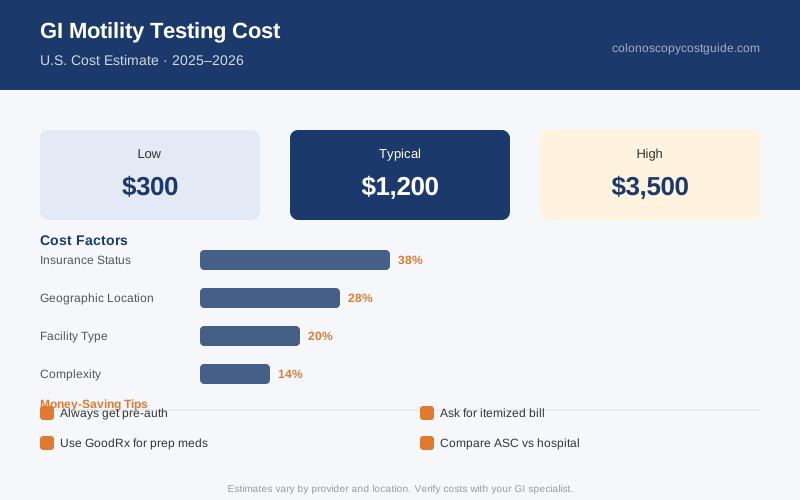
GI Motility Testing Cost: Manometry, SmartPill, and Transit Studies
Chronic constipation. Inexplicable bloating. Food that seems to sit in your stomach for days. These symptoms point to a motility problem — and motility testing is how gastroenterologists figure out exactly where in the GI tract things are going wrong.
The tests aren’t cheap. But they’re far cheaper than years of trial-and-error treatments for a condition you haven’t properly diagnosed.
What Is GI Motility Testing?
Motility testing measures how efficiently food and waste move through different segments of your digestive system. There isn’t one single test — there’s a suite of options depending on which part of the gut is being evaluated.
The American Neurogastroenterology and Motility Society (ANMS) estimates that roughly 15–20% of American adults experience chronic GI motility disorders, including gastroparesis, chronic constipation, colonic inertia, and pelvic floor dysfunction. Many go years without proper evaluation because motility testing isn’t universally available and carries meaningful costs.
Motility Test Types and Costs
| Test | What It Measures | Typical Cost (Uninsured) |
|---|---|---|
| Colonic transit study (Sitzmarks) | Speed of colon emptying | $300 – $800 |
| Gastric emptying scintigraphy | Stomach emptying rate | $500 – $1,800 |
| SmartPill wireless motility capsule | Whole-gut transit + pH/pressure | $1,000 – $2,500 |
| High-resolution colonic manometry | Colon muscle pressure patterns | $1,500 – $4,000 |
| Anorectal manometry (ARM) | Anal sphincter + rectal sensation | $500 – $1,500 |
| High-resolution esophageal manometry | Esophageal pressure/peristalsis | $800 – $2,500 |
| Defecography (fluoroscopic) | Rectal evacuation mechanics | $400 – $1,200 |
| MRI defecography (dynamic) | Pelvic floor mechanics | $1,200 – $3,500 |
| Antroduodenal manometry | Small intestine pressure | $1,500 – $4,000 |
| Gastric emptying breath test | Stomach emptying (alternative) | $200 – $500 |
The Sitzmarks Colonic Transit Study: Cheapest First Step
For patients with chronic constipation or suspected slow-transit constipation, the Sitzmarks study is often the starting point — and at $300–$800, it’s the most affordable motility test.
The patient swallows a capsule containing 24 small radiopaque markers on Day 0, then gets a plain abdominal X-ray on Day 5 (and sometimes Day 3). The number and distribution of markers remaining tells the radiologist how quickly the colon is emptying and which segment is retaining stool.
- If most markers are retained diffusely: suggests slow-transit constipation (colonic inertia)
- If markers cluster in the rectum: suggests pelvic floor dysfunction (outlet obstruction)
This distinction matters enormously for treatment — and it’s why doing the cheap test first saves money overall.
SmartPill: The All-in-One Option
The SmartPill (Medtronic) is a swallowable wireless capsule that measures pH, pressure, and temperature throughout the entire GI tract as it passes through. It provides transit times for the stomach, small intestine, and colon in a single test.
Cost: $1,000 – $2,500 (facility-dependent) Insurance: Medicare covers SmartPill under HCPCS G0240 for patients with documented chronic GI dysmotility symptoms who haven’t responded to standard therapy. Commercial coverage is more variable — United Healthcare and Aetna have positive coverage policies for gastroparesis evaluation; coverage for colonic transit testing is less consistent.
SmartPill is particularly useful when you suspect dysfunction at multiple levels or when gastric emptying scintigraphy isn’t available locally.
High-Resolution Anorectal Manometry: Key for Constipation + Incontinence
Anorectal manometry (ARM) measures pressure at the anal sphincters, rectal compliance, and rectal sensation during simulated defecation. It’s essential for:
- Diagnosing dyssynergic defecation (the most common cause of outlet-obstruction constipation — where the pelvic floor contracts instead of relaxing during defecation)
- Evaluating fecal incontinence (sphincter pressure deficiency)
- Assessing Hirschsprung’s disease in adults
Standard ARM: $500 – $1,200 High-resolution ARM (3D manometry): $800 – $1,800
Insurance generally covers ARM when ordered for chronic constipation not responding to first-line therapy, or for fecal incontinence evaluation. CPT 91122 (anorectal manometry). Prior auth commonly required.
What Motility Testing Actually Costs With Insurance
If your insurer covers motility testing (most do for appropriate indications), your out-of-pocket looks quite different from the uninsured rates above.
With a standard PPO plan and met deductible:
- Sitzmarks X-ray: $20 – $80 (billed as outpatient radiology)
- Gastric emptying study: $100 – $400 (nuclear medicine)
- Anorectal manometry: $100 – $300 (GI procedure copay)
- SmartPill: $200 – $600 if covered; full cost if not
Getting a clear diagnosis before expensive treatment can save thousands. Treating dyssynergic constipation with laxatives instead of biofeedback (which actually fixes the problem) costs more over time and never resolves the issue.
How to Get Motility Testing Covered
Document everything. Before requesting prior auth, make sure your medical records show:
- Duration of symptoms (chronic = 3+ months)
- Symptom severity and impact on daily life
- Prior treatments tried and failed (dietary fiber, laxatives, antidiarrheals)
- Physician clinical reasoning connecting symptoms to suspected diagnosis
Insurance is far more likely to approve testing when the clinical record shows appropriate stepwise evaluation rather than jumping straight to expensive testing without conservative measures first.
Where to Get Motility Testing
Not all GI practices offer advanced motility testing. Academic medical centers, university-affiliated GI practices, and specialty motility centers have the equipment and expertise for the full range of tests. Rural and community GI practices may offer Sitzmarks and basic ARM but not high-resolution colonic manometry or SmartPill.
The ANMS and the International Foundation for Gastrointestinal Disorders (IFFGD) both maintain online directories of GI motility specialists. Telehealth GI services can help with ordering remote testing when local specialists aren’t available.
The Cost of Not Testing
Treating functional constipation with escalating laxatives — when the real problem is dyssynergic defecation — means spending $20–$60/month on medications that don’t fix the underlying dysfunction. Over 5 years, that’s $1,200–$3,600 plus ongoing quality-of-life costs. A $500 anorectal manometry test that identifies the real problem, followed by 6–8 sessions of biofeedback PT, often resolves the issue permanently.
GI motility testing isn’t glamorous. But for patients who’ve spent years “managing” symptoms with medications that never actually worked, it’s often the most cost-effective thing they ever do.