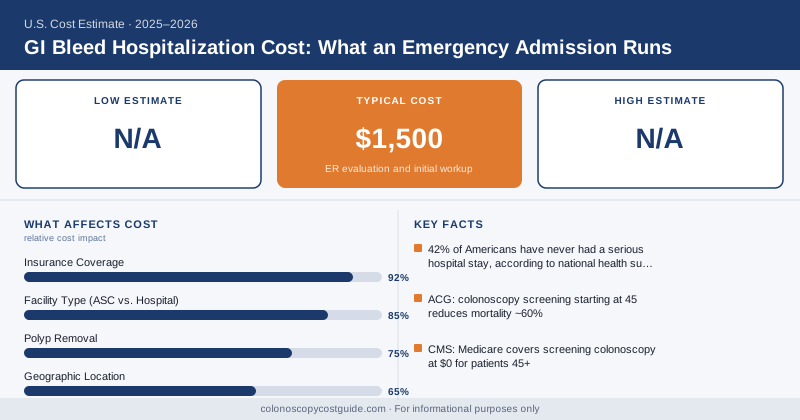
GI Bleed Hospitalization Cost: What an Emergency Admission Runs
{ if eq .Lang "zh" }{ else }{ end }42% of Americans have never had a serious hospital stay, according to national health survey trends — which means most people have no idea what a GI bleed admission actually costs until they’re the one signing the intake paperwork in an ER at 2 a.m.
Here’s the real number, broken into pieces.
What Drives the Bill
| Cost Component | Typical Range |
|---|---|
| ER evaluation and initial workup | $1,500 – $6,000 |
| Inpatient floor bed (per day) | $2,500 – $6,000 |
| ICU bed (per day, if needed) | $6,000 – $15,000 |
| Emergency/urgent colonoscopy or EGD | $2,500 – $8,000 |
| Blood transfusion (per unit) | $500 – $1,500 |
| Total 2-4 day uncomplicated stay | $15,000 – $30,000 |
| Total ICU-level, multi-transfusion stay | $40,000 – $60,000+ |
A GI bleed isn’t a single billed service — it’s a bundle of ER care, imaging, an urgent endoscopic procedure to find and stop the bleed, possible transfusions, and days of inpatient monitoring. Each piece bills separately, and they add up fast.
Why Severity Changes Everything
A slow, self-limiting bleed caught early might mean a two-day floor admission with one endoscopy and no transfusion — expensive, but on the lower end of the range. A brisk upper GI bleed with hemodynamic instability can mean an ICU admission, multiple transfusion units, and a repeat endoscopic procedure, pushing costs toward the top of the range or beyond.
Key Takeaway
How Insurance Actually Handles This
Because a GI bleed is an emergent, medically necessary condition, it’s covered under your plan’s standard emergency and inpatient hospitalization benefits — there’s no preventive-care ambiguity here like there is with routine screening colonoscopies. Your actual out-of-pocket cost depends on where you are relative to your deductible and out-of-pocket maximum for the year.
What Happens After Discharge
Following a GI bleed hospitalization, you’ll likely need a follow-up outpatient visit with a gastroenterologist and possibly a repeat colonoscopy or endoscopy weeks later to confirm healing, which bills separately from the hospitalization itself. Related conditions like black or tarry stool workups or ongoing blood in stool evaluation may also follow.
Negotiating the Bill Afterward
Once you’re stable and home, it’s worth requesting an itemized bill and checking every line for errors, then applying for the hospital’s financial assistance program if the total creates real hardship — nonprofit hospitals are required to offer one, and a nurse navigator, if your hospital has one, can help you apply.
Bottom Line
A GI bleed hospitalization typically runs $15,000-$60,000+, driven mainly by ICU need and transfusion volume. It’s fully covered as emergency care under standard insurance, but knowing the cost structure helps you understand your bill and know what to negotiate once you’re safely home.
{ if eq .Lang "zh" }