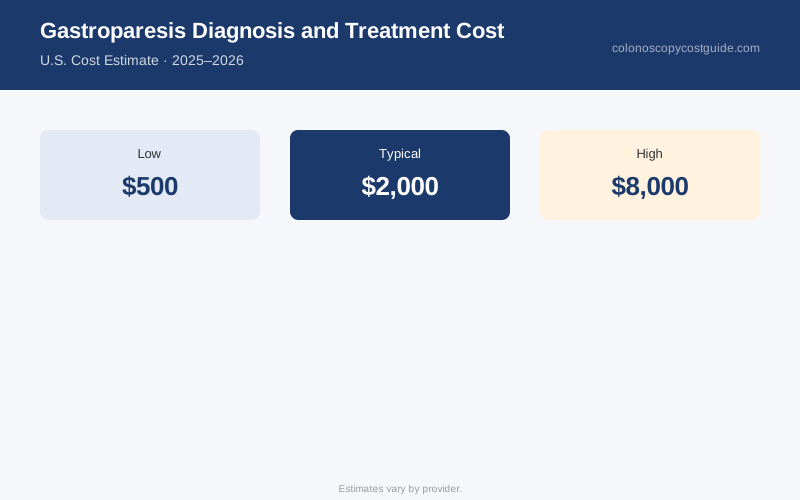
Gastroparesis Diagnosis and Treatment Cost: Full Breakdown for 2025–2026
She’d been nauseated after every meal for eight months. Three different doctors had told her to “eat smaller portions” before a gastric emptying study finally revealed the problem: gastroparesis. The diagnosis cost her $1,400. Getting that answer — and starting effective treatment — changed everything.
If you’re dealing with unexplained nausea, early fullness, or vomiting after meals, gastroparesis is a real possibility, and the diagnostic and treatment costs are worth understanding upfront.
What Is Gastroparesis?
Gastroparesis is a condition where the stomach empties too slowly — not because of a blockage, but because the nerves or muscles controlling gastric emptying aren’t working properly. According to the National Institute of Diabetes and Digestive and Kidney Diseases (NIDDK), it affects approximately 5 million Americans, with diabetic gastroparesis (a complication of long-standing diabetes) being the most common cause.
Idiopathic gastroparesis (no identifiable cause) accounts for 36% of cases; diabetic gastroparesis accounts for 29%, according to data from the Gastroparesis Clinical Research Consortium published in 2012.
Diagnostic Costs
The gold-standard test is the gastric emptying scintigraphy (gastric emptying study), though several other tests may be ordered first or alongside it.
| Diagnostic Test | Typical Cost (Uninsured) |
|---|---|
| GI specialist office visit | $200 – $450 |
| Gastric emptying scintigraphy (nuclear medicine) | $500 – $1,800 |
| Upper endoscopy (EGD) — to rule out obstruction | $800 – $3,500 |
| Abdominal ultrasound — to rule out gallbladder disease | $200 – $600 |
| Gastric emptying breath test (alternative to scintigraphy) | $200 – $500 |
| SmartPill wireless motility capsule | $1,000 – $2,500 |
| Blood work (HbA1c, thyroid, CBC) | $100 – $300 |
| Total diagnostic workup | $1,200 – $7,000 |
The gastric emptying study is the core cost. You eat a standardized meal (usually scrambled eggs with a small amount of radioactive tracer) and a nuclear medicine camera images your stomach at 1, 2, and 4 hours post-meal to measure how much food remains. Insurance almost always covers it when ordered for appropriate GI symptoms — but prior authorization is common.
Treatment Costs: Medications
There’s no cure for gastroparesis. Treatment focuses on managing symptoms and improving stomach emptying. Medication is the first line.
Metoclopramide (Reglan, generic): The only FDA-approved prokinetic agent for gastroparesis. Generic is cheap — $15–$30/month. But the FDA requires a black-box warning about tardive dyskinesia risk with long-term use, so most physicians limit courses to 12 weeks.
Domperidone: Not FDA-approved in the US but available through compounding pharmacies or from Canadian/overseas pharmacies under compassionate use protocols. Cost: $50–$150/month from compounding pharmacies.
Erythromycin (oral): A low-dose antibiotic that also accelerates gastric emptying. Generic is inexpensive — $10–$30/month — but tolerance develops quickly, limiting long-term usefulness.
Antiemetics (for nausea control):
| Medication | Monthly Cost (Generic) | Use |
|---|---|---|
| Ondansetron (Zofran generic) | $10 – $40 | Nausea/vomiting |
| Promethazine | $10 – $25 | Nausea relief |
| Prochlorperazine | $10 – $30 | Nausea/vomiting |
| Mirtazapine (off-label) | $10 – $25 | Nausea, appetite stimulation |
| Metoclopramide (generic) | $15 – $30 | Prokinetic (first-line) |
Treatment Costs: Procedures and Surgery
When medications fail, interventional options come into play.
Gastric electrical stimulation (Enterra Therapy): An implanted device that sends electrical impulses to the stomach muscles. FDA-approved under humanitarian device exemption for refractory gastroparesis. Device + implantation: $25,000 – $45,000. Major insurers including Medicare and most commercial plans cover Enterra for refractory cases with documentation of failed medical therapy.
Pyloromyotomy (POEM-G or laparoscopic): A procedure cutting the pyloric muscle to improve emptying. Increasingly performed endoscopically (G-POEM). Hospital cost: $8,000 – $20,000. Medicare and most commercial plans cover laparoscopic pyloromyotomy; G-POEM coverage is expanding but still varies by payer.
Jejunostomy feeding tube: For severe cases where oral nutrition is inadequate. Placement: $3,000 – $8,000 (surgery center). Ongoing tube feeding supplies: $1,000 – $3,000/month. Usually covered by Medicare and commercial insurance with appropriate documentation.
Insurance Coverage Notes
Coverage Essentials for Gastroparesis Patients
- Gastric emptying scintigraphy is covered by Medicare Part B under CPT 78264 (gastric emptying imaging study) — you pay 20% after deductible.
- Metoclopramide is on virtually every formulary at Tier 1 (generic) pricing.
- Enterra gastric stimulation requires extensive documentation: typically 12+ months of failed medical management, documented nutritional impairment, and specialist attestation.
- Jejunostomy feeding: covered under Medicare Part B (durable medical equipment benefit) with physician certification of medical necessity.
- Domperidone (compounded): not covered by US insurance as it’s not FDA-approved; patient pays full cost.
The Real Annual Cost of Living With Gastroparesis
Mild-to-moderate gastroparesis, well-controlled on generic medications: $500–$2,000/year (office visits + generic meds).
Moderate-severe gastroparesis requiring specialist management, antiemetics, and dietary counseling: $3,000–$8,000/year out of pocket on a commercial plan.
Refractory gastroparesis with feeding tube or Enterra therapy: costs can exceed $15,000–$30,000+ in the year of device implantation, with ongoing costs of $2,000–$5,000/year afterward.
Finding Low-Cost Care
The Gastroparesis Patient Association (G-PACT) maintains a directory of specialists and resources. Some academic medical centers offer GI motility clinics with specialty expertise — these can be more affordable than private specialty practices and often participate in clinical trials that provide treatment at no cost.
If you’re uninsured, the NIDDK’s clinical trial network at major GI centers frequently enrolls gastroparesis patients, providing diagnostic workup and treatment at no charge in exchange for research participation.
The path to diagnosis isn’t always cheap — but it is worth it. Eight months of unexplained nausea has a real cost too, in quality of life and repeated urgent care visits that add up without ever providing an answer.