Gastric Polyp Removal Cost: What Stomach Polyp Removal Runs
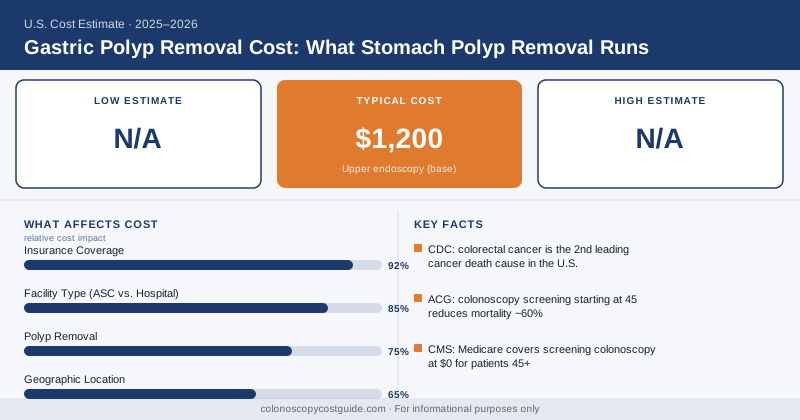
{ if eq .Lang "zh" }{ else }{ end }You went in for an upper endoscopy because of reflux or vague stomach trouble, and the doctor found a polyp. First reaction: is it cancer? Second reaction, usually within minutes: what’s this going to cost? The honest answer is that removing a stomach polyp usually runs $1,800 to $4,500 — and most of these polyps turn out to be harmless.
Gastric polyps are growths on the stomach lining, and the most common type — fundic gland polyps — are very often benign and linked to long-term acid-suppressing medication. The NIDDK notes that polyps in the GI tract are frequently incidental findings during endoscopy. Adenomatous polyps are less common but carry more risk, which is why pathology matters.
What removal costs
Most gastric polyps are removed during the same upper endoscopy that finds them, using a snare or biopsy forceps. So the cost is essentially an EGD plus the removal and pathology.
| Component | Typical Cost |
|---|---|
| Upper endoscopy (base) | $1,200–$3,000 |
| Polypectomy add-on | $300–$1,000 |
| Pathology (per specimen) | $200–$600 |
| Anesthesia/sedation | $400–$1,200 |
Bundled together, a typical insured patient sees a total facility-and-physician charge of $1,800 to $4,500. For the underlying scope mechanics, our upper endoscopy (EGD) cost guide breaks down each fee.
Not every polyp needs removal
Here’s the cost-saving nuance. Small fundic gland polyps — the most common kind — are frequently just biopsied or left in place if they look classic and you have several of them. Removing dozens of tiny benign polyps would be expensive and pointless. Doctors typically remove polyps that are large (over about 1 cm), adenomatous, ulcerated, or otherwise suspicious.
Key Takeaway
The PPI connection
If your polyps are fundic gland type and you’ve been on a proton pump inhibitor for years, your doctor may discuss whether you still need the medication, since long-term PPI use is associated with these polyps. That’s worth a conversation — not because the polyps are dangerous, but because it ties into your overall reflux management. Our GERD treatment cost guide covers the long-term PPI picture and alternatives.
Insurance and follow-up costs
When a polyp is found and removal is recommended, it’s medically necessary, so insurance and Medicare cover it. Your out-of-pocket is your deductible and coinsurance. Self-pay patients should ask for a bundled cash price and review the itemized bill, since pathology is sometimes billed separately by an outside lab. See endoscopy cost without insurance for how to handle that.
Depending on what the pathology shows, you may need a surveillance endoscopy down the road:
| Scenario | Follow-Up Cost |
|---|---|
| Benign fundic gland polyps | Usually none |
| Hyperplastic polyps | Possible repeat scope, $1,500–$3,000 |
| Adenomatous polyps | Surveillance scope, $1,500–$3,000+ |
Bottom line
Finding a stomach polyp is unsettling, but the cost and the risk are usually modest. Removal, when it’s needed, adds a manageable amount to your endoscopy bill, and most polyps come back benign on pathology. Ask your gastroenterologist whether removal is actually necessary, whether your PPI is contributing, and whether you’ll need any follow-up — those three answers shape your real cost. And if you’ve got colon screening coming up too, our colonoscopy cost guide rounds out your GI budget.
{ if eq .Lang "zh" }