FOBT Cost: Guaiac vs. Immunochemical — What You'll Pay and What Insurance Covers
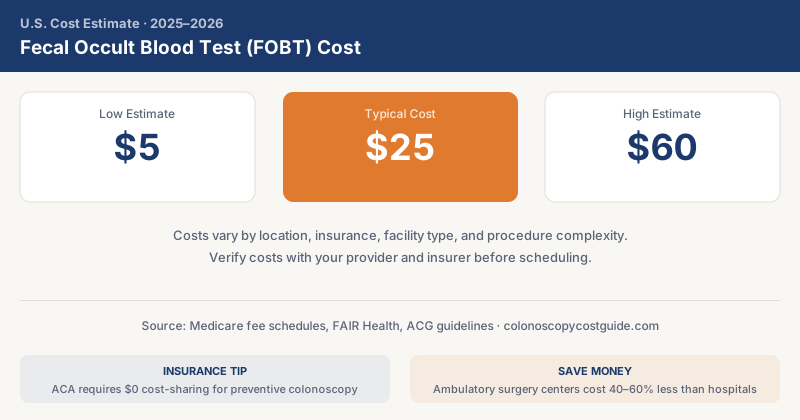
{ if eq .Lang "zh" }{ else }{ end }Most people assume colorectal cancer screening costs hundreds of dollars. The guaiac FOBT runs you as little as $5.
That’s not a typo. A take-home guaiac fecal occult blood test — the kind your doctor hands you in a little cardboard kit — is one of the cheapest cancer screenings in American medicine. And yet roughly 34% of adults in the US aren’t up to date on any form of colorectal cancer screening, according to CDC data from 2023. Cost shouldn’t be the barrier with a test this inexpensive.
Here’s what each version of the FOBT actually costs, what insurance pays, and what happens financially when the test comes back positive.
The Two Types of FOBT — and Their Price Gap
“FOBT” is an umbrella term for two different technologies:
Guaiac FOBT (gFOBT) — the older, chemical-reaction-based test. You collect stool samples on cardboard cards, apply a developing solution, and a blue color indicates blood. Brand name: Hemoccult.
Fecal Immunochemical Test (FIT) — a newer antibody-based version that’s more specific to human hemoglobin. Less affected by diet. Same take-home format, higher accuracy. Technically a separate category, but often grouped under “FOBT” by insurers.
| Test Type | Cash Price | With Insurance |
|---|---|---|
| Guaiac FOBT (take-home kit) | $5 – $25 | $0 (preventive) |
| Guaiac FOBT (in-office processing) | $15 – $50 | $0 (preventive) |
| FIT (fecal immunochemical test) | $20 – $60 | $0 (preventive) |
| High-sensitivity gFOBT | $20 – $45 | $0 (preventive) |
| Lab processing fee (if billed separately) | $10 – $30 | Varies |
Insurance Coverage: Free Under the ACA
Under the ACA’s preventive care mandate, both guaiac FOBT and FIT are covered at $0 cost-sharing when ordered as colorectal cancer screening for average-risk adults 45 and older. This applies to most employer plans and ACA marketplace plans — no copay, no deductible applies.
Medicare covers FOBT too. Medicare Part B pays for a high-sensitivity guaiac FOBT or FIT every 12 months for enrolled beneficiaries. No coinsurance, no Part B deductible. The lab submits the claim directly.
If Your Plan Is Grandfathered
What the Test Actually Detects (and Misses)
The USPSTF recommends annual high-sensitivity guaiac FOBT or annual FIT as acceptable alternatives to colonoscopy for average-risk adults starting at age 45. Both tests have good sensitivity for colorectal cancer but lower sensitivity for precancerous polyps.
According to a 2023 meta-analysis published in JAMA, a single FIT round detects about 79% of colorectal cancers but only about 24% of advanced precancerous adenomas. Guaiac FOBT’s sensitivity is somewhat lower. That’s why annual testing is essential — you’re relying on catching the cancer early rather than removing precancerous polyps like colonoscopy does.
The Real Cost Trigger: A Positive Result
Here’s the part that surprises people. The $20 FIT itself is essentially free — but a positive result requires a follow-up diagnostic colonoscopy. And that colonoscopy won’t be billed as a preventive screening.
This is where the “FOBT is free” story gets more complicated:
| Step After Positive FOBT | Typical Cost |
|---|---|
| Diagnostic colonoscopy (facility) | $1,200 – $3,500 |
| Gastroenterologist fee | $250 – $600 |
| Anesthesia | $400 – $1,200 |
| Pathology (if polyps found) | $150 – $600 per specimen |
| Total follow-up cost | $1,800 – $5,000+ |
Whether that colonoscopy is covered as preventive or diagnostic depends on your insurance plan and the billing codes your GI practice uses. See colonoscopy cost without insurance for what to expect if you’re uninsured or underinsured.
gFOBT vs. FIT: Which Is Worth the Difference?
For a few extra dollars, FIT is the better test. The USPSTF, the American Cancer Society, and the American College of Gastroenterology all prefer FIT over guaiac FOBT because:
- FIT doesn’t require dietary restrictions before the test (no red meat, vitamin C, or aspirin restrictions like gFOBT requires)
- FIT is specific to human hemoglobin, so it has fewer false positives from food or animal blood
- FIT requires fewer samples (typically one rather than three)
The ASGE reported that FIT compliance rates are consistently higher than gFOBT because the prep burden is lower. Better compliance = better screening outcomes.
Where to Get an FOBT for Free
Even without insurance, there are ways to get FOBT done at no cost:
- Federally Qualified Health Centers (FQHCs) — sliding-scale fee clinics that provide preventive screenings based on income
- National Colorectal Cancer Roundtable programs — community screening events
- State health department programs — some states have separate colorectal cancer screening programs with income-based eligibility
- Your primary care physician’s office — many PCPs have take-home kits they distribute at no charge during annual wellness visits
If cost is the only thing standing between you and screening, call your county health department. Most have a referral to free or low-cost testing.
The Bottom Line
A guaiac FOBT costs $5 to $25 out of pocket. A FIT costs $20 to $60. With insurance or Medicare, both are free. There’s no cheaper way to start colorectal cancer screening — but you have to take it seriously. Annual testing is mandatory for these tests to work. Skip a year, and you may miss a fast-growing cancer.
If you want to understand how these tests stack up against colonoscopy and Cologuard across a 10-year timeline, see the colon cancer screening comparison cost article.
{ if eq .Lang "zh" }