FIT Test vs. Cologuard Cost: Which At-Home Screen Saves You More?
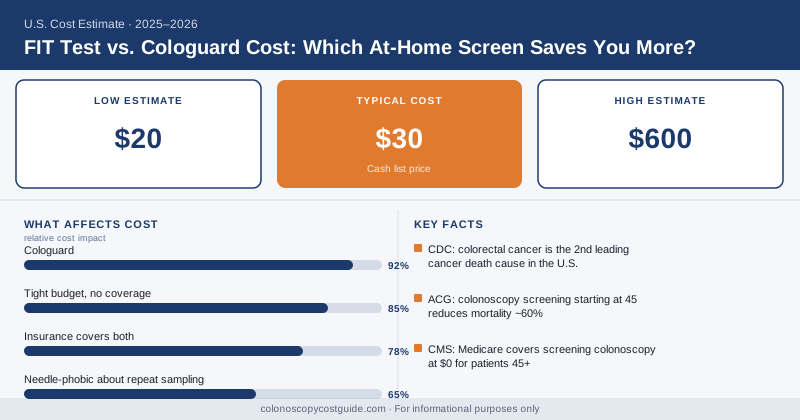
{ if eq .Lang "zh" }{ else }{ end }Twenty bucks or six hundred? That’s the gap between the two stool tests your doctor might hand you, and most people have no idea why one costs 30 times more than the other.
Both the FIT test and Cologuard let you screen for colon cancer without prepping for or undergoing a scope. But they work differently, repeat on different schedules, and carry wildly different price tags. Here’s how the math actually shakes out.
The Headline Numbers
A fecal immunochemical test (FIT) detects hidden blood in your stool. It’s cheap to manufacture and ships in a small kit. Cash prices typically run $20 to $30, and many labs charge even less. Cologuard adds DNA-marker analysis on top of the blood test, which is why its list price sits around $600.
| Factor | FIT Test | Cologuard |
|---|---|---|
| Cash list price | $20 – $30 | ~$600 |
| Repeat interval | Every year | Every 3 years |
| With insurance (preventive) | $0 | $0 |
| What it detects | Hidden blood | Blood + DNA markers |
| Positive result requires | Colonoscopy | Colonoscopy |
The U.S. Preventive Services Task Force gave both tests an “A” recommendation in 2021 for average-risk adults starting at age 45. That A-grade is what forces most ACA-compliant plans to cover them at $0 — so for many people, the cash price never comes up. But if you’re uninsured or your plan is grandfathered, the difference is enormous.
The 10-Year Cost, Done Honestly
Here’s where the repeat schedule matters. The American Cancer Society notes FIT should be done annually, while Cologuard is approved for every 3 years. Run the cash math over a decade:
- FIT: ~$25 × 10 years = roughly $250
- Cologuard: ~$600 × 4 kits (years 1, 4, 7, 10) = roughly $2,400
So even though Cologuard is “less frequent,” its per-kit premium swamps the savings. For cash payers, FIT wins by a landslide.
Key Takeaway
Accuracy Trade-Offs Behind the Price
Cologuard’s higher price buys higher sensitivity for cancer in a single sitting — but it also produces more false positives, and a false positive lands you in a colonoscopy you may not have needed. A FIT test is less sensitive per round, but doing it every year catches up over time. Neither replaces a colonoscopy; they’re triage tools that decide whether you need the scope.
That downstream scope is the budget wildcard. If either test comes back positive, you’ll need a follow-up colonoscopy — and that’s frequently coded as diagnostic rather than preventive, which can trigger cost-sharing. Read more in our cologuard vs colonoscopy cost comparison before you choose.
Who Should Pick Which
- Tight budget, no coverage: FIT every year is hard to beat on price.
- Insurance covers both: Talk to your doctor; convenience and risk profile matter more than the sticker.
- Needle-phobic about repeat sampling: Cologuard’s 3-year gap may feel easier even at cash prices.
- Symptoms present (bleeding, change in habits): Skip both stool tests. You likely need a diagnostic colonoscopy, not a screen.
The Bottom Line
For pure cost, FIT crushes Cologuard — about $250 versus $2,400 over 10 years out of pocket. For insured average-risk adults, both are usually free, so the decision shifts to comfort and your physician’s recommendation. Just remember the real expense often arrives later: a positive result on either test points to a colonoscopy cost you’ll want to plan for. If money is the deciding factor and you’re uninsured, learn how to negotiate that scope in our guide on how to lower your colonoscopy bill.
{ if eq .Lang "zh" }