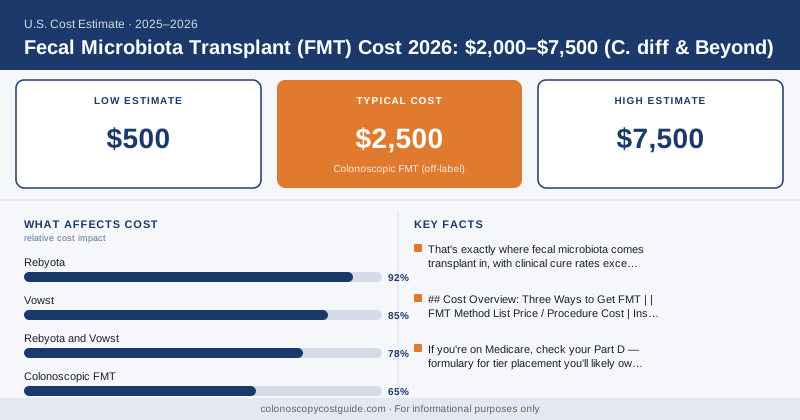
Fecal Microbiota Transplant (FMT) Cost 2026: $2,000–$7,500 (C. diff & Beyond)
{ if eq .Lang "zh" }{ else }{ end }42% of Clostridioides difficile patients who clear their first infection will relapse. After a second recurrence, you’re in rough territory — antibiotics alone fail more than half the time. That’s exactly where fecal microbiota transplant comes in, with clinical cure rates exceeding 90% according to the American Gastroenterological Association’s 2023 guidelines.
The financial picture has changed since 2022, when the FDA approved the first commercial FMT products. What you pay now depends a lot on which form of FMT you get.
Cost Overview: Three Ways to Get FMT
| FMT Method | List Price / Procedure Cost | Insured Out-of-Pocket |
|---|---|---|
| Colonoscopic FMT (off-label) | $2,000–$7,500 | $500–$2,500 |
| Rebyota (fulgancimab-ebsl) — FDA approved | $8,000–$12,000 drug cost | $0–$2,000 with copay assist |
| Vowst (SER-109 capsules) — FDA approved | $9,000–$17,500 drug cost | $0–$3,000 with copay assist |
| Stool donor testing alone (if done separately) | $400–$1,200 | Varies by plan |
Colonoscopic FMT is the procedure most people picture: a gastroenterologist performs a colonoscopy and infuses screened donor stool directly into your colon. It’s been used for over a decade and has the strongest long-term evidence base.
Rebyota and Vowst are processed biologic products derived from human donor stool. They’re not cheaper than the procedure — their list prices are actually higher — but FDA approval means they can be billed through pharmacy benefits, which often results in lower patient cost after insurance.
Breaking Down Colonoscopic FMT Costs
If you’re getting a traditional colonoscopic FMT, here’s what builds the total bill:
| Component | Typical Cost (No Insurance) |
|---|---|
| Donor stool screening and processing | $400–$1,500 |
| Colonoscopy facility fee | $1,200–$4,000 |
| Gastroenterologist physician fee | $350–$1,000 |
| Anesthesia (propofol sedation) | $500–$1,200 |
| Pre-procedure vancomycin course (4 days) | $20–$60 |
| Total | $2,000–$7,500 |
Some academic medical centers bundle the entire cost into a single procedure charge or include FMT as part of a clinical protocol at significantly reduced rates. It’s worth calling your regional academic GI center and asking directly — their self-pay price can be $1,500–$3,000 lower than a private practice.
Stool Donor Testing: What Gets Screened
FDA-Approved Products: Rebyota and Vowst
Rebyota (Ferring Pharmaceuticals, approved November 2022) is a single-dose enema administered in-clinic. You receive it after completing a course of antibiotics to reduce existing C. diff. The list price is around $10,000, but Ferring’s Cares program provides it free to uninsured patients and as a $0 copay for eligible commercially insured patients.
Vowst (Seres Therapeutics, approved April 2023) consists of four oral capsules taken once daily for four days — no endoscopy required. It’s the first orally administered FMT product. List price is $9,900 for the full course. The SeresCares program offers copay assistance and income-based free product access.
Both carry Medicare Part D coverage as of 2024. If you’re on Medicare, check your Part D formulary for tier placement — you’ll likely owe $500–$2,500 depending on your plan’s specialty tier structure.
Insurance Coverage: What’s Changed Since 2023
The FDA approvals changed the coverage landscape. Before 2023, colonoscopic FMT was often covered inconsistently — some plans approved it, others denied it as experimental. Today:
- Rebyota and Vowst: Covered by most major commercial plans (UnitedHealthcare, BCBS, Aetna, Cigna) when prescribed for recurrent C. diff after at least two prior episodes. Prior authorization required.
- Colonoscopic FMT: Still covered by many plans as a colonoscopy procedure plus CPT 44705 for the FMT material. Call your insurer with both codes before scheduling — some plans still deny the 44705 charge.
- Medicare Part B: May cover colonoscopic FMT under the colonoscopy benefit; coverage for the material fee varies by MAC (Medicare Administrative Contractor).
FMT for Non-C. diff Conditions: Out-of-Pocket Only
Researchers are actively studying FMT for Crohn’s disease, ulcerative colitis, irritable bowel syndrome, metabolic syndrome, and even psychiatric conditions. The science is genuinely promising. But right now, none of these applications are FDA-approved or covered by insurance.
If you’re interested in FMT for conditions other than C. diff, the only legitimate path is enrollment in a registered clinical trial (clinicaltrials.gov). Out-of-pocket costs for investigational FMT at US academic centers typically run $1,500–$5,000, and some trials cover the cost entirely.
Don’t pay international FMT clinics offering “microbiome restoration therapy” for IBD or IBS. That’s not evidence-based and you’re taking on infection risk with no regulatory oversight.
The Bottom Line
For recurrent C. diff, FMT is highly cost-effective — one successful treatment avoids repeated antibiotic courses, potential hospitalization, and years of recurrences. With insurance and copay assistance, most patients pay $500–$3,000. Without insurance, colonoscopic FMT at an academic medical center is your best self-pay option at $2,000–$5,000. The CDC reports approximately 500,000 C. diff infections annually in the US, making this one of the most consequential cost questions in GI medicine.
{ if eq .Lang "zh" }