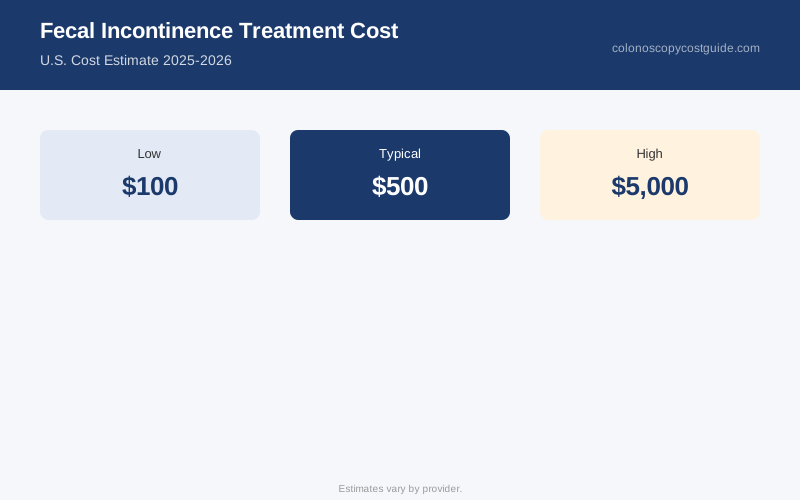
Fecal Incontinence Treatment Cost: From Pelvic Floor PT to Surgery
Fecal incontinence affects an estimated 1 in 3 people who see a primary care physician — yet most patients never bring it up. They assume nothing can be done, or they’re too embarrassed to ask. In reality, effective treatments exist at every price point, from free dietary changes to covered surgical procedures. Here’s what each option actually costs.
Who Gets Fecal Incontinence?
The American College of Gastroenterology (ACG) estimates that fecal incontinence affects 8–15% of U.S. adults. Risk factors include prior childbirth injury, aging, diabetes, inflammatory bowel disease, prior anorectal surgery, and nerve damage. It’s not a normal part of aging — it’s a medical condition with treatment options.
A 2023 report in Gastroenterology found that fewer than 30% of patients with fecal incontinence ever discuss it with a physician, meaning the majority are managing it with pads, avoidance, and social isolation — at a real personal and financial cost.
Diagnostic Evaluation Costs
Before treatment, your GI doctor or colorectal surgeon needs to understand the cause. Common diagnostic tests:
| Diagnostic Test | Typical Cost (Uninsured) |
|---|---|
| GI specialist office visit | $200 – $450 |
| Anorectal manometry (sphincter pressure testing) | $500 – $1,500 |
| Endoanal ultrasound (sphincter imaging) | $400 – $1,200 |
| Colonoscopy (rule out structural cause) | $1,500 – $4,500 |
| Defecography (MRI or X-ray) | $500 – $2,000 |
| Pudendal nerve terminal motor latency test | $300 – $800 |
| Typical workup total | $1,000 – $5,000 |
Most of these are covered by insurance when ordered for clinically documented fecal incontinence with a specific ICD-10 code (R15.0–R15.9). Prior authorization is common for defecography and some neurological testing.
Conservative Treatment Costs (First Line)
Dietary changes and fiber supplementation: Bulking the stool with psyllium husk (Metamucil generic: $10–$20/month) is inexpensive and often effective for mild cases.
Antidiarrheal medications: Loperamide (Imodium generic: $5–$15/month) reduces stool frequency and urgency. First-line for FI with loose stools.
Pelvic floor physical therapy with biofeedback: This is the evidence-based conservative treatment with the strongest data. A trained pelvic floor PT uses sensors and visual feedback to help you strengthen the external anal sphincter and improve coordination.
- Cost per session: $150 – $350 (billed as physical therapy)
- Typical course: 6–12 sessions
- Total cost: $900 – $4,200 uninsured
- With insurance: Usually covered under PT benefit; expect $20–$60 copay per session
A 2012 systematic review in Diseases of the Colon and Rectum found biofeedback improves FI symptoms in 50–80% of motivated patients — making it the most cost-effective intervention for most cases.
Injectable Bulking Agents (Solesta)
Solesta is an injectable gel (dextranomer/hyaluronic acid) injected into the anal submucosa to narrow the anal canal and improve sphincter function. It’s done in a GI or colorectal surgery office in about 10 minutes.
- Cost without insurance: $4,000 – $8,000 per treatment (includes 4 injection sites)
- May require repeat injection: Some patients need re-treatment at 6–12 months
- Insurance coverage: Most major payers cover Solesta (CPT 46999 or 0266T) for FI that has failed conservative management. Prior auth required.
Sacral Nerve Stimulation (Sacral Neuromodulation — SNS)
Medtronic’s InterStim system and the newer InterStim Micro are FDA-approved for fecal incontinence. A small implanted device sends mild electrical impulses to the sacral nerves that control bowel function.
The process involves two stages:
- Trial stimulation (tined lead test): Outpatient procedure. If symptoms improve ≥50%, you proceed to permanent implant.
- Permanent implant: Outpatient surgery.
| SNS Component | Typical Cost (Uninsured) |
|---|---|
| Trial stimulation procedure | $5,000 – $12,000 |
| Permanent device implantation | $15,000 – $30,000 |
| Device replacement (battery life 5–7 years) | $8,000 – $20,000 |
| Total first-year cost | $20,000 – $42,000 |
Insurance coverage: Medicare covers SNS for fecal incontinence (CPT 64590, 64595) with documented failed conservative therapy. Most commercial plans follow suit. With Medicare, a beneficiary typically pays the Part B 20% coinsurance — out-of-pocket roughly $3,000 – $6,000 for the permanent implant with a supplemental plan covering much of that.
Sphincteroplasty (Surgical Sphincter Repair)
For patients with anatomic sphincter defects (most commonly from obstetric injury), surgical sphincteroplasty directly repairs the torn muscle.
- Total cost (surgeon + facility + anesthesia): $8,000 – $20,000
- Results: Good short-term outcomes; long-term success rates decline over years as repaired muscle can weaken
- Insurance: Covered when medically documented sphincter defect is present
TOPAS Sling System
A newer FDA-approved implantable sling placed beneath the rectum to support the anorectal junction. Used for patients who have failed conservative and injectable treatments but aren’t candidates for SNS or sphincteroplasty.
- Cost: $12,000 – $22,000
- Insurance: Coverage expanding; requires prior auth documentation of failed first and second-line therapy
Managing Costs Practically
Get the right diagnosis first: Biofeedback is far cheaper than SNS — and equally effective for FI caused by weak but anatomically intact sphincters. Don’t skip the workup.
Use your PT benefit: If your insurance covers physical therapy, pelvic floor PT for FI counts. Many patients don’t realize this is a valid PT diagnosis.
Manufacturer programs: Medtronic offers patient assistance for InterStim for uninsured/underinsured patients. Ask your colorectal surgeon’s office about access programs.
Academic medical centers: Colorectal surgery programs at teaching hospitals often provide FI treatment at lower self-pay rates with trainees supervised by experienced attendings.
Fecal incontinence is treatable. The right conversation with a GI doctor or colorectal surgeon — at any income level — is where to start.