Fatty Liver Disease Treatment Cost: What You'll Actually Pay in 2026
{ if eq .Lang "zh" }{ else }{ end }Roughly 100 million Americans have some form of fatty liver disease, and most of them don’t know it. That stat comes from the American Liver Foundation, and it’s the reason so many people get blindsided by a diagnosis after a routine blood test. The good news? Early fatty liver is often reversible. The not-so-great news? Figuring out what treatment actually costs can feel like a guessing game.
So let’s clear it up.
What you’re really paying for
Fatty liver disease isn’t treated with one big procedure. It’s a series of smaller costs spread across the year: diagnosis, monitoring, sometimes medication, and the occasional specialist visit. The total depends heavily on how advanced your liver disease is and whether you’ve crossed into the inflammation stage (NASH).
| Service | Typical Cost (Uninsured) | With Insurance |
|---|---|---|
| Initial blood panel (ALT/AST) | $80 – $250 | $20 – $60 copay |
| Abdominal ultrasound | $200 – $700 | $50 – $200 |
| FibroScan (liver stiffness) | $300 – $1,200 | $75 – $300 |
| Gastroenterologist visit | $200 – $450 | $30 – $75 copay |
| Liver biopsy (if needed) | $1,500 – $6,000 | $500 – $1,800 |
| Annual monitoring (combined) | $400 – $2,000 | $200 – $900 |
Your first stop is usually a set of liver function tests, which flag elevated enzymes long before symptoms appear. If those come back high, your doctor will likely order an abdominal ultrasound to see the fat directly.
The diagnosis ladder: cheap to expensive
Here’s how the costs stack up as your doctor narrows things down.
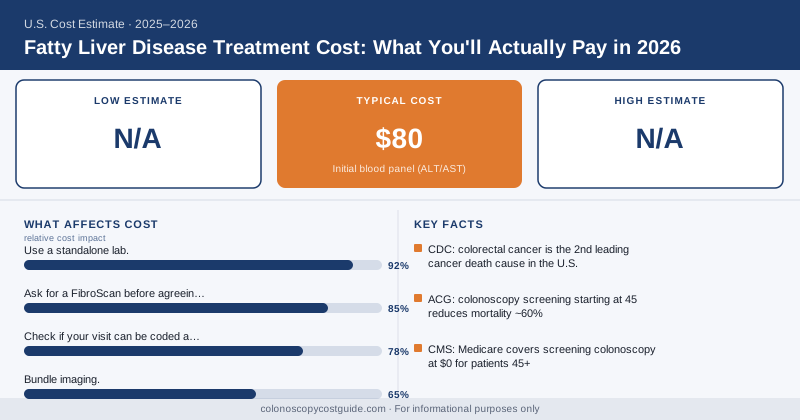
Blood work is the bargain. A basic metabolic panel plus liver enzymes might cost you $80 if you pay cash at a lab. Imaging is the next rung. Most people get an ultrasound first because it’s non-invasive and relatively affordable.
The FibroScan is where things get interesting. It’s a specialized ultrasound that measures liver stiffness and fat without a needle. It costs more, but it can spare you a liver biopsy, which is both pricier and more invasive. If your numbers are borderline, paying for a FibroScan can genuinely save money down the road.
Key Takeaway
Medication costs
For most early-stage patients, there’s no prescription at all. Treatment is lifestyle. But when fatty liver progresses to NASH with inflammation, things change.
In 2024, the FDA approved the first medication specifically for NASH-related liver scarring. Brand-name liver medications can run $500 to $1,500 a month before insurance, though manufacturer copay cards often knock that down significantly. Many people are also prescribed generics for related conditions, vitamin E, metformin, or a GLP-1 drug, which cost anywhere from $4 to $1,000+ monthly depending on the drug and your coverage.
Don’t assume you need an expensive new drug. Ask your gastroenterologist whether a generic or lifestyle-first approach makes sense for your stage.
Monitoring: the recurring cost nobody mentions
Even after diagnosis, you’re not done paying. Fatty liver requires ongoing monitoring, usually blood work every 6 to 12 months and periodic imaging. According to the NIDDK, nonalcoholic fatty liver disease is now the most common chronic liver condition in the U.S., affecting about 24 percent of adults as of recent estimates. That means a lot of people are quietly paying for annual checkups they didn’t budget for.
Budget $200 to $900 a year for monitoring if you’re insured. Uninsured? Expect $400 to $2,000.
How to keep costs down
A few practical moves:
- Use a standalone lab. Cash-pay lab panels are often cheaper than hospital-billed ones.
- Ask for a FibroScan before agreeing to a biopsy. It’s cheaper and may be enough.
- Check if your visit can be coded as preventive. Some monitoring visits qualify.
- Bundle imaging. If you’re already getting screened for other GI issues, ask whether tests can be combined.
If your fatty liver was caught during a workup for other digestive symptoms, you may have already paid for a colonoscopy or related screening, so coordinate care to avoid duplicate testing.
The bottom line
Most people with early fatty liver will spend a few hundred to a couple thousand dollars a year, mostly on monitoring and visits. Advanced disease with new medications can push past $6,000 annually. The cheapest and most effective treatment, though, is still weight loss and diet change, which is why catching it early matters so much for both your liver and your wallet.
{ if eq .Lang "zh" }