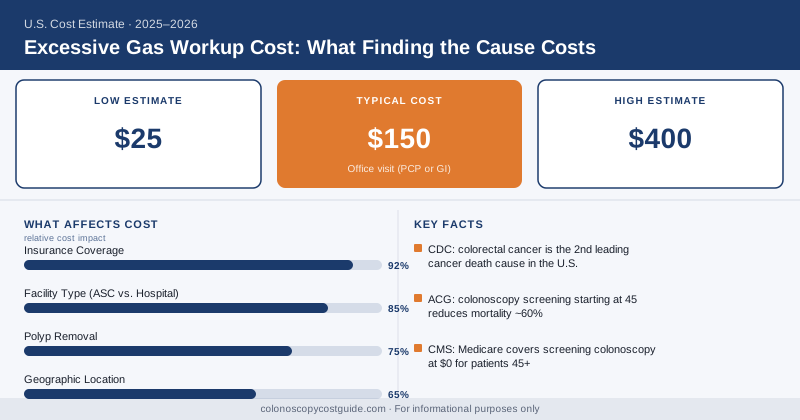
Excessive Gas Workup Cost: What Finding the Cause Costs
{ if eq .Lang "zh" }{ else }{ end }In 2010, the typical advice for chronic gas was “eat less broccoli.” Today, the workup is far more precise — and far more likely to find an actual, fixable cause like lactose intolerance or bacterial overgrowth. The cost of pinning it down is modest by GI standards, usually $150 to $3,000, with most people landing near the bottom.
Here’s what the workup involves and what each test runs.
The Diet-and-Breath-Test Approach
Excessive, persistent gas is rarely dangerous, so the workup leans on cheap, targeted tests that identify what your gut isn’t digesting well. Breath testing is the star, because gases produced by undigested sugars show up in your breath.
| First-Line Test | Cash Cost | With Insurance |
|---|---|---|
| Office visit (PCP or GI) | $150 – $400 | $25 – $75 copay |
| Hydrogen breath test (lactose) | $100 – $350 | $20 – $120 |
| Hydrogen breath test (SIBO) | $100 – $400 | $20 – $150 |
| Celiac antibody blood test | $50 – $200 | $5 – $40 |
| Basic blood panel | $80 – $250 | $5 – $50 |
The NIDDK notes that lactose intolerance affects a large portion of the U.S. adult population, with prevalence much higher in some ethnic groups, and it’s one of the most common reasons for chronic gas. A simple breath test confirms it for a few hundred dollars — no scope, no sedation, no prep day off work.
When Anything More Is Warranted
For isolated gas, the workup usually stops at breath tests and diet changes. Imaging or a scope only comes in if gas travels with something more concerning, or if initial tests suggest a structural issue.
| Escalated Test | Total Billed Cost |
|---|---|
| Abdominal X-ray | $100 – $500 |
| Abdominal ultrasound | $200 – $1,000 |
| Abdominal/pelvic CT scan | $300 – $3,000 |
| Diagnostic colonoscopy | $1,200 – $5,000 |
A CT scan or ultrasound would only be ordered if your doctor suspects an obstruction or another structural cause behind the bloating-and-gas combination. A colonoscopy is reserved for cases with genuine red flags, not for gas alone.
Key Takeaway
Why IBS Often Sits at the End of the Workup
When the breath tests and celiac panel are all normal, the diagnosis frequently lands on irritable bowel syndrome. The NIDDK estimates IBS affects 10 to 15% of U.S. adults, and gas and bloating are core features. It’s a clinical diagnosis — meaning no expensive test confirms it, which is good news for your wallet.
The Cost Bottom Line
A typical gas workup — visit plus a breath test or two — runs $250–$800 and ends with a diet plan or a probiotic. Add a celiac panel and you’re maybe at $1,000. Imaging or a scope, only if truly indicated, pushes things toward $3,000.
If you ever do need a scope and you’re uninsured, compare a colonoscopy without insurance at a cash-pay surgery center against hospital pricing. But for the vast majority of people chasing down chronic gas, the answer is cheap, fast, and never involves a scope at all.
{ if eq .Lang "zh" }