Esophageal Stent Placement Cost: Prices for Swallowing Relief in 2026
{ if eq .Lang "zh" }{ else }{ end }When swallowing food becomes a daily struggle, an esophageal stent can hand back the simple dignity of eating dinner. The procedure that delivers that relief, though, carries a steep price tag — $8,000 to $25,000 without insurance, driven largely by the stent device itself.
An esophageal stent is a self-expanding metal or plastic mesh tube that props open a narrowed esophagus. It’s placed during an endoscopy, often with X-ray (fluoroscopy) guidance, to relieve a blockage from cancer, a stricture, or a fistula. Here’s exactly what goes into the bill.
What Esophageal Stent Placement Costs
The single biggest line item is the device. A self-expanding metal stent isn’t cheap, and that flows straight through to your total.
| Cost Component | Typical Range (Uninsured) |
|---|---|
| Self-expanding stent device | $1,500 – $4,000 |
| Endoscopy and physician fee | $1,500 – $4,000 |
| Fluoroscopy / imaging guidance | $500 – $1,500 |
| Facility fee (outpatient) | $3,000 – $8,000 |
| Facility fee (inpatient, if admitted) | $6,000 – $15,000 |
| Anesthesia / sedation | $600 – $1,800 |
| Total estimate | $8,000 – $25,000 |
The placement itself shares technique with a standard upper endoscopy, but the device, imaging, and frequent inpatient setting push the total far higher.
Why the Price Is So High
Three factors stack up here, and none of them are padding:
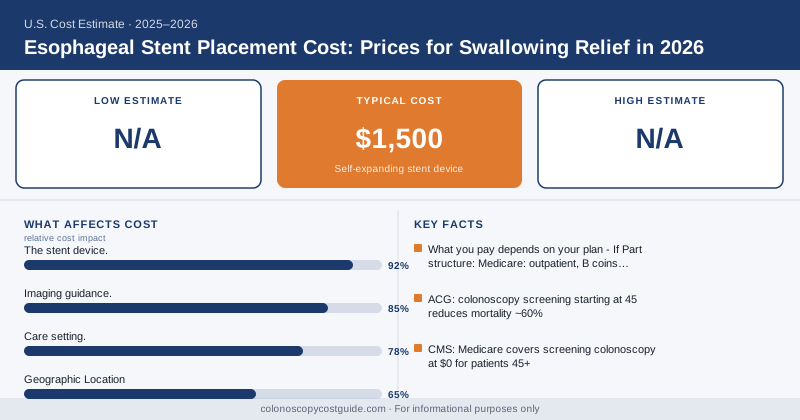
- The stent device. Self-expanding nitinol stents are precision medical hardware. They account for a large slice of the cost and aren’t reusable.
- Imaging guidance. Most placements use live fluoroscopy to position the stent precisely, adding radiology time and equipment charges.
- Care setting. Many patients getting esophageal stents are dealing with advanced cancer or acute obstruction, so placement often happens during a hospital admission — and inpatient facility fees dwarf outpatient ones.
The same facility and sedation dynamics that drive up endoscopic procedures generally are explained in why is colonoscopy so expensive.
Who Needs an Esophageal Stent
The most common reason is malignant dysphagia — trouble swallowing caused by esophageal or stomach cancer. The American Cancer Society estimates more than 22,000 new esophageal cancer cases are diagnosed in the U.S. each year, and many of those patients eventually need a stent for palliation. Per the American Society for Gastrointestinal Endoscopy (ASGE), stenting is also used for benign strictures that don’t respond to dilation, and for sealing leaks or fistulas.
Key Takeaway
Insurance and Medicare Coverage
This is a procedure insurers don’t argue about. Relieving a swallowing obstruction is clearly medically necessary, so coverage is standard across commercial plans, Medicare, and Medicaid. What you pay depends on your plan structure:
- Medicare: If outpatient, Part B coinsurance (20% after the deductible) applies. If admitted, the Part A inpatient deductible applies.
- Commercial insurance: Your deductible and coinsurance, up to your out-of-pocket maximum — which acts as your real ceiling for the year.
Because totals run high, hitting your out-of-pocket max is likely. After that, additional related care for the year is covered in full.
How It Fits With Other GI Procedures
Stenting is one tool in a larger workup. Before placement, you’ll likely have had an upper endoscopy to map the stricture and an endoscopy biopsy to identify the cause. If the narrowing involves nearby structures, an endoscopic ultrasound may stage it first. Some benign strictures are managed with dilation before stenting is even considered.
Bottom Line
Esophageal stent placement is expensive — $8,000 to $25,000 uninsured — mainly because of the device and the often-inpatient setting. But it’s a clearly necessary procedure that restores the ability to eat and drink, which means insurance and Medicare reliably cover it. Confirm whether outpatient placement is an option, verify your anesthesia provider is in-network, and you’ll likely pay only your deductible and coinsurance for a procedure that genuinely changes daily life.
{ if eq .Lang "zh" }