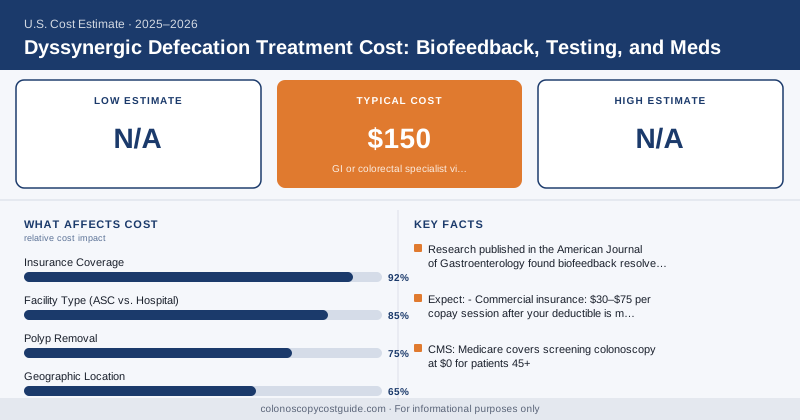
Dyssynergic Defecation Treatment Cost: Biofeedback, Testing, and Meds
{ if eq .Lang "zh" }{ else }{ end }Maria spent four years and hundreds of dollars on fiber supplements and laxatives before a GI specialist finally told her the problem wasn’t her diet — it was her muscles. She had dyssynergic defecation, meaning her pelvic floor muscles contract instead of relax when she tries to have a bowel movement. No amount of Metamucil was ever going to fix that.
If this sounds like your situation, you’re not alone. The American College of Gastroenterology estimates dyssynergia is behind roughly 25–50% of chronic constipation cases that don’t respond to standard laxative therapy. The good news: it’s treatable, and the treatment has a fairly predictable price tag.
What Dyssynergic Defecation Treatment Costs
| Component | Typical Cash Cost | Notes |
|---|---|---|
| GI or colorectal specialist visit | $150 – $400 | Initial workup and referral |
| Anorectal manometry (diagnostic test) | $300 – $2,000 | Confirms the dyssynergia diagnosis |
| Balloon expulsion test | $50 – $200 | Often bundled with manometry |
| Biofeedback therapy (per session) | $150 – $400 | 4–6 sessions typical |
| Full biofeedback course | $1,000 – $2,500 | Total for the treatment program |
| Stool softeners / fiber supplements | $20 – $60/month | Ongoing supportive care |
Why Testing Comes Before Treatment
You can’t treat dyssynergia effectively without confirming it first, which is why anorectal manometry usually comes before biofeedback gets prescribed. The test measures whether your pelvic floor muscles relax or tighten when you strain — dyssynergia patients paradoxically tighten, which blocks the exit instead of opening it.
Skipping straight to biofeedback without a confirmed diagnosis is rarely covered by insurance and rarely effective, since biofeedback is specifically designed to retrain the exact muscle pattern manometry identifies as abnormal.
How Biofeedback Sessions Work
Biofeedback isn’t a single treatment — it’s a training program. A nurse or physical therapist places sensors that show you, in real time, whether your pelvic floor is contracting or relaxing. Over 4–6 weekly sessions, you learn to consciously relax the right muscles at the right moment.
Biofeedback Success Rates Justify the Cost
Insurance Coverage
Most commercial insurers and Medicare cover biofeedback therapy under CPT code 90911 when it follows a documented abnormal manometry result. Expect:
- Commercial insurance: $30–$75 copay per session after your deductible is met
- Medicare Part B: Standard 80/20 cost-sharing after the annual deductible, roughly $30–$80 per session
- Medicaid: Covered in most states with minimal or no copay
Some plans require prior authorization for biofeedback, so ask your GI office to submit documentation of the manometry findings alongside the referral — this significantly reduces denial rates.
What If Biofeedback Doesn’t Fully Resolve Symptoms?
A minority of patients need additional support — often a referral to a pelvic floor physical therapist for manual therapy, or ongoing management of related conditions like persistent constipation. Very rarely, surgical evaluation is considered, but that’s uncommon for pure dyssynergia without a structural abnormality.
The Bottom Line
Expect to spend $1,500–$4,500 in cash prices for the full diagnostic-and-treatment pathway, or a few hundred dollars out of pocket with insurance. Compared to years of ineffective fiber and laxative purchases, biofeedback is one of the rare GI treatments that’s both cost-effective and backed by strong clinical evidence. If you’ve been told your constipation is “just diet,” and nothing has worked, ask your doctor specifically about anorectal manometry — it’s the test that unlocks the right treatment.
{ if eq .Lang "zh" }