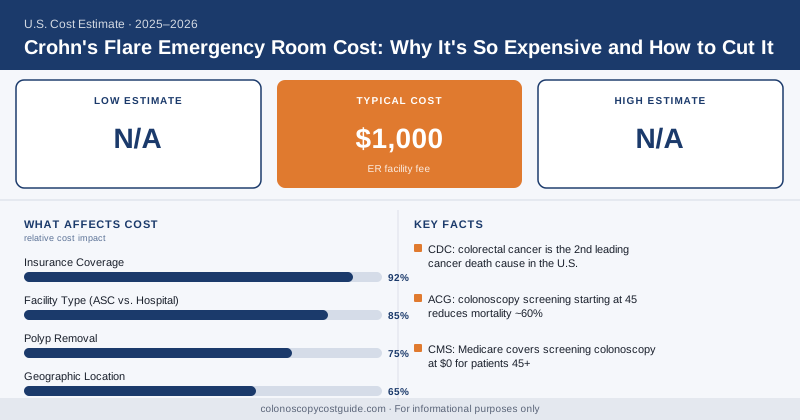
Crohn's Flare Emergency Room Cost: Why It's So Expensive and How to Cut It
{ if eq .Lang "zh" }{ else }{ end }Jake, 29, has managed Crohn’s disease for six years. When a flare hit hard on a Saturday night — cramping, fever, and pain he’d never felt before — he skipped calling his GI doctor’s after-hours line and drove straight to the ER. The bill: $6,200 for labs, a CT scan, and IV fluids, before insurance. His GI doctor later told him a phone call that night could have routed him to an urgent next-day appointment instead.
Here’s what actually drives the cost of an ER visit during a flare, and when it’s genuinely the right call.
The Real ER Cost Breakdown
| ER Component | Typical Cost |
|---|---|
| ER facility fee | $1,000 – $3,000 |
| Physician evaluation | $300 – $1,000 |
| CT scan of abdomen/pelvis | $1,500 – $6,000 |
| Labs (CBC, CRP, metabolic panel) | $300 – $1,000 |
| IV fluids and medication | $200 – $800 |
| Total, discharged same day | $3,000 – $8,000 |
| Total, if admitted | $10,000 – $20,000+ |
Notice the CT scan alone can cost more than the rest of the visit combined. ERs default to CT imaging quickly for abdominal pain in IBD patients specifically because it’s the fastest way to rule out a bowel obstruction, abscess, or perforation — all legitimate emergencies that can occur during a severe flare.
When the ER Is Genuinely Necessary
Some flare symptoms are true emergencies, not just discomfort. High fever, a rigid or severely distended abdomen, inability to keep fluids down, or signs of an obstruction (severe cramping with no bowel movement or gas) all warrant the ER regardless of cost, because a bowel obstruction, abscess, or fistula complication can become life-threatening quickly.
Key Takeaway
Why IBD Patients End Up in the ER So Often
The CDC’s National Health Interview Survey data indicates roughly 3.1 million U.S. adults have been diagnosed with inflammatory bowel disease, and flares are often unpredictable in timing — meaning many happen nights or weekends when a GI office is closed. That timing mismatch, more than medical necessity alone, drives a lot of avoidable ER utilization among IBD patients.
What Happens After the ER Visit
If your flare requires admission, costs escalate quickly into full hospitalization territory, and you’ll likely need follow-up with your IBD specialist and possibly a medication adjustment, including biologic therapy if your current regimen isn’t controlling flares adequately.
Building an Action Plan With Your GI Doctor
Ask your gastroenterologist to help you build a written flare action plan in advance — specific symptoms that warrant an urgent call versus symptoms that clearly mean the ER. Having that plan in hand during a flare removes the guesswork exactly when you’re least able to think it through calmly.
Bottom Line
An ER visit for a Crohn’s flare typically costs $3,000-$8,000 without admission and far more with one, driven heavily by CT imaging. True emergency symptoms always warrant the ER regardless of cost, but many flares can be managed through an urgent call to your GI doctor first, avoiding the ER bill entirely.
{ if eq .Lang "zh" }