Constipation Treatment Cost: From OTC Laxatives to Prescription Drugs
Chronic constipation is more common than most people admit talking about — and the cost gap between treating it well versus treating it ineffectively is enormous. The CDC’s National Health Interview Survey data shows that 4 million Americans report frequent constipation, making it one of the most common GI complaints in primary care. Yet most people spend years cycling through $10 OTC products before a GI doctor adjusts the approach and gets results.
Let’s break down what actually works and what it costs.
The Treatment Ladder: OTC First, Then Prescription
Chronic constipation is managed in tiers. Start with the cheapest evidence-based approach, escalate only if it fails, and document each step for insurance purposes when prescription options become necessary.
| Treatment | Type | Monthly Cost | Notes |
|---|---|---|---|
| Dietary fiber increase (food-based) | Lifestyle | $0 – $20 extra | Most underutilized first step |
| Psyllium husk (Metamucil, generic) | OTC fiber | $10 – $25 | Best-evidence OTC; works for mild chronic constipation |
| Polyethylene glycol (MiraLax, generic) | OTC osmotic | $15 – $30 | Highly effective; can use long-term |
| Docusate sodium (Colace) | OTC stool softener | $8 – $15 | Limited evidence for chronic constipation |
| Bisacodyl (Dulcolax) | OTC stimulant | $10 – $20 | Short-term use; avoid daily long-term |
| Senna (Senokot, generic) | OTC stimulant | $8 – $18 | Commonly used; evidence for chronic use is modest |
| Lactulose (Rx, but cheap) | Prescription osmotic | $20 – $60 | Old standby; effective; GI side effects common |
| Linzess 145mcg (linaclotide) | Rx — Tier 3 | $450 – $600 cash | Most effective for slow-transit constipation |
| Trulance (plecanatide) | Rx — Tier 3 | $400 – $550 cash | Similar to Linzess; once-daily dosing |
| Amitiza (lubiprostone) | Rx — Tier 3 | $350 – $500 cash | Works differently; FDA-approved for chronic idiopathic constipation |
| Motegrity (prucalopride) | Rx — prokinetic | $450 – $600 cash | Serotonin agonist; also works for gastroparesis-related constipation |
Generic MiraLax: The Underrated Powerhouse
Polyethylene glycol 3350 — sold as MiraLax brand or in generic form — is one of the most thoroughly studied OTC laxatives for chronic constipation. It’s osmotic (draws water into the colon), tasteless, and dissolves in any liquid. Multiple randomized trials show it outperforms lactulose and senna for chronic use.
The generic version is $15–$20 for a 30-dose supply at any major pharmacy. That’s less than a dollar a day for a treatment that works for the majority of patients with mild to moderate chronic constipation. If you’ve been spending money on specialty supplements or commercial “cleanse” products before trying plain polyethylene glycol, you’ve been wasting money.
When Prescription Drugs Make Sense
If you’ve tried 6–8 weeks of daily fiber supplementation plus MiraLax and haven’t improved, it’s time for a GI evaluation. Prescription options become appropriate when:
- OTC approaches have genuinely failed with consistent use
- Symptoms are severe enough to affect daily function
- There’s concern for a secondary cause (hypothyroidism, medication side effects, pelvic floor dysfunction)
- The constipation subtype is slow-transit constipation (where the colon moves too slowly), which responds specifically well to secretagogues like Linzess and Trulance
The $0 Linzess Strategy: Manufacturer Savings Programs
Linzess (linaclotide) has a sticker price of $450–$600/month — unaffordable for most without insurance coverage. But AbbVie (the manufacturer) offers:
For commercially insured patients: A savings card that caps your monthly cost at $0–$30/month, regardless of your insurance tier (available at linzess.com).
For uninsured/underinsured patients: A patient assistance program that provides Linzess for free to qualifying low-income patients. Income thresholds vary; apply through the manufacturer’s website.
Trulance (plecanatide) and Amitiza (lubiprostone) have similar programs. If your GI doctor prescribes a name-brand secretagogue, ask the office to check for the manufacturer savings program before you fill — the difference between $600/month and $0–$30/month is not small.
Specialist Costs: When Should You See a GI Doctor?
Primary care can manage most constipation. You should see a GI specialist when:
- Constipation began suddenly in someone over 50 (warrants colonoscopy to rule out obstructive cause)
- There’s unexplained weight loss, blood in stool, or iron-deficiency anemia
- OTC and standard Rx therapies have all failed
- Pelvic floor dysfunction is suspected (straining, sensation of incomplete evacuation, need to digitally assist defecation)
A GI specialist visit costs $200–$600 without insurance, or your specialist copay ($30–$75) with commercial insurance. If your GI doctor suspects pelvic floor dysfunction, they’ll likely order anorectal manometry and possibly refer you for biofeedback therapy — adding $400–$1,500 to the diagnostic/treatment path.
Total Annual Cost by Severity
| Scenario | Estimated Annual Cost |
|---|---|
| Mild constipation: fiber + MiraLax as needed | $200 – $400 |
| Moderate: daily MiraLax + 1–2 PCP visits | $400 – $900 |
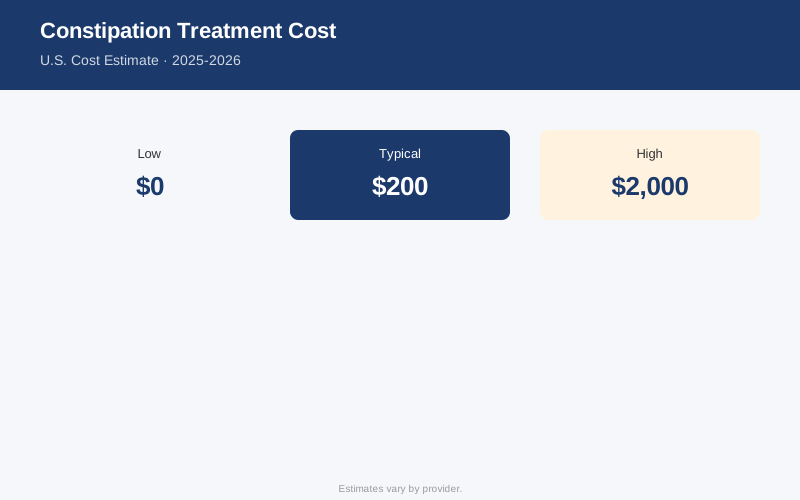
| Treatment-resistant: GI visits + Linzess (with savings card) | $800 – $2,000 |
| Complex: GI eval + anorectal manometry + biofeedback | $2,000 – $5,000 (year 1) |
Things That Don’t Work (and Just Cost Money)
Herbal laxatives and “detox teas”: Most contain senna or cascara, sold at a steep markup. If senna is appropriate for you, buy it as Senokot for $8/month — not in a $40 “wellness” tea blend.
Probiotic supplements for constipation: The evidence is weak and inconsistent. The ACG’s 2022 clinical guidelines on gut microbiota state that no specific probiotic formulation is recommended for chronic constipation based on current evidence. Save $30–$60/month.
Colonics and colon hydrotherapy: No clinical evidence of benefit for chronic constipation. Not covered by insurance. Risks include infection and electrolyte imbalance with repeated use.
Magnesium supplements in high doses: Magnesium citrate or magnesium oxide can act as a mild osmotic laxative — and at $5–$15/month it’s a reasonable option for some patients. But high-dose magnesium carries kidney risk, especially in older adults or those with chronic kidney disease. Use only with physician knowledge.
Chronic constipation costs most when it’s undertreated for years — in quality of life, repeat doctor visits, and OTC products that don’t address the underlying problem. A direct path from dietary changes → polyethylene glycol → GI evaluation (if needed) → appropriate prescription with manufacturer savings is both the most effective and the most cost-efficient approach.