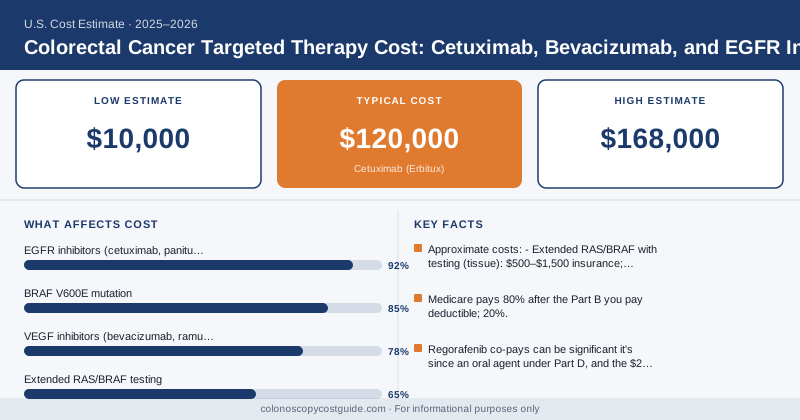
Colorectal Cancer Targeted Therapy Cost: Cetuximab, Bevacizumab, and EGFR Inhibitors
Most patients with metastatic colorectal cancer will encounter targeted therapy at some point in their treatment — and the price tags are jarring. Cetuximab (Erbitux) runs $10,000–$14,000 per month at list price. Bevacizumab (Avastin) costs $8,000–$12,000 monthly. Add in the chemotherapy backbone they’re combined with, and you’re looking at $200,000–$350,000 per year in drug costs alone. Here’s how to understand what you’ll actually pay.
The American Cancer Society estimates that about 52,900 Americans die from colorectal cancer each year — it remains the 2nd leading cause of cancer death when men and women are combined. For metastatic disease (Stage IV), targeted agents added to chemotherapy have extended median survival from roughly 12 months (early 2000s) to over 30 months today.
Major Targeted Agents for Colorectal Cancer
| Drug | Target | Monthly List Price | Annual Estimate | Biosimilar/Generic? |
|---|---|---|---|---|
| Cetuximab (Erbitux) | EGFR | $10,000–$14,000 | $120,000–$168,000 | Biosimilar in development |
| Panitumumab (Vectibix) | EGFR | $9,000–$13,000 | $108,000–$156,000 | No |
| Bevacizumab (Avastin) | VEGF/angiogenesis | $8,000–$12,000 | $96,000–$144,000 | Yes — Mvasi, Zirabev |
| Ramucirumab (Cyramza) | VEGFR-2 | $7,000–$11,000 | $84,000–$132,000 | No |
| Ziv-aflibercept (Zaltrap) | VEGF/PLGF | $9,000–$13,000 | $108,000–$156,000 | No |
| Encorafenib (Braftovi) + Binimetinib | BRAF V600E | $15,000–$22,000 | $180,000–$264,000 | No |
| Regorafenib (Stivarga) | Multi-kinase | $8,000–$13,000 | $96,000–$156,000 | No |
| Trifluridine/tipiracil (Lonsurf) | DNA synthesis | $11,000–$16,000 | $132,000–$192,000 | No |
These are WAC (Wholesale Acquisition Cost) list prices. Insurance-negotiated rates typically run 15–40% lower. For bevacizumab, biosimilars (Mvasi, Zirabev, and others) are available and may cost 15–30% less than the reference product — ask your oncologist and specialty pharmacy if a biosimilar is appropriate.
Who Gets Which Agent: The RAS and BRAF Testing Factor
Targeted therapy in colorectal cancer isn’t one-size-fits-all. Genetic testing on the tumor determines eligibility:
EGFR inhibitors (cetuximab, panitumumab): Only work if the tumor is RAS wild-type (no KRAS or NRAS mutation). About 55–60% of colorectal cancers are RAS mutant — those patients don’t benefit from EGFR inhibitors and should not receive them. Left-sided tumors also respond better than right-sided ones.
BRAF V600E mutation: About 8–12% of metastatic CRC. These patients do poorly with standard therapy but respond to encorafenib + binimetinib (the BEACON CRC regimen). It’s a different price category — $15,000–$22,000/month — but response rates in this population are meaningfully better.
VEGF inhibitors (bevacizumab, ramucirumab): Don’t require RAS/BRAF wild-type status. Used across most CRC subtypes as add-ons to chemotherapy backbones.
Biomarker Testing Costs Before Targeted Therapy
Before targeted therapy can be selected, molecular profiling is required. Approximate costs:
- Extended RAS/BRAF testing (tissue): $500–$1,500 with insurance; $1,500–$4,500 without
- Comprehensive genomic profiling (Foundation One, Caris, Tempus): $3,500–$8,000 list; often covered by major commercial plans for metastatic CRC per NCCN guidelines
- Liquid biopsy (Guardant360, Foundation Medicine): $1,500–$5,000; useful when tissue is insufficient
- HER2 testing: $300–$800; relevant if considering newer HER2-targeted agents
Most commercial plans and Medicare cover biomarker testing for metastatic colorectal cancer when supported by NCCN guidelines — which they are for RAS, BRAF, MSI, and HER2 testing. Get prior authorization in writing before testing.
The Bevacizumab Biosimilar Savings Opportunity
Bevacizumab was the first targeted agent approved for colorectal cancer (2004), and it’s now off patent. Multiple FDA-approved biosimilars exist: Mvasi (Amgen), Zirabev (Pfizer), Alymsys, Vegzelma, and others. Biosimilar pricing runs approximately 15–30% below reference Avastin.
For a patient on bevacizumab-containing regimen for 12 months, that biosimilar discount could save $10,000–$25,000 in drug costs — savings that may partially pass through to your insurer’s negotiated rate and ultimately to your cost-sharing. Ask your oncologist or infusion pharmacist whether a biosimilar substitute is available and appropriate for your regimen.
Insurance Coverage Reality
Commercial insurance. Most employer-sponsored plans cover FDA-approved targeted therapies for colorectal cancer with prior authorization. The PA process typically requires documented Stage IV diagnosis, pathology confirming CRC, and evidence of NCCN guideline-consistent biomarker testing.
Out-of-pocket under commercial insurance: You’ll typically hit your plan’s out-of-pocket maximum ($7,500–$9,450 for individual ACA plans in 2026) within the first 1–2 infusion cycles. After that, insurance covers 100% for the rest of the plan year.
Medicare. Intravenous targeted agents administered in an outpatient clinical setting are covered under Medicare Part B. Medicare pays 80% after the Part B deductible; you pay 20%. On $10,000/month in drug costs, that’s $2,000/month or $24,000/year in 20% coinsurance — a significant number. Medigap Plans G or F cover this coinsurance completely.
Oral targeted agents (regorafenib, encorafenib, trifluridine/tipiracil) fall under Medicare Part D. The Inflation Reduction Act’s $2,000 annual out-of-pocket cap for Part D drugs, effective January 2025, is significant for patients on expensive oral oncology agents.
Full Cost of a Targeted Therapy Regimen
What does a year of first-line FOLFOX + bevacizumab actually cost? Here’s a realistic breakdown:
| Component | Annual Cost (List Price) | Notes |
|---|---|---|
| Bevacizumab (Avastin/biosimilar) | $96,000–$144,000 | Every 2 weeks with FOLFOX |
| Oxaliplatin (FOLFOX backbone) | $3,000–$8,000 | Generic now; relatively inexpensive |
| 5-FU/leucovorin (FOLFOX backbone) | $2,000–$5,000 | Inexpensive generics |
| Infusion center administration fees | $15,000–$30,000 | Per-visit facility fees |
| Oncologist visits | $4,000–$8,000 | Monthly minimum |
| CT/PET imaging (response assessment) | $15,000–$40,000 | Every 8–12 weeks |
| Lab work | $3,000–$7,000 | CBC, CMP, tumor markers |
| Anti-nausea, growth factors | $2,000–$8,000 | Supportive medications |
Total annual cost at list price: $140,000–$250,000. Insurance-negotiated rates reduce this substantially, but the scale illustrates why oncology financial counseling is valuable.
Manufacturer Assistance Programs
Eli Lilly (Cyramza, Lartruvo): Patient support program offers co-pay assistance for commercially insured patients and free drug for uninsured qualifying patients.
Genentech/Roche (Avastin/bevacizumab): The Genentech Access Solutions program provides co-pay assistance and free drug programs based on income.
Bayer (Stivarga/regorafenib): Provides co-pay cards and a patient assistance program. Regorafenib co-pays can be significant since it’s an oral agent under Part D, and the $2,000 IRA cap now limits maximum out-of-pocket for Medicare patients.
Pfizer Oncology Together (Inlyta, others): Co-pay and patient assistance programs for eligible patients.
CancerCare Financial Assistance: National organization offering grants to help with co-pays, transportation, and other costs.
For a broader view of colorectal cancer costs, the comprehensive guide to colon cancer treatment covers surgery, chemotherapy, radiation, and monitoring costs in detail. And for patients who’ve completed active treatment, the colon cancer surveillance follow-up cost article covers what ongoing monitoring looks like.
Key Questions to Ask Before Starting Targeted Therapy
- Has my tumor been tested for RAS, BRAF, and MSI status?
- Is the targeted agent being proposed appropriate given my tumor’s molecular profile?
- Is there a biosimilar option for the VEGF inhibitor in my regimen?
- Will I need both IV infusion drugs AND oral drugs — and what are the coverage implications of each?
- Does your practice have a financial counselor who can review my benefits before treatment starts?
- Are there clinical trials I’d be eligible for where targeted agents might be provided at no cost?
These aren’t just financial questions — they’re clinical ones too. Biomarker-matched therapy consistently outperforms non-matched therapy in colorectal cancer. Getting the testing right before selecting the agent is both better medicine and smarter financial planning.