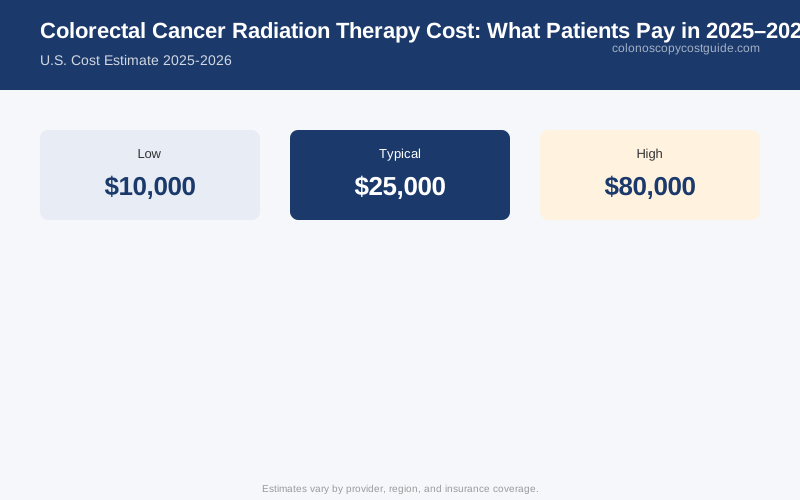
Colorectal Cancer Radiation Therapy Cost: What Patients Pay in 2025–2026
The American Cancer Society estimates that about 154,270 Americans will be diagnosed with colorectal cancer in 2026. For rectal cancer patients especially, radiation is a core part of the treatment plan — and it’s where some of the most complex billing in oncology happens.
Radiation for colorectal cancer isn’t a single treatment. It’s typically 25 to 28 daily sessions over five to six weeks, sometimes combined with chemotherapy, sometimes used as a standalone bridge before surgery. The cost of each session, the technology used, and your insurance situation combine to determine what you’ll actually pay.
Radiation Therapy Cost Overview
| Treatment Type | Sessions | Total Cost (Uninsured) | With Insurance (Est. OOP) |
|---|---|---|---|
| Conventional EBRT (3D-CRT) | 25–28 | $15,000 – $30,000 | $1,500 – $6,000 |
| IMRT (intensity-modulated) | 25–28 | $25,000 – $55,000 | $2,500 – $8,000 |
| SBRT / stereotactic (select cases) | 3–5 | $20,000 – $45,000 | $2,000 – $7,000 |
| Intraoperative radiation (IORT) | 1 (during surgery) | $8,000 – $20,000 | Included in surgery costs |
| Short-course pre-op (5×5 Gy) | 5 | $8,000 – $18,000 | $800 – $3,500 |
These ranges include simulation/planning, daily treatment delivery, on-treatment physician visits, and the treatment planning dosimetry. They don’t include concurrent chemotherapy, which is commonly added for rectal cancer.
Why Rectal Cancer Specifically Uses Radiation
Radiation is primarily used in rectal cancer, not colon cancer. The rectum’s fixed position in the pelvis makes it amenable to radiation — and the higher risk of local recurrence after surgery alone makes neoadjuvant (pre-surgery) radiation standard of care for locally advanced tumors.
For colon cancer, radiation isn’t standard because the colon moves, making consistent targeting difficult, and local recurrence is less of a concern than systemic spread.
Chemoradiation — concurrent 5-FU or capecitabine with daily radiation — is standard for stage II and stage III rectal cancer as neoadjuvant treatment. The radiation itself costs what’s shown above; the chemotherapy adds separate expenses.
Short-Course vs. Long-Course Radiation
What Insurance Covers
Commercial insurance and Medicare cover radiation therapy for colorectal cancer as a medically necessary cancer treatment. You’ll owe:
| Insurance Type | Typical Cost-Sharing |
|---|---|
| Commercial (met deductible) | 10–20% coinsurance per session |
| Commercial (HDHP, pre-deductible) | 100% until deductible, then 10–20% |
| Medicare Part B | 20% after $257 Part B deductible (2025) |
| Medicaid | Usually $0–$3 copay per session |
| ACA marketplace (silver) | Varies; out-of-pocket max typically $9,450/year |
For Medicare patients, each radiation session billed under Part B involves the 20% coinsurance — but Medigap policies (Plan G, Plan N) cover this coinsurance, making out-of-pocket costs very low for well-covered beneficiaries.
Prior Authorization and Treatment Planning
Your radiation oncologist submits a prior authorization request that includes the diagnosis code, proposed treatment plan (number of sessions, technique, doses), and supporting imaging. This is reviewed by your insurer’s oncology team. Approval is routine for appropriately staged rectal cancer.
Treatment planning itself — the simulation CT, dosimetry calculations, and physician plan approval — is billed separately from the daily treatment sessions and is typically covered under the same authorization.
Financial Assistance for Cancer Radiation Costs
Several resources exist specifically for cancer patients facing radiation treatment costs:
CancerCare: Provides financial assistance grants of $500 to $3,000 to help with treatment-related costs, including transportation to daily radiation sessions.
NeedyMeds: Maintains a database of financial assistance programs by cancer type and state.
Hospital charity care: Most academic cancer centers have financial counselors who can apply for institutional assistance or help navigate state programs. Ask to speak with a financial counselor — not a billing department — at your cancer center.
The American Cancer Society Road to Recovery program: Covers transportation to and from radiation sessions, which add up significantly over 25+ treatment days.
Radiation Side Effects and Follow-Up Costs
Radiation for rectal cancer causes pelvic side effects — bowel urgency, skin irritation, fatigue — that may require additional medical management during and after treatment. Budget for:
- Follow-up visits every 3 months for the first two years post-treatment
- Restaging CT or PET scans every 3 to 6 months
- Colonoscopy at 1 year post-surgery
- Pelvic floor physical therapy if bowel dysfunction persists
These follow-up costs add $2,000 to $5,000 annually for the first two to three years. Insurance covers all of these as medically necessary cancer surveillance.
The total cost of rectal cancer treatment — surgery, radiation, chemotherapy, and follow-up — commonly reaches $150,000 to $350,000 at billed charges. What patients actually pay depends heavily on insurance and financial assistance. You don’t have to navigate this alone — ask your cancer center for a financial counselor on your first visit.