Colorectal Cancer Immunotherapy Cost: Pembrolizumab, Nivolumab, and MSI-H Treatment
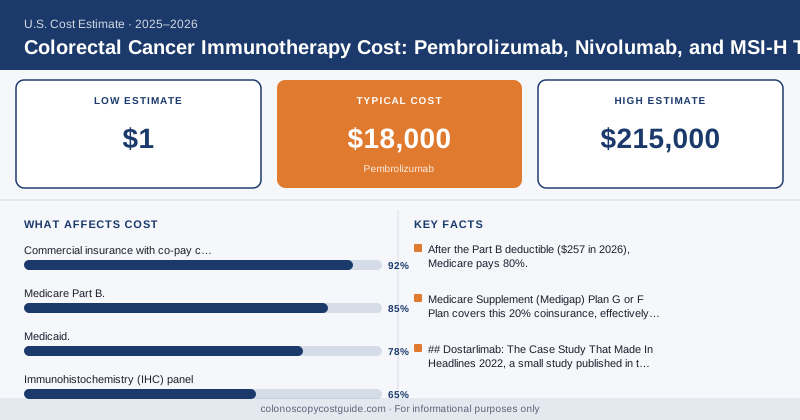
Pembrolizumab (Keytruda) for MSI-H colorectal cancer costs $12,000–$18,000 per month at list price. Nivolumab (Opdivo) runs $12,000–$16,000 per month. That’s $150,000–$200,000+ per year before any insurance discounts. If you or someone you know just received a colorectal cancer diagnosis with mismatch repair deficiency, here’s what you’re actually looking at financially — and what most patients ultimately pay.
NCI data shows colorectal cancer is the 3rd most common cancer in the U.S., with approximately 154,270 new cases estimated in 2026. About 15% of colorectal cancer cases are classified as MSI-H (microsatellite instability-high) or dMMR (mismatch repair deficient) — these are the patients who respond dramatically to checkpoint inhibitor immunotherapy.
What Immunotherapy Is Used for Colorectal Cancer
Not all colorectal cancer patients are candidates for immunotherapy. The key test is MSI/MMR status, typically run on a colon cancer treatment tissue biopsy.
| Drug | Brand | Mechanism | Monthly List Price | Annual List Price |
|---|---|---|---|---|
| Pembrolizumab | Keytruda | PD-1 inhibitor | $12,000–$18,000 | $145,000–$215,000 |
| Nivolumab | Opdivo | PD-1 inhibitor | $12,000–$16,000 | $144,000–$192,000 |
| Nivolumab + Ipilimumab | Opdivo + Yervoy | PD-1 + CTLA-4 | $18,000–$28,000 | $216,000–$336,000 |
| Dostarlimab | Jemperli | PD-1 inhibitor | $13,000–$20,000 | $156,000–$240,000 |
These are Wholesale Acquisition Cost (WAC) list prices. Insurance-negotiated rates are 20–40% lower. What matters is your out-of-pocket after your plan’s negotiated rate and your cost-sharing structure.
What Patients Pay: The Real-World Picture
Commercial insurance with co-pay card. Merck (Keytruda) and Bristol Myers Squibb (Opdivo) both offer manufacturer co-pay assistance cards for commercially insured patients. These programs often cap patient cost-sharing at $0–$25 per infusion. Most commercially insured patients pay less than $500/year out of pocket with these programs active.
High-deductible plans without co-pay cards (or accumulator programs). Some insurance plans use “accumulator adjustment programs” that prevent manufacturer co-pay assistance from counting toward your deductible. In these cases, you may face $5,000–$8,000 in out-of-pocket costs in the first few months before coverage kicks in fully.
Medicare Part B. Immunotherapy infusions administered in an outpatient setting are covered under Medicare Part B, not Part D. After the Part B deductible ($257 in 2026), Medicare pays 80%. You pay 20% — which on a $15,000 monthly infusion means $3,000/month or $36,000/year without supplemental coverage. Medicare Supplement (Medigap) Plan G or Plan F covers this 20% coinsurance, effectively bringing your cost to near zero.
Medicaid. Medicaid covers FDA-approved immunotherapy drugs with prior authorization. Cost-sharing is minimal — typically $3–$8 per infusion in most states. Medicaid’s approval process may require documentation of MSI-H/dMMR status and prior treatment failure.
The MSI-H Testing Cost: What Comes Before Immunotherapy
Before starting immunotherapy, your oncologist needs to confirm MSI-H or dMMR status. Testing options and approximate costs:
- Immunohistochemistry (IHC) panel (tissue): $300–$800 with insurance, $800–$2,500 without
- PCR-based MSI testing (tissue): $500–$1,500 with insurance, $1,500–$4,000 without
- Comprehensive genomic profiling (Foundation One, Guardant): $3,500–$8,000 list price; often covered for metastatic CRC
- Liquid biopsy (ctDNA): $1,000–$5,000; useful for monitoring response
Most commercial plans cover MSI/MMR testing for metastatic colorectal cancer — the NCCN guidelines recommend it for all CRC patients, which supports coverage arguments.
Additional Costs Around Immunotherapy Treatment
The drug cost is only one line item. Here’s what a year of pembrolizumab treatment looks like in full:
| Cost Component | Annual Estimate | Notes |
|---|---|---|
| Pembrolizumab drug cost | $145,000–$215,000 (list) | Insurance-negotiated rate lower |
| Infusion center administration | $500–$2,500 per infusion | ~26 infusions/year (q3w) |
| Oncologist visits | $300–$600 each | Monthly at minimum |
| Imaging (CT, PET scans) | $3,000–$12,000/scan | Every 8–12 weeks to assess response |
| Lab work (immune toxicity panels) | $500–$2,000/quarter | Monitor for irAEs |
| Treating immune-related adverse events | $2,000–$50,000+ | Variable — steroids, endocrine drugs, hospitalization |
Immune-related adverse events (irAEs) are the wild card. About 20–30% of patients on PD-1 inhibitors experience significant side effects requiring treatment — colitis, pneumonitis, thyroid dysfunction, hepatitis. Treatment for these side effects adds real cost but is typically covered under your existing medical insurance.
Dostarlimab: The Case Study That Made Headlines
In 2022, a small study published in the New England Journal of Medicine showed that dostarlimab achieved a 100% complete clinical response rate in 12 patients with dMMR rectal cancer — none needed standard chemotherapy or radiation. The finding generated enormous attention. Dostarlimab’s list price is approximately $13,000–$20,000 per month. This doesn’t change the insurance math much compared to pembrolizumab or nivolumab, but it highlights why MSI-H/dMMR status testing before any treatment decision matters so much.
Pembrolizumab as First-Line Treatment: KEYNOTE-177 Impact
The FDA approved pembrolizumab as first-line treatment for MSI-H/dMMR metastatic colorectal cancer in 2020, based on the KEYNOTE-177 trial. That trial showed pembrolizumab significantly extended progression-free survival versus standard chemotherapy as the first treatment choice. This changed the treatment algorithm — immunotherapy isn’t just a last resort for MSI-H patients anymore, it’s often the first choice.
Financial Assistance Programs
Merck Patient Assistance Program (Keytruda). For uninsured or underinsured patients, Merck offers Keytruda at no cost through its Patient Assistance Program. Income limits apply — typically up to 400–500% of the federal poverty level.
Bristol Myers Squibb Patient Assistance Foundation (Opdivo). Similar program for nivolumab; provides free drug to qualifying uninsured or underinsured patients.
CancerCare Co-Payment Assistance Foundation. Provides grants of $500–$5,000 to help cancer patients cover immunotherapy co-pays.
NCI-Designated Cancer Centers. These centers often have dedicated financial counselors who can identify assistance programs, including clinical trials where immunotherapy is provided at no cost.
Clinical trials. Dozens of ongoing Phase II/III trials are testing immunotherapy combinations for colorectal cancer. Participants receive trial drugs free of charge. ClinicalTrials.gov lists currently enrolling studies.
For context on how immunotherapy fits into the full treatment landscape, see the detailed breakdown of colon cancer treatment costs by stage.
Is Immunotherapy Always the Right Call for MSI-H?
Cost isn’t the only reason to ask this question — but it’s legitimate. For early-stage MSI-H colorectal cancer that’s surgically resectable, surgery alone may be curative. Neoadjuvant (pre-surgery) immunotherapy is being studied but isn’t yet standard. For metastatic MSI-H disease, the data strongly favor immunotherapy over chemotherapy as first-line treatment, and most oncologists and insurance plans recognize this.
The conversation to have with your oncologist: What’s my MSI/MMR status? If I’m MSI-H, does immunotherapy replace chemotherapy entirely or combine with it? What’s the monitoring protocol, and what are the out-of-pocket implications of each?