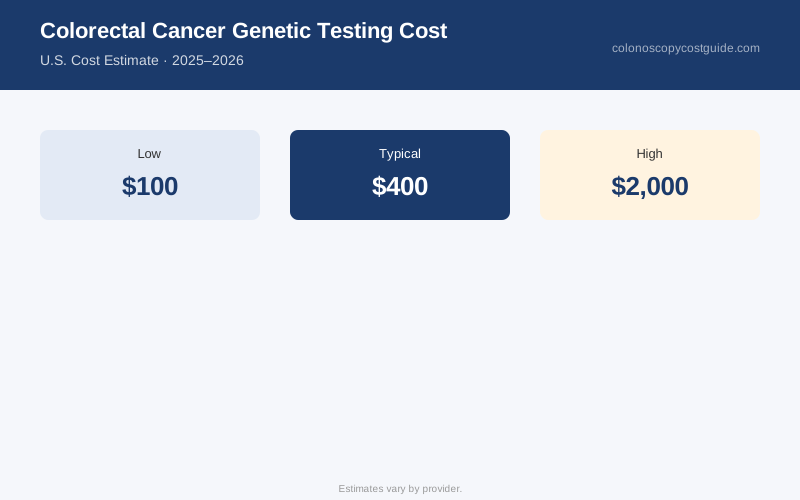
Colorectal Cancer Genetic Testing Cost: Lynch Syndrome, FAP, and More
Colorectal cancer runs in families — and not just because of shared diet or lifestyle. About 5–10% of colorectal cancers are caused by inherited gene mutations, according to the American Cancer Society’s 2024 data. Identifying those mutations can guide screening frequency, prevent cancer in family members, and change treatment decisions for people already diagnosed.
What does that genetic testing actually cost? Less than most people expect — if you qualify.
Which Syndromes Does Genetic Testing Identify?
Lynch syndrome (Hereditary Nonpolyposis Colorectal Cancer — HNPCC): The most common hereditary colorectal cancer syndrome. Caused by mutations in MLH1, MSH2, MSH6, PMS2, or EPCAM genes. Lifetime colorectal cancer risk: 50–80%. The CDC classifies Lynch syndrome testing as a Tier 1 genomic application — meaning evidence strongly supports its use in clinical practice.
Familial Adenomatous Polyposis (FAP): APC gene mutation causing hundreds to thousands of colon polyps, with near-certain cancer development by age 40 if untreated. Classic FAP: highly penetrant, usually identified early. Attenuated FAP (AFAP) has fewer polyps and later onset.
MUTYH-Associated Polyposis (MAP): Biallelic MUTYH mutations cause a FAP-like syndrome with dozens to hundreds of adenomatous polyps.
Serrated Polyposis Syndrome: Not a single-gene condition, but strong familial patterns warrant genetic evaluation in some patients.
PTEN Hamartoma Tumor Syndrome (Cowden syndrome): Includes colorectal polyps and elevated cancer risk among other features.
What Does Genetic Testing Cost?
Costs depend heavily on the test panel size, the lab, and whether tumor testing is done first.
| Test Type | Typical Self-Pay Cost |
|---|---|
| Single gene test (e.g., MLH1 only) | $200 – $600 |
| Mismatch repair (MMR) 4-gene panel | $250 – $800 |
| Lynch syndrome comprehensive panel (MLH1, MSH2, MSH6, PMS2, EPCAM) | $400 – $1,200 |
| Hereditary colorectal cancer multi-gene panel (10–30 genes) | $400 – $2,500 |
| APC gene sequencing (for FAP) | $400 – $1,000 |
| Comprehensive FAP panel (APC + deletion/duplication analysis) | $600 – $1,800 |
| Universal tumor MMR/MSI testing (IHC or PCR) | $300 – $900 |
| Germline testing following tumor MMR loss | $250 – $800 |
Major commercial genetic testing labs — including Invitae, Ambry Genetics, GeneDx, and Myriad Genetics — offer multi-gene hereditary colorectal cancer panels at competitive self-pay prices. Invitae’s self-pay comprehensive hereditary cancer panel (which includes Lynch syndrome and FAP genes) is currently priced at $250 for patients who don’t have insurance coverage.
What Insurance Covers
This is one area where insurers are increasingly generous, because catching Lynch syndrome early is demonstrably cost-effective.
Medicare: Covers Lynch syndrome germline testing for patients diagnosed with colorectal or endometrial cancer when tumor testing shows mismatch repair deficiency (MMR-d) or microsatellite instability-high (MSI-H). NCD 90.2 (Colorectal Cancer Screening) governs coverage for familial risk assessment in some contexts.
Commercial insurance: Most major payers cover Lynch syndrome testing when:
- Patient has personal history of colorectal or Lynch-associated cancer
- Tumor testing shows MMR-d or MSI-H
- Family history meets Amsterdam II or revised Bethesda criteria
- First-degree relative with confirmed Lynch syndrome
ACA requirement: Under the ACA, BRCA genetic counseling and testing is a covered preventive service for women at elevated risk — Lynch syndrome for colorectal cancer has a similar evidence base but is not currently mandated as preventive at the federal level, so coverage varies.
Who Qualifies for Covered Testing?
You’re most likely to get insurance coverage if you have ANY of the following:
- Personal diagnosis of colorectal cancer, especially before age 50
- Personal diagnosis of endometrial, ovarian, gastric, or small bowel cancer
- First- or second-degree relative with confirmed Lynch syndrome mutation
- Three or more relatives with Lynch-associated cancers across two generations
- Colorectal cancer diagnosed in two+ generations of your family
- More than 10 cumulative adenomatous colon polyps at any age
Genetic Counseling: The Cost You Might Miss
Genetic testing should be preceded (and often followed) by genetic counseling — a session with a certified genetic counselor (CGC) who explains what the test covers, what results mean, and what actions follow from different findings.
Genetic counseling session cost: $150 – $400 per session (pre-test) + $100 – $300 post-results session. Most insurance plans cover genetic counseling when testing is covered; it’s typically billed as a specialist visit.
Telehealth genetic counseling (through platforms like Genome Medical, InformedDNA, or Color Health) often runs $150–$250 per session and may have better insurance coverage than in-person.
What If You Test Positive?
A positive Lynch syndrome result changes your colonoscopy schedule dramatically — and that’s a cost you’ll carry for life.
Lynch syndrome surveillance colonoscopy schedule: Annual or every 1–2 years starting at age 20–25. Compare that to the standard 10-year interval for average-risk adults. Over a lifetime, that’s 30–40 additional colonoscopies — a significant financial commitment, though each one is often covered as high-risk surveillance.
Cascade testing for family members: When you test positive, your first-degree relatives (parents, siblings, children) should be tested for the same mutation. Cascade testing (single-site known mutation testing) costs $100–$300 per family member — far less than the full panel, and usually covered.
The Cost of Not Testing
Lynch syndrome is in an estimated 1 in 280 people in the US, yet the CDC estimates fewer than 5% of people with Lynch syndrome have been diagnosed. Undiagnosed Lynch syndrome means routine 10-year colonoscopy intervals rather than annual surveillance — and a substantially higher likelihood of developing colorectal or endometrial cancer at a young age. Treatment costs for advanced colorectal cancer easily exceed $100,000–$300,000, depending on stage and treatment regimen.
A $250–$400 genetic test — or even a $1,200 comprehensive panel — is an extraordinary investment relative to that downstream cost.
If you have any family history of colorectal, endometrial, or other Lynch-associated cancers, ask your GI doctor or primary care physician about hereditary cancer genetic evaluation. Many GI practices now offer in-house genetic counseling referrals.