Colonoscopy with General Anesthesia Cost: Why It Costs More Than Sedation
{ if eq .Lang "zh" }{ else }{ end }In most parts of the country, a colonoscopy today costs less in sedation fees than it did a decade ago — routine deep sedation with propofol has become standard and efficient. Today, if it’s general anesthesia instead, expect a meaningfully higher bill. Here’s why that specific distinction matters financially.
Sedation Type Cost Comparison
| Sedation Type | Typical Anesthesia Cost | Used For |
|---|---|---|
| Moderate sedation (conscious sedation) | $200 – $500 | Rarely used today for colonoscopy |
| Deep sedation (propofol/MAC) | $300 – $700 | Standard approach for most patients |
| True general anesthesia | $800 – $2,200 | Complex cases, specific risk factors |
What Makes General Anesthesia Different
Standard colonoscopy sedation today is almost always monitored anesthesia care (MAC) using propofol — patients are deeply relaxed and unaware of the procedure but breathe on their own without a secured airway. True general anesthesia goes further: it typically involves a secured airway (sometimes with intubation or a laryngeal mask), continuous ventilator support monitoring, and a longer, more intensive anesthesiologist involvement throughout the case.
That additional complexity is why general anesthesia billing includes more anesthesia time units and a higher base rate, typically adding $500–$1,500 to your total anesthesia bill compared to standard MAC sedation.
Who Actually Needs General Anesthesia
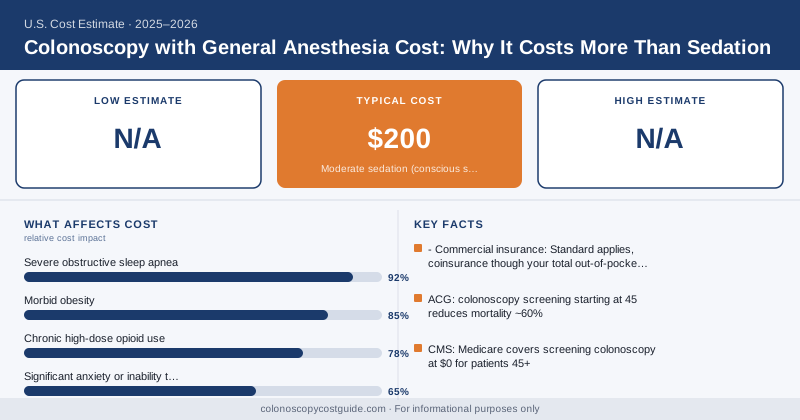
General anesthesia isn’t routinely offered or needed for a standard colonoscopy — most patients do very well with propofol-based deep sedation. Anesthesiologists typically reserve true general anesthesia for:
- Severe obstructive sleep apnea where airway control is a significant safety concern
- Morbid obesity, which can complicate airway management under standard sedation
- Chronic high-dose opioid use, which can make standard sedation dosing unpredictable
- Significant anxiety or inability to tolerate any awareness, in select cases
- Combined, lengthy procedures requiring extended sedation time
Ask If Standard Sedation Is Appropriate for You
Insurance Coverage
Insurance covers general anesthesia for colonoscopy when medically justified with documented risk factors in your chart — this isn’t typically something insurers deny outright, but they may request documentation supporting the decision if it’s questioned during claims review.
- Commercial insurance: Standard coinsurance applies, though your total out-of-pocket cost will reflect the higher overall anesthesia charge
- Medicare Part B: Covers medically necessary anesthesia at 80% after the deductible, regardless of sedation type, provided documentation supports the choice
- Medicaid: Covered with minimal cost-sharing when medically indicated
For more detail on how anesthesia billing works generally, including how to avoid surprise out-of-network anesthesia bills, see our colonoscopy anesthesia cost guide.
Comparing to Propofol-Based Sedation
If you’re trying to understand the full spectrum of sedation options and their tradeoffs, our propofol vs. standard sedation cost guide breaks down the middle tier in more detail — useful context if your doctor is deciding between standard and deeper sedation approaches for your specific case.
The Bottom Line
True general anesthesia for a colonoscopy costs $500–$1,500 more than standard deep sedation, driven by the added complexity of airway management and anesthesiologist time. It’s reserved for patients with specific risk factors, not offered routinely — if you don’t have those risk factors and are quoted general anesthesia by default, it’s reasonable to ask why.
{ if eq .Lang "zh" }