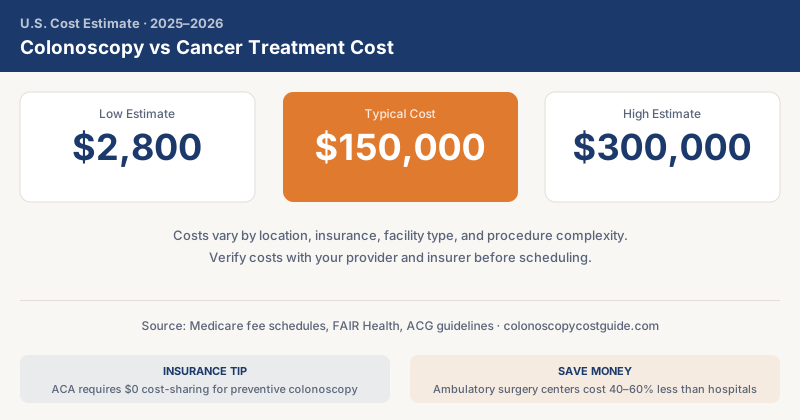
Colonoscopy vs. Colon Cancer Treatment Cost: The $2,800 vs. $300,000 Math
{ if eq .Lang "zh" }{ else }{ end }Most patients avoid colonoscopy because of cost. The procedure they’re trying to avoid costs $1,500 to $3,500. The disease they’re trying to avoid costs $150,000 to $300,000 or more — and may still kill them.
That’s the math. It’s not pleasant, but it’s real. Colorectal cancer is the second leading cause of cancer death in the United States, according to the CDC. The American Cancer Society estimates about 153,020 new cases will be diagnosed in 2025. The majority of colorectal cancers are preventable — not just detectable early, but actually preventable — through colonoscopy screening that finds and removes precancerous polyps before they become cancer.
The financial case for screening is overwhelming. Here’s the full comparison.
What a Colonoscopy Actually Costs
For an average-risk adult with ACA-compliant insurance, a preventive colonoscopy costs $0. Zero. The ACA requires qualifying health plans to cover colorectal cancer screening at 100% when recommended by the USPSTF, with no deductible and no copay.
For patients with high-deductible plans, Medicare beneficiaries, or those who are uninsured, actual out-of-pocket costs vary:
| Patient Situation | Colonoscopy Out-of-Pocket |
|---|---|
| ACA-compliant insurance (average-risk screening) | $0 |
| High-deductible plan (before deductible met) | $800 – $2,500 |
| Medicare Part B (preventive, every 10 years) | $0 (reduced from 15% to 0% in 2023) |
| Uninsured (ASC, negotiated cash rate) | $800 – $1,800 |
| Uninsured (hospital outpatient) | $2,500 – $5,000 |
Over a lifetime — say, colonoscopies at ages 45, 55, and 65 — an average-risk person with insurance pays $0 to $500 total for all three procedures.
What Colon Cancer Treatment Costs
Stage matters enormously. Colon cancer caught at Stage I — localized, before it spreads to lymph nodes — is usually treated with surgery alone and has a 5-year survival rate of about 90%. Stage IV cancer — spread to distant organs — has a 5-year survival rate under 15% and requires aggressive, prolonged treatment.
| Cancer Stage | Typical Treatment | Estimated Total Cost |
|---|---|---|
| Stage I | Surgery only (colectomy) | $40,000 – $80,000 |
| Stage II | Surgery + possible chemotherapy | $80,000 – $150,000 |
| Stage III | Surgery + chemotherapy (6 months) | $150,000 – $250,000 |
| Stage IV (metastatic) | Surgery + chemo + targeted therapy | $250,000 – $600,000+ |
| Recurrent disease | Additional chemo, immunotherapy, surgery | Adds $100,000–$300,000 |
A 2020 analysis in the Journal of the National Cancer Institute estimated the mean 5-year net cost of colorectal cancer care at approximately $157,000 per patient — and that’s the mean across all stages. Late-stage patients routinely exceed $300,000 in total treatment costs.
What Patients Actually Pay Out of Pocket for Cancer Treatment
Even with insurance, colon cancer treatment is financially devastating for many families. Most commercial insurance plans have annual out-of-pocket maximums of $8,700 to $9,450 (2025 ACA limits). A patient going through Stage III colon cancer treatment will hit that maximum every year for multiple consecutive years.
In addition to direct medical costs:
- Lost income: Surgery typically requires 4 to 8 weeks of recovery. Chemotherapy causes fatigue, nausea, and cognitive effects that reduce work productivity for months.
- Transportation and accommodation: For patients who need treatment at a cancer center, travel costs can run $5,000 to $15,000 per year.
- Caregiver costs: A family member often reduces work hours or stops working entirely to provide care.
The American Cancer Society estimates that 1 in 4 cancer patients depletes their life savings within two years of diagnosis. Colon cancer, with its typically extended treatment timelines, is among the most financially toxic diagnoses.
The Stage Shift Math
The Insurance ROI of Getting Screened
Here’s a concrete scenario:
Maria, 52, skips her colonoscopy because she’s busy and her plan has a $1,500 deductible she’d rather not deal with. At 56, she develops rectal bleeding. She gets a diagnostic colonoscopy. Stage III colorectal cancer is found.
Treatment: 6 months of FOLFOX chemotherapy, bowel resection surgery, then 6 months of adjuvant chemo. She hits her $9,000 out-of-pocket maximum for three consecutive years. That’s $27,000 in direct cost-sharing. She takes 12 weeks of unpaid leave. Her husband reduces his hours. Total economic impact to the family: well over $100,000.
If Maria had gotten a preventive colonoscopy at 52, a routine polypectomy could have removed the precancerous adenoma for $0 cost-sharing. The cancer would never have developed.
This isn’t hypothetical — it’s the documented pattern of how colorectal cancer progresses.
The Lifetime Screening Math in Plain Numbers
| Scenario | Lifetime Colonoscopy Cost | Lifetime Cancer Treatment Cost | Total |
|---|---|---|---|
| Regular screening, no cancer | $0 (insured) | $0 | $0 |
| Regular screening, polyps found/removed | $200 – $600 (polypectomy) | $0 | $200 – $600 |
| No screening, Stage II cancer | $0 | $100,000 – $150,000 | $100,000+ |
| No screening, Stage IV cancer | $0 | $300,000 – $600,000 | $300,000+ |
The colonoscopy cost you’re trying to avoid is a rounding error compared to what cancer treatment costs. And unlike cancer treatment, a preventive colonoscopy has a very high probability of preventing the disease entirely — not just managing it.
Schedule the colonoscopy. The math is not close.
{ if eq .Lang "zh" }