Colonoscopy Surprise Bills and the No Surprises Act: Your 2026 Protections
{ if eq .Lang "zh" }{ else }{ end }The colonoscopy went fine. The facility was in your network. Then three weeks later a $1,400 bill shows up from an anesthesiologist you never chose and never met. For decades that bill was legal, and patients just paid it. Since January 2022, in many cases, it isn’t legal anymore.
The No Surprises Act is one of the strongest consumer-protection laws to hit healthcare in years, and colonoscopies are a textbook case it was written to fix. Here’s how it shields you.
The Classic Colonoscopy Surprise Bill
The scenario is almost always the same. Your gastroenterologist and the facility are in-network, so you expect your normal cost-share. But the anesthesia provider — or sometimes the pathology lab reading your biopsy — is out-of-network and bills you the difference between what your insurer pays and their full charge. That difference is a “balance bill,” and it’s exactly what the law targets.
Key Takeaway
What the Law Limits You To
Under the No Surprises Act, when an out-of-network provider treats you at an in-network facility without your informed consent, you owe only what you’d owe in-network. The provider and insurer settle the rest between themselves, sometimes through an independent dispute resolution process — and you stay out of it.
| Situation | Old Reality (Pre-2022) | Under No Surprises Act |
|---|---|---|
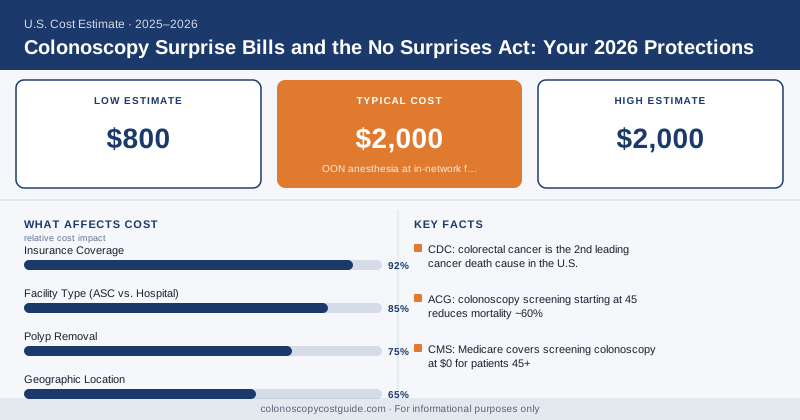
| OON anesthesia at in-network facility | Full balance bill ($800–$2,000) | In-network cost-share only |
| OON pathology reading your biopsy | Surprise lab bill | In-network cost-share only |
| Emergency colonoscopy-related care | Balance billed | Protected, in-network rates |
| Uninsured/self-pay over good-faith estimate | No recourse | Disputable if $400+ over estimate |
This is the same problem we cover in our out-of-network anesthesia bill guide — the No Surprises Act is the legal hammer for exactly that situation.
If You’re Uninsured: The Good-Faith Estimate
The law protects self-pay patients too, just differently. If you don’t have insurance or you’re paying cash, the provider must give you a written good-faith estimate before the procedure. If your final bill comes in $400 or more above that estimate, you can challenge it through the federal patient-provider dispute resolution process. Our colonoscopy cost without insurance guide explains how to use the estimate to your advantage.
Exactly What to Do With a Surprise Bill
Don’t pay it on reflex. Work through these steps:
- Confirm the facility was in-network. Check your insurer’s explanation of benefits. If the facility was in-network but a provider was out, the law applies.
- Compare the bill to your EOB. If you’re being charged more than your in-network cost-share, that excess is likely the illegal balance bill.
- Contact the provider in writing. State that the No Surprises Act applies and you’ll only pay the in-network amount.
- File a federal complaint. Call the No Surprises Help Desk at 1-800-985-3059 or file online with CMS.
If your insurer wrongly processed the claim, the denial and appeal process is your next step.
Why This Matters So Much for Colonoscopies
Colonoscopies are uniquely exposed to surprise billing because they involve multiple providers — facility, gastroenterologist, anesthesiologist, pathologist — who may bill separately and may not all share the same network status. Before 2022, a KFF analysis found that surprise out-of-network bills were common across exactly these kinds of multi-provider outpatient procedures. The law was built for this.
Bottom Line
If you had an in-network colonoscopy and got slammed with an out-of-network bill from anesthesia or pathology, the No Surprises Act likely makes that bill illegal — you owe only your in-network share. Uninsured patients get good-faith estimate protections instead. Don’t pay a surprise bill on autopilot. Confirm the facts, cite the law, and dispute it. If the underlying number still feels too high, our how to lower your colonoscopy bill guide covers the rest.
{ if eq .Lang "zh" }