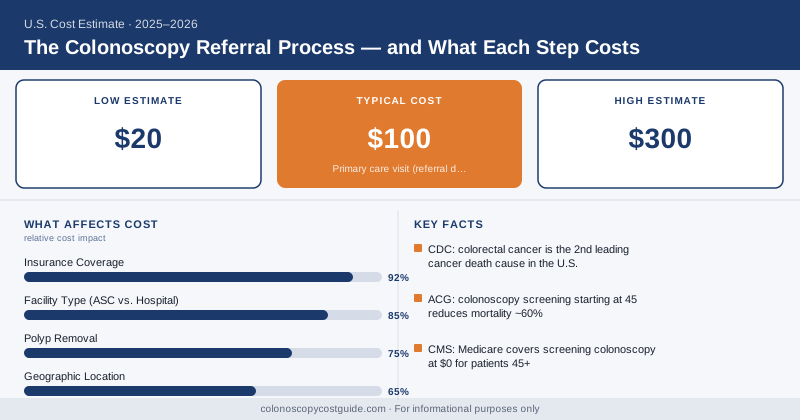
The Colonoscopy Referral Process — and What Each Step Costs
{ if eq .Lang "zh" }{ else }{ end }What does a colonoscopy actually cost before you even get to the colonoscopy? Most people focus on the procedure price and forget the referral chain that gets you there has its own costs at every stop.
Here’s the full path, step by step, with prices attached.
Step 1: The Primary Care Visit
Everything usually starts here, either because you’re due for routine screening at 45 or because you mentioned symptoms during an unrelated visit.
| Referral Step | Cash Cost | With Insurance |
|---|---|---|
| Primary care visit (referral discussion) | $100 – $300 | $20 – $50 copay |
| GI new patient consultation | $200 – $400 | $30 – $75 copay |
| Pre-procedure labs (if ordered) | $50 – $200 | $0 – $40 |
| Anesthesia pre-screening (if needed) | $75 – $150 | $10 – $30 |
Step 2: HMO vs. PPO — Does It Even Matter?
If you’re on an HMO plan, your primary care doctor typically has to submit a formal referral to a gastroenterologist before your insurance will pay for that specialist visit. Skip this step and you could be billed as out-of-network or fully self-pay. PPO plans are more forgiving — you can usually call a GI office directly and schedule, though bringing your PCP’s notes speeds up the process.
Key Takeaway
Step 3: The GI Consultation
Some practices skip a separate consultation for routine screening patients and go straight to scheduling. Others, especially for symptomatic patients, want a face-to-face visit first to review history and decide what testing makes sense — a colonoscopy, an upper endoscopy, or something else entirely.
Step 4: Scheduling and Pre-Procedure Requirements
Once the GI doctor orders the colonoscopy, the office’s scheduling team books your date, sends prep instructions, and may require pre-procedure labs or an anesthesia screening call, especially if you have other health conditions. These add-on steps rarely cost much on their own but can add administrative delay.
Step 5: The Procedure Itself
By the time you reach the actual colonoscopy, you’ve usually already spent $150–$500 in referral-chain visits and labs. Factor that into your total budget, not just the headline procedure price.
Bottom Line
The referral process itself typically adds $150–$500 in visits and labs before the colonoscopy even happens, and skipping the referral step entirely (when your plan requires one) risks a much larger bill. Confirm your plan’s referral rules first, verify network status at every stop, and the path from primary care to procedure stays predictable and affordable.
{ if eq .Lang "zh" }