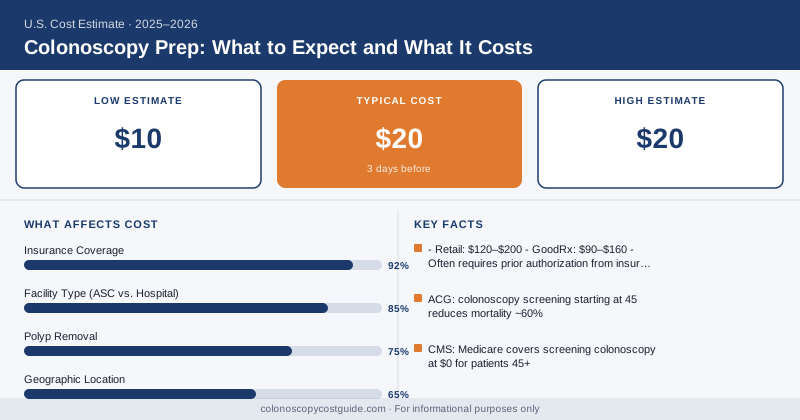
Colonoscopy Prep: What to Expect and What It Costs
Colonoscopy prep is uncomfortable, but it’s not as bad as most people expect — and it’s much cheaper than most people assume. A GoodRx prescription for a generic PEG solution runs $18–$35. The Miralax split-dose option your doctor may approve costs about $25 at any drugstore.
The prep is also the part of the colonoscopy process you have the most control over. Here’s what to expect, when to expect it, and how to get through it without missing more work than necessary.
What Prep Actually Does (and Why It Matters)
A colonoscopy requires your colon to be completely clear for the physician to see the lining. The prep is a strong laxative that flushes your entire GI tract. The ASGE (American Society for Gastrointestinal Endoscopy) estimates that inadequate bowel preparation occurs in up to 25% of colonoscopies and is the leading reason procedures need to be rescheduled.
A failed prep means you pay for the prep again, take another day off work, and potentially pay another facility fee. Doing the prep correctly the first time is always the cheaper option.
The Low-Residue Diet (1–3 Days Before)
Most GI offices require a low-fiber, low-residue diet for 1–3 days before the procedure. Some newer protocols use only a clear liquid diet the day before (combined with a same-day morning prep). Your GI physician will specify which protocol you’re following.
Low-residue foods you can eat:
- White rice, white bread, plain pasta
- Eggs, chicken, fish (baked or grilled)
- Cooked vegetables (no skins or seeds)
- Dairy products in moderation
Foods to avoid:
- Raw vegetables, salads
- Whole grains, seeds, nuts
- High-fiber fruits (apples, berries)
- Red meat, fried foods
- Popcorn
Cost impact: The diet change itself adds maybe $10–$20 to your grocery bill. The bigger cost is the lost convenience — you’re eating differently for 1–3 days.
| Prep Timeline | What Happens | Estimated Cost |
|---|---|---|
| 3 days before | Low-residue diet begins | $10 – $20 extra groceries |
| Day before (evening) | Clear liquids only + first dose of prep | — |
| Day before (6–9 PM) | First laxative dose, bathroom effects begin | — |
| Day of procedure (5–6 AM) | Second laxative dose (split-dose protocols) | — |
| 2–4 hours before procedure | Nothing by mouth | — |
| Procedure day | Colonoscopy (30–60 min) + recovery (1–2 hrs) | See procedure costs |
The Prep Products: What They Cost
Your GI physician will prescribe or recommend a specific prep. Here are the most common options and their costs:
Generic PEG solution (GoLYTELY / NuLYTELY): A large-volume liquid prep you drink over several hours. It works well and is inexpensive.
- Retail: $40–$80
- GoodRx price: $18–$35
- Insurance copay: $5–$30 (Tier 1 generic at most plans)
Suprep / Generic sulfate solution: A lower-volume prep (two 6-oz doses). The generic became widely available in 2021.
- Generic retail: $60–$120
- GoodRx: $45–$80
Sutab (tablets): Twelve tablets taken in two divided doses with water. No mixing required.
- Retail: $120–$200
- GoodRx: $90–$160
- Often requires prior authorization from insurance
Miralax + Gatorade (OTC, no prescription needed): The ACG included this in its 2021 CRC screening guidelines as an acceptable prep for appropriate patients. One bottle of Miralax ($17–$22) mixed into two 32-oz Gatorades ($4–$6) — total cost $22–$28.
How to Ask About the OTC Option
After your colonoscopy is scheduled, call the GI office and say: “I’d like to use the Miralax split-dose prep if I’m a candidate — can you confirm it’s appropriate for me?”
Many GI physicians are comfortable with this for average-risk adults without constipation or kidney issues. It’s the cheapest option available and works as well as most prescription preps in appropriately selected patients.
Do NOT start Miralax prep without physician approval — it’s not appropriate for everyone.
Split-Dose vs. Single-Day Prep: What’s Better
Split-dose prep (half the prep the evening before, half the morning of) produces significantly better bowel preparation quality than single-day prep according to ACG guidelines. Better preparation = more polyps found = fewer missed cancers. It also typically causes less nausea because you’re drinking smaller volumes at each sitting.
The trade-off: you need to wake up early enough to complete the morning dose at least 2–4 hours before your procedure start time. For a 7:30 AM procedure, that means a 3–4 AM wake-up.
Single-day prep (all the prep the evening before) is more convenient for early morning procedures but produces slightly less thorough cleaning. Some GI offices prefer it to avoid very early morning prep doses.
Ask your GI physician which protocol they recommend for your specific procedure time.
Time Off Work: What to Actually Plan For
This is where most patients underestimate the impact. Here’s the realistic picture:
- Prep day (day before): Most people work half-day at most. Bathroom effects begin a few hours after starting the prep and continue for 4–8 hours. Plan to be home.
- Procedure day: You’ll need the full day off. The procedure takes 20–45 minutes, but prep, pre-op, procedure, and recovery together take 3–5 hours at the facility. You’re not permitted to drive for the remainder of the day due to sedation.
- Day after: Most people return to work. Light-headedness and fatigue are possible. Avoid strenuous activity.
Total lost work time: Typically 1.5 to 2 days.
If you’re paid hourly and losing 2 days of wages represents a real financial hardship, that’s worth factoring into the total cost of your colonoscopy. Some employers allow using sick time; others don’t. A half-day remote work option on prep day can help.
The Full Prep Cost Summary
| Prep Item | Low-Cost Option | Higher-Cost Option |
|---|---|---|
| Prep medication | $22–$28 (OTC Miralax) | $120–$200 (Sutab, brand) |
| Low-residue groceries | $10–$20 | $10–$20 |
| Clear liquids (day before) | $5–$10 (broth, popsicles) | $5–$10 |
| Lost wages (hourly workers) | $0 (if salaried/sick time) | $100–$400 (2 days) |
| Total prep cost | $37–$58 | $235–$630 |
The prep itself is the cheap part of the colonoscopy process. The bigger cost is the procedure, facility fee, and anesthesia. For those numbers, see colonoscopy cost and colonoscopy anesthesia cost.